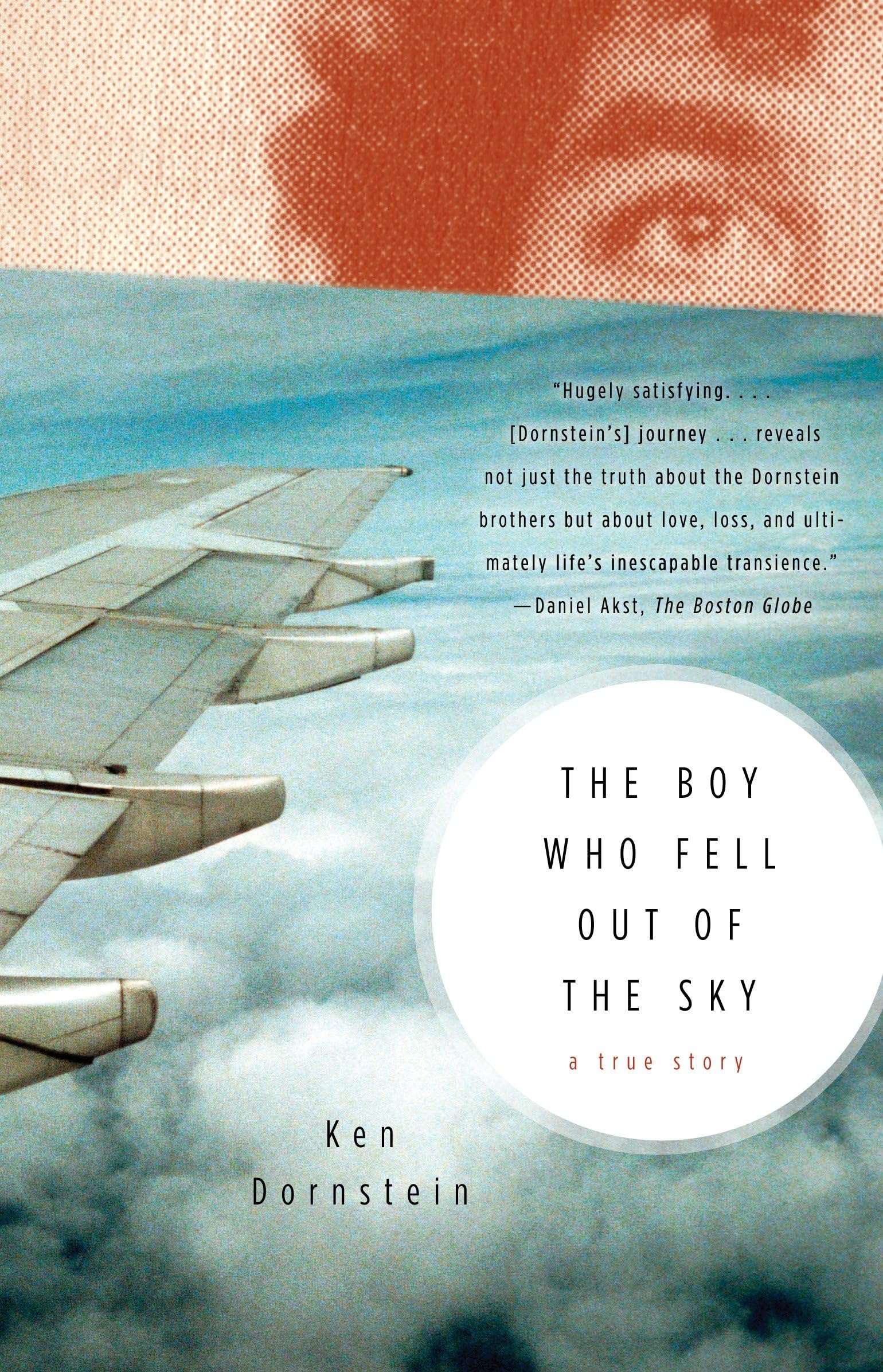



The story of one man’s search for the truth about his brother—and himself. “Hugely satisfying ... [Dornstein's] journey ... reveals not just the truth about the Dornstein brothers but about love, loss, and ultimately life's inescapable transience.” — The Boston Globe David Dornstein was twenty-five years old, with dreams of becoming a great writer, when he boarded Pan Am Flight 103 on December 21, 1988. Thirty-eight minutes after takeoff, a terrorist bomb ripped the plane apart over Lockerbie, Scotland. Almost a decade later, Ken Dornstein set out to solve the riddle of his older brother’s life, using the notebooks and manuscripts that David left behind. In the process, he also began to create a new life of his own. “Hugely satisfying ... [Dornstein's] journey ... reveals not just the truth about the Dornstein brothers but about love, loss, and ultimately life's inescapable transience.” — The Boston Globe “Creating narrative coherence out of awful accident is, I suppose, a textbook way of dealing with grief.... [But] Dornstein's skill as a writer makes the raw material [of his brother’s life] seem tailor-made for the form he has chosen.... It's a compelling, sad, thoughtful book." —Nick Hornby, The Believer “Dornstein has written a book that transcends its subject, becoming a meditation upon not only his brother's life but his own. All of ours.”— Esquire “Without an ounce of self-pity or melodrama, [Dornstein] writes with razor-sharp clarity and realizes, as we do, how the chapters themselves are a testament to the enormous love between these two brothers.” — The Washington Post Book World KEN DORNSTEIN has been published in The New Yorker and has received two Yaddo artist residencies. He is the series editor at PBS's Frontline and lives near Boston with his wife and two children. I The night my brother died, I slept fine, back in my old bed in my old room in the old house where I grew up. I came downstairs late the next morning. My father and stepmother had left for work, but I was on my first day of Christmas break from college. I had nothing to do, and the entire day to do it. I found the newspaper laid out on the kitchen table. The headline ran in giant letters across the front page-PLANE WITH 259 ABOARD CRASHES, DESTROYS 40 HOMES IN SCOTLAND. I started to read: lockerbie, Scotland-A Pan Am jumbo jet bound for New York with 259 people, many of them Christmas travelers, crashed last night into this Scottish village, exploding into a huge fireball and setting ablaze dozens of homes and cars. No survivors from the Boeing 747 were found. The cause of the crash was not immediately clear, although speculation centered on either structural failure or sabotage. There were other stories on the bombing as well: "Fire Fell from the Sky 'Like Liquid.' " "All On Jet, 11 in Town Are Killed." There were also pictures-a Scottish police officer peering into the plane's crushed cockpit lying in a field; houses and cars on fire; a woman collapsed on the floor of JFK airport (she'd just been told that her daughter was on the plane). I skimmed the stories. I also checked the sports page and the police blotter in the suburban "Neighbors" section. A pizza delivery man had been robbed of $120 at knifepoint not too far from where I lived. News is just news to those not immediately affected, and my brother, David, was not supposed to fly until later in the week. I finished breakfast and puttered around. At around noon, I turned on the television. Again, the bombing. Now there was news footage from Scotland. I remember the blue lights of the ambulances streaking into town and the hospital doctors looking useless waiting for injured passengers who would never arrive. There would be no injured, the anchorman said, "only dead." I remember the houses on fire and that cockpit in the field still looking sort of like a cockpit. It was Thursday, December 22, 1988. David had been dead on the ground in Scotland since Wednesday night, but I didn't know it. I have come to think of the impact of my brother's death in dramatic terms: a curtain dropping on my youth, a terrible storm that left me shipwrecked, the start of a new life. But this language came much later. Events unfolded in a much more everyday way: The phone rang and my father, home early from work, answered it. A sales agent from the airline said she might have some unfortunate news about a David Dornstein. Is this the family of David Dornstein? The agent said she needed to check the final passenger list. She said she needed to cross-reference one thing with another. She said she needed to speak with her supervisor. She said she needed to get people in London or Scotland or New York or somewhere to "sign off." She said things were still a little confused. So could you please bear with us? Could you please hold? My father waited on hold by himself initially, and then he called upstairs to me. I found him at his desk. "Pan Am is on the phone," he said.