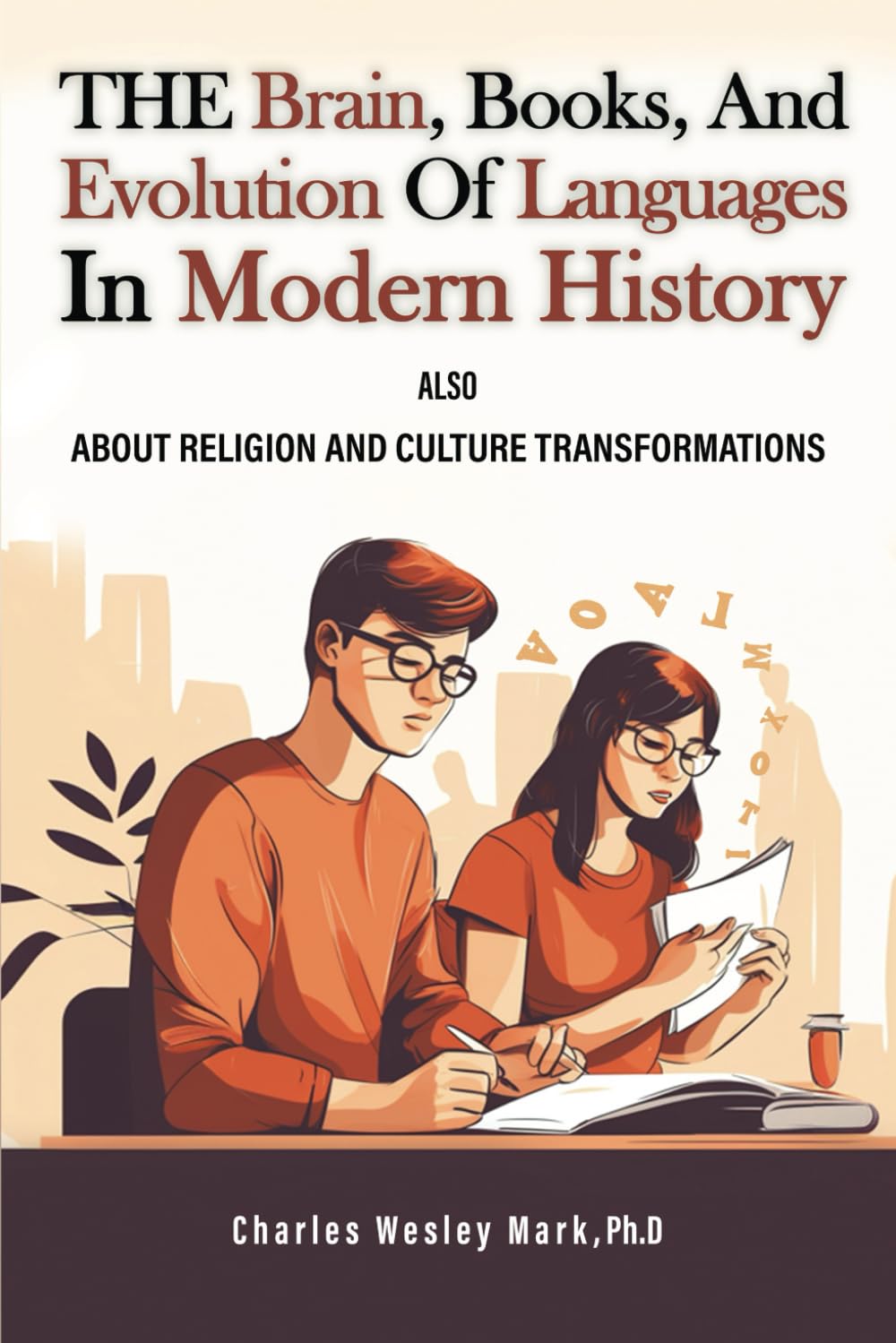
The Brain, Books, and Evolution of Languages in Modern History
$24.99
by Charles Wesley Mark



The book's central thesis is that modern history began with the transformation of dialects into literary languages during the Reformation, driven by Bible translation efforts and the invention of Gutenberg's printing press in 1450. This technology enabled widespread literacy, reshaped vernacular languages, and fueled the Protestant Reformation, transforming Europe's political, religious, and linguistic landscape. By the late 16th century, the Bible had been translated into 15 European languages, and Protestantism had emerged as a dominant force. The second part of the book examines the influence of Protestant missionaries in the 18th and 19th centuries. These missionaries translated the Bible and portions of Bible into about 3,000 and more non-European dialects, developed scripts, and built schools to foster literacy and education in the "Two-Thirds’ World," significantly shaping global cultures and languages. Their contributions are often overlooked due to associations with colonialism. The third part explores the role of the human brain and rational tools—language, reading, writing, and arithmetic—in shaping societies. The evolution of literary languages and educational systems, beginning in the Reformation era, laid the foundation for exponential knowledge growth, culminating in the modern digital age and artificial intelligence. This interconnected history of education, language, and cultural transformation underscores humanity's progress over the past 569 years.