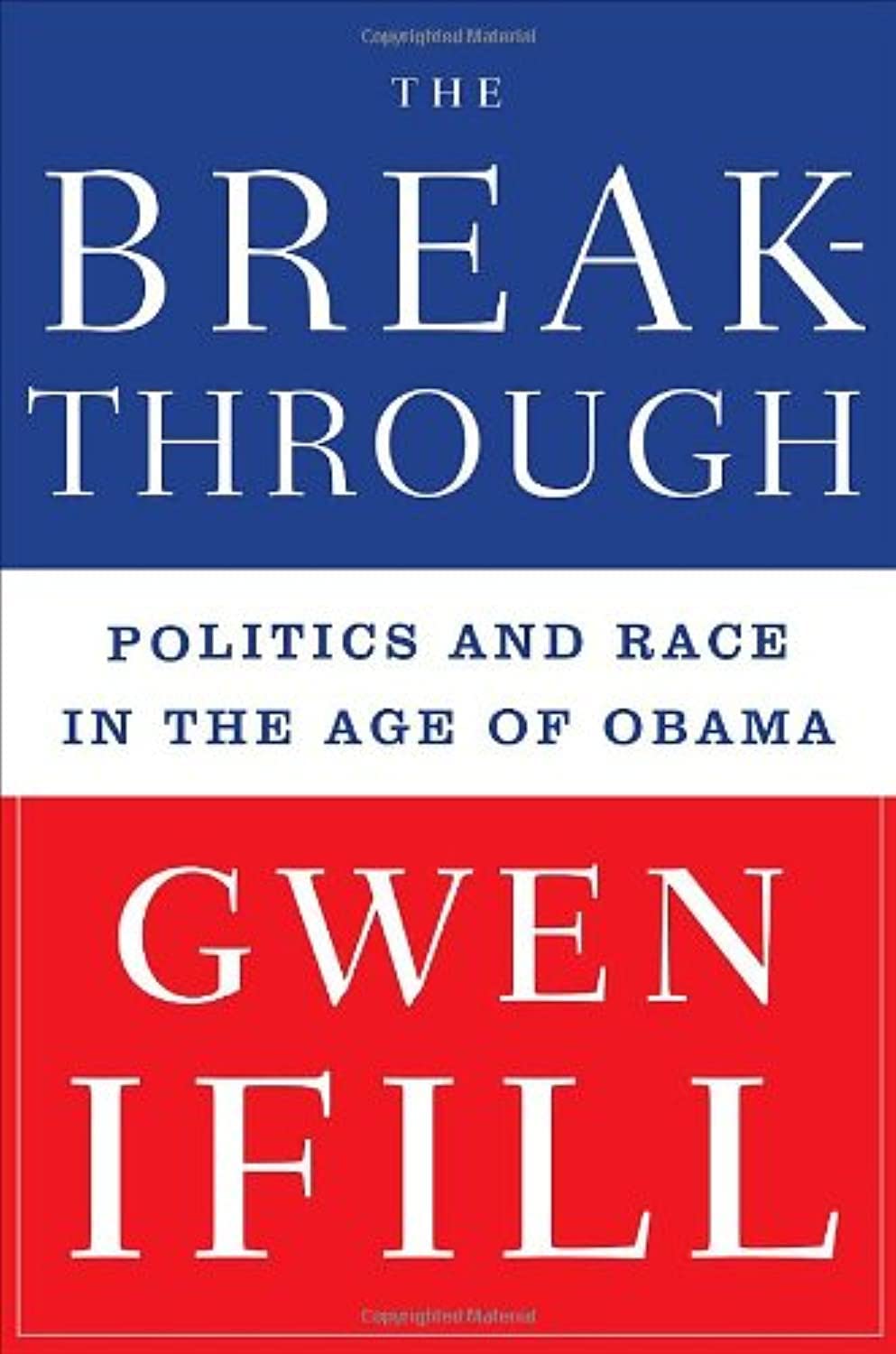



In The Breakthrough , veteran journalist Gwen Ifill surveys the American political landscape, shedding new light on the impact of Barack Obama’s stunning presidential victory and introducing the emerging young African American politicians forging a bold new path to political power. Ifill argues that the Black political structure formed during the Civil Rights movement is giving way to a generation of men and women who are the direct beneficiaries of the struggles of the 1960s. She offers incisive, detailed profiles of such prominent leaders as Newark Mayor Cory Booker, Massachusetts Governor Deval Patrick, and U.S. Congressman Artur Davis of Alabama (all interviewed for this book), and also covers numerous up-and-coming figures from across the nation. Drawing on exclusive interviews with power brokers such as President Obama, former Secretary of State Colin Powell, Vernon Jordan, the Reverend Jesse Jackson, his son Congressman Jesse Jackson Jr., and many others, as well as her own razor-sharp observations and analysis of such issues as generational conflict, the race/ gender clash, and the "black enough" conundrum, Ifill shows why this is a pivotal moment in American history. The Breakthrough is a remarkable look at contemporary politics and an essential foundation for understanding the future of American democracy in the age of Obama. GWEN IFILL is moderator and managing editor of Washington Week and senior correspondent of The NewsHour with Jim Lehrer. Before coming to PBS, she was chief congressional and political correspondent for NBC News, and had been a reporter for the New York Times , the Washington Post , the Baltimore Sun , and Boston Herald American. She lives in Washington, D.C. From The Washington Post's Book World/washingtonpost.com Reviewed by Alan Cooperman When Deval Patrick was 6 or 7, his mother took him to hear Martin Luther King Jr. speak in a park on Chicago's South Side. Patrick, now 52 and serving as the first African American governor of Massachusetts, says he does not recall a single word of King's speech. But he does remember "what it felt like" to be in that park: "Nothing but hope." Patrick's reminiscence -- described by PBS television reporter Gwen Ifill in her perceptive new book, The Breakthrough -- captures something essential about the rising generation of black political leaders. These are men and women in their 30s, 40s and 50s who inherited the hopes of the civil rights movement without having to go through its confrontations. While the worldview of older black politicians "was defined by limitation," Ifill writes, the new generation was "raised to believe they could do anything. Their schools were integrated, and Ivy League colleges came looking for them. . . . They lived in a world shaped by access instead of denial." Ifill's book, the first she's written in a long and distinguished journalistic career, caused a ruckus months before publication. As she prepared to moderate the only vice presidential debate of 2008, the Oct. 2 face-off between Gov. Sarah Palin and Sen. Joseph R. Biden Jr. in St. Louis, some conservatives questioned her neutrality on the grounds that she was writing a "pro-Obama" book. In the "Saturday Night Live" skit about the debate -- which was at least as memorable and probably more widely seen than the real thing -- Ifill (played by Queen Latifah) repeatedly held up her book to the camera. As it turns out, however, The Breakthrough is not primarily about Obama. It contains just one chapter on how he won the election, a 19-page analysis that contains no news-making revelations and largely follows conventional wisdom (he had the right "temperament"; he ran not "as the black candidate, but as a candidate for president who happened to be black"; he showed that white voters "were willing to embrace a black man who did not make them feel guilty about race.") The book's real departure, and its real value, is that it treats Obama not as the breakthrough candidate but as one, fairly typical member of a breakthrough generation of African American politicians. The bulk of the book consists of short profiles of this deep bench "crammed elbow to elbow with mayors, state lawmakers, and other rising stars poised to grab at the next brass ring," from Newark Mayor Cory Booker to San Francisco District Attorney Kamala Harris, Louisiana House Speaker pro tempore Karen Carter Peterson, Buffalo Mayor Byron Brown and Washington's own Mayor Adrian Fenty. Ifill makes several provocative points about this cohort. She does it in a mild, unargumentative fashion, mostly by quoting one black leader after another saying pretty much the same thing until the message sinks in. If anything, in her book she is too neutral a moderator: She lets everyone talk and talk, all too rarely delivering her own crisp judgments. But some patterns become clear. One is that the breakthrough generation is not willing to bide its time. In Newark, Ron Rice Jr. ran for city council in