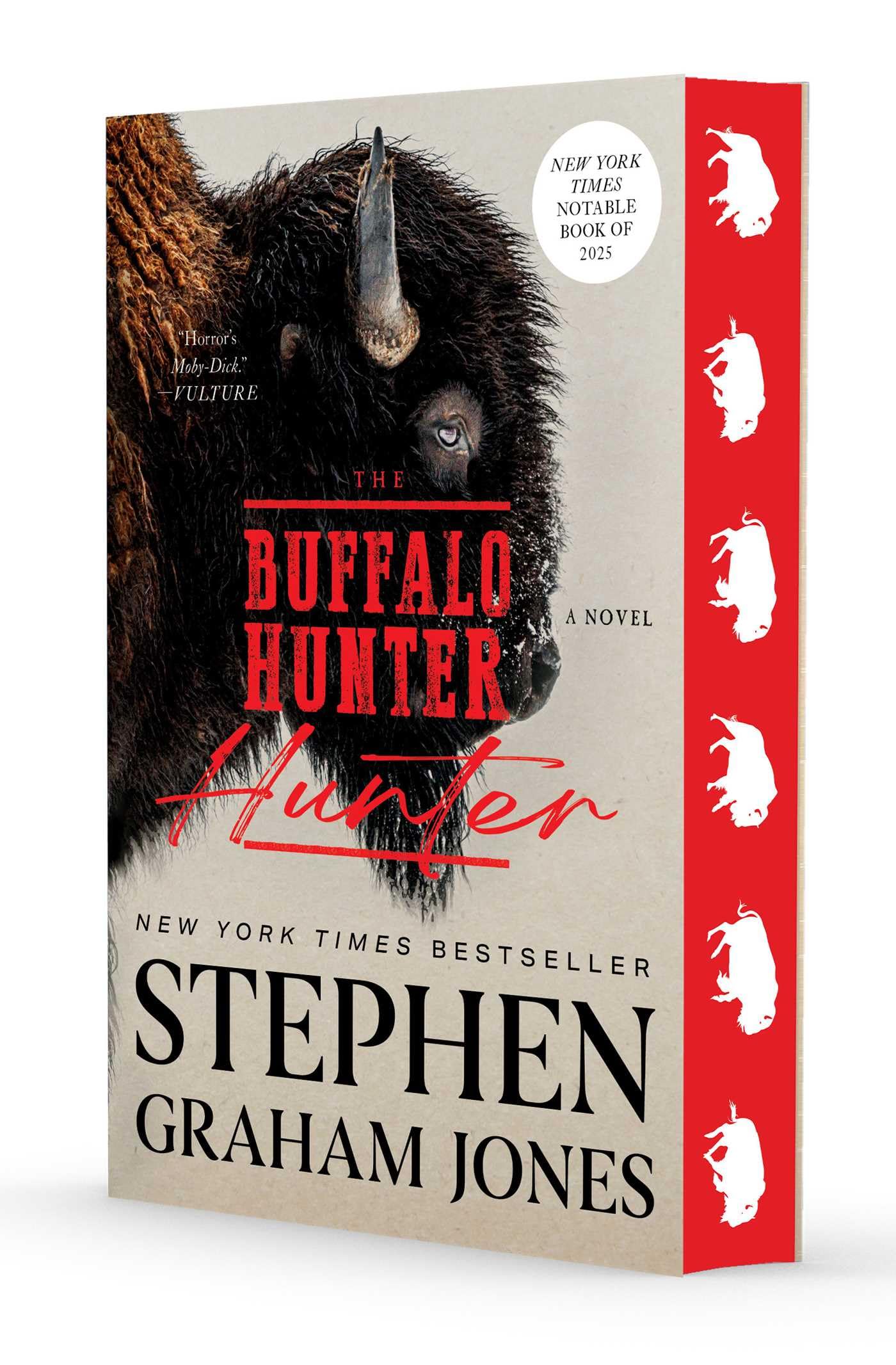



Selected as One of The New York Times ’s 100 Notable Books of the Year A Barack Obama Summer Read Libby Award for Best Horror Nebula, Bram Stoker, and Los Angeles Times Book Prize Award Finalist A Time , The Washington Post , NPR, Shelf Awareness , Toronto Star , and Publishers Weekly Best of the Year Kirkus Reviews Best Historical Fiction The New York Times bestseller and “horror masterpiece” (NPR) from Stephen Graham Jones—the master of modern horror—is a chilling historical horror novel tracing the life of a vampire who haunts the fields of the Blackfeet reservation looking for justice. “Jones has written his Interview with the Indigenous Vampire. A landmark of horror and historical fiction alike, perhaps the closest thing we have to horror’s Moby-Dick .” — Vulture “Inventive and spine-tingling…a master class in voice. Queasy, uneasy, The Buffalo Hunter Hunter plays with the interplay between religion and historical guilt, identity and appetite.” — The Washington Post A diary, written in 1912 by a Lutheran pastor is discovered within a wall. What it unveils is a slow massacre, a chain of events that go back to 217 Blackfeet dead in the snow. Told in transcribed interviews by a Blackfeet named Good Stab, who shares the narrative of his peculiar life over a series of confessional visits. This is an American Indian revenge story written by one of the new masters of horror, Stephen Graham Jones. Stephen Graham Jones is the New York Times bestselling author of The Only Good Indians . He has been an NEA fellowship recipient and a recipient of several awards including the Ray Bradbury Award from the Los Angeles Times , the Bram Stoker Award, the Shirley Jackson Award, the Jesse Jones Award for Best Work of Fiction from the Texas Institute of Letters, the Independent Publishers Award for Multicultural Fiction, and the Alex Award from American Library Association. He is the Ivena Baldwin Professor of English at the University of Colorado Boulder. 1. 16 July 2012 16 July 2012 A dayworker reaches into the wall of the parsonage his crew’s revamping and pulls a piece of history up, the edges of its pages crumbling under the fingers of his glove, and I have to think that, if his supervisor isn’t walking by at just that moment, then this construction grunt stuffs that journal from a century ago into his tool belt to pawn, or trade for beer, and the world never knows about it. If this works out, though, then I owe that dayworker my career. In January, I wasn’t exactly denied tenure, but I was told that, instead of continuing with my application, I consider asking for the extension I’m currently on. The issue wasn’t my teaching— I’m the dayworker of Communication and Journalism, covering all the 1000- and 2000-level courses—it was that my publications aren’t up to University of Wyoming “standards for promotion.” See: get a book under contract, Etsy, and then we’ll talk. And, if you don’t? Then all your schooling, all your dreams of being a professor, they’re smoke, and you’re out in the cold. Until that random dayworker reached into that wall. Until what he found wrapped in mouse-chewed buckskin wound up in the hands of Special Collections librarian Lydia Ackerman of Montana State up in Bozeman, and she was able to read the scripty hand enough to glean a name from the very front page: “Arthur Beaucarne.” It’s not far from there to me, that surname not exactly being common. And, because technically that journal belongs to me—well, my father then me, but my father in his facility down in Denver’s not exactly compos mentis—Lydia Ackerman’s been sending me the digitized pages as they’re processed, the original being a century too delicate to handle. But I don’t think she does it out of kindness. It’s to keep me from showing up unannounced again. “Etsy?” she asked when I did show up like that in May, breathing hard from the stairs. She was looking from my ID to me, to see which was the typo. It’s Betsy , really, I didn’t say, but a boy with a speech impediment in kindergarten… who cares? “The last name,” I told her, as politely as I could. So, I was led back to the workbench they conserve delicate literary artifacts on, was made to mask up, glove up, bootie up, and then sit like that through a lecture about the lignin content of old paper and the homemade inks of the late nineteenth century, and how this particular ink had aged into acid that was eating away the brittle old paper it was written on, meaning the individual letters collapse into hopeless crumbles from just the slightest breath—thus the case the journal’s enclosed in. It’s for humidity and temperature, Lydia Ackerman explained like giving a tour to second-graders, but mostly it’s to keep any breeze from punching those black letters from the pages, effectively erasing this amazing find from history. “It’s also for dust ,” Lydia Ackerman leaned forward to say in some sort of confidence, l