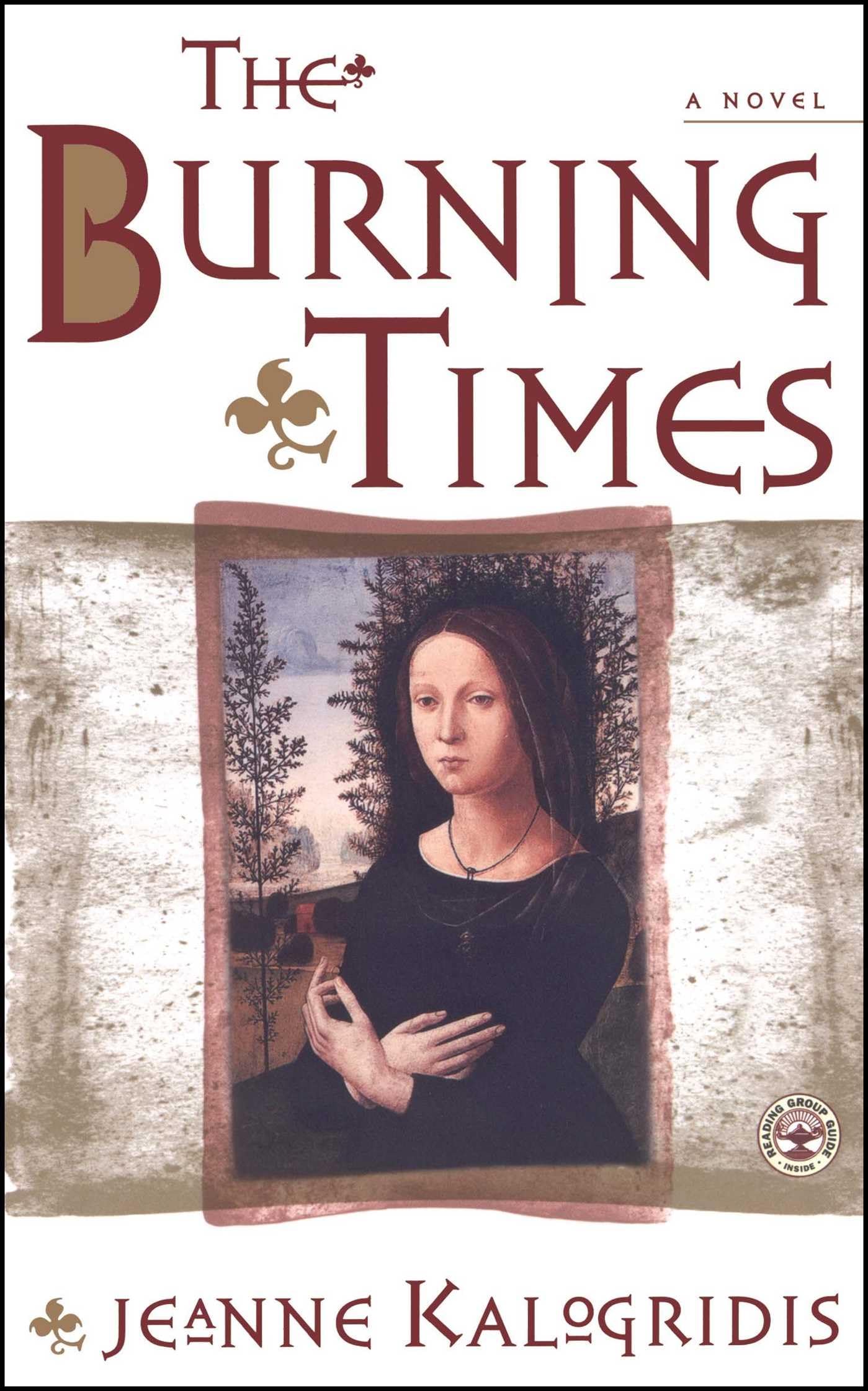



The year is 1357. The Inquisition rages throughout medieval France, searching ruthlessly for heretics. In an epic tale of passion, mystery, and unspeakable danger, one woman faces the flames...and triumphs. Mother Marie Françoise, born Sybille, is a midwife with a precocious gift for magic -- a gift that makes her a prime target for persecution at the hands of the Church. She flees her village and takes refuge in a Franciscan sisterhood. Before long, Sybille's unusual powers bring her under the scrutiny of the Inquisition. Michel, a pious and compassionate monk sent to hear her confession, finds himself drawn more intimately into Sybille's life and destiny than either of them could have imagined. Like a magician herself, Jeanne Kalogridis weaves a tale of star-crossed love, of faith and heresy, of mysticism and witchcraft, against a fascinating historical backdrop -- the Black Death, the Hundred Years' War, and the catastrophic defeat of France at the hands of the English. The result is a page-turning novel about one of the most intriguing periods in history. Jeanne Kalogridis is the author of The Diaries of the Family Dracul, a historical vampire trilogy, and wrote for the bestselling Star Trek series under the pseudonym J. M. Dillard. She lives in California. Chapter One It is a hard, deafening rain. Fast, malignant clouds shroud the moon and stars, and the softer velvet black of the night sky; profound darkness veils all, save for those instants when lightning illuminates the distant mountains, and I see: My galloping mount's coat gleaming like onyx, his wet mane whipping like a Medusa's crown in the angry wind; see, too, the road to Carcassonne before us, studded with stones, brambles of wild rose, and bushes of rosemary that yield their astringent fragrance as they are crushed beneath the horse's hooves. Rosemary brings memories; roses are not without thorns; stones are hard. Hard as the rain: in the flash, it appears long, jagged, crystalline -- a hail of icicles, of small, frozen lightning bolts. They pierce and sting, and though it seems right that this moment should be physically painful, I feel a welling of pity for the stallion. He is exhausted, gasping from the long, strenuous run; even so, when at last I rein him in, he fights me, rearing his head. As he slows reluctantly, lifting strong, graceful legs to pace sidelong, I put one palm flat against his shoulders and feel the muscles straining there. He is sensitive, my steed, in the way most animals are, though he does not possess the Sight: he cannot see those pursuing us, but he can sense the Evil residing in one particular heart. He shivers, but not from the autumn chill, and rolls his great dark eyes to look questioningly back at me; I can see terror in the whites. We have fled our enemies this long; why, now, do we wait for them? "They will not hurt you," I tell him softly, and stroke his neck as he whinnies in protest. His coat is cold and soaked from sweat and rain, but underneath, the muscles emanate heat. "You are a fine horse, and they will take you where it is warm and dry, and feed you. You will be treated kindly." Would that I should encounter the same. In that instant, I want to weep, hard and bitter as the rain; hard, so very hard. The stallion senses this and, distressed, increases his pacing. I collect myself and give his wet neck another stroke. My pursuers would say I was casting a spell on the poor animal; but I know it is only the opening of one's heart to another creature, the unspoken sharing of calm -- a true calm I must look deep within myself to find. One cannot lie to animals. I am almost near the end of my journey, but the Goddess has spoken: there is no further use in running. Should I continue to flee and my Enemy to chase, none of it will save my poor Beloved. Surrender provides my only chance -- a slender one, fraught with risk, and my Sight will not reveal the outcome. I shall live, or I shall die. Soon the horse and I fall silent and still. The rain has eased, and in the absence of one noise, I hear another. Thunder, but there is no lightning in the sky. No; not thunder. Hoofbeats -- not one pair, but several. We wait, my steed and I, until they come closer, closer, closer.... And out of the darkness appear four, seven, ten cloaked men on horseback -- the very ones I have Seen in my mind's eye all the dark hours of my flight now materialized in the flesh. A black cloud slips to reveal a slice of new moon, and the glint of metal: nine of these men are gendarmes from Avignon, from the pope's personal cadre. I am encircled. They close in, drawing the noose tighter, and lift their swords. New moons are for beginnings; this one bodes an end. I and my stallion remain perfectly composed, perfectly still. Suspicious, some of the gendarmes face outward: where are my protectors? Certainly, they lie in wait nearby, ready to spring on my captors; certainly, they would not have simply abandone