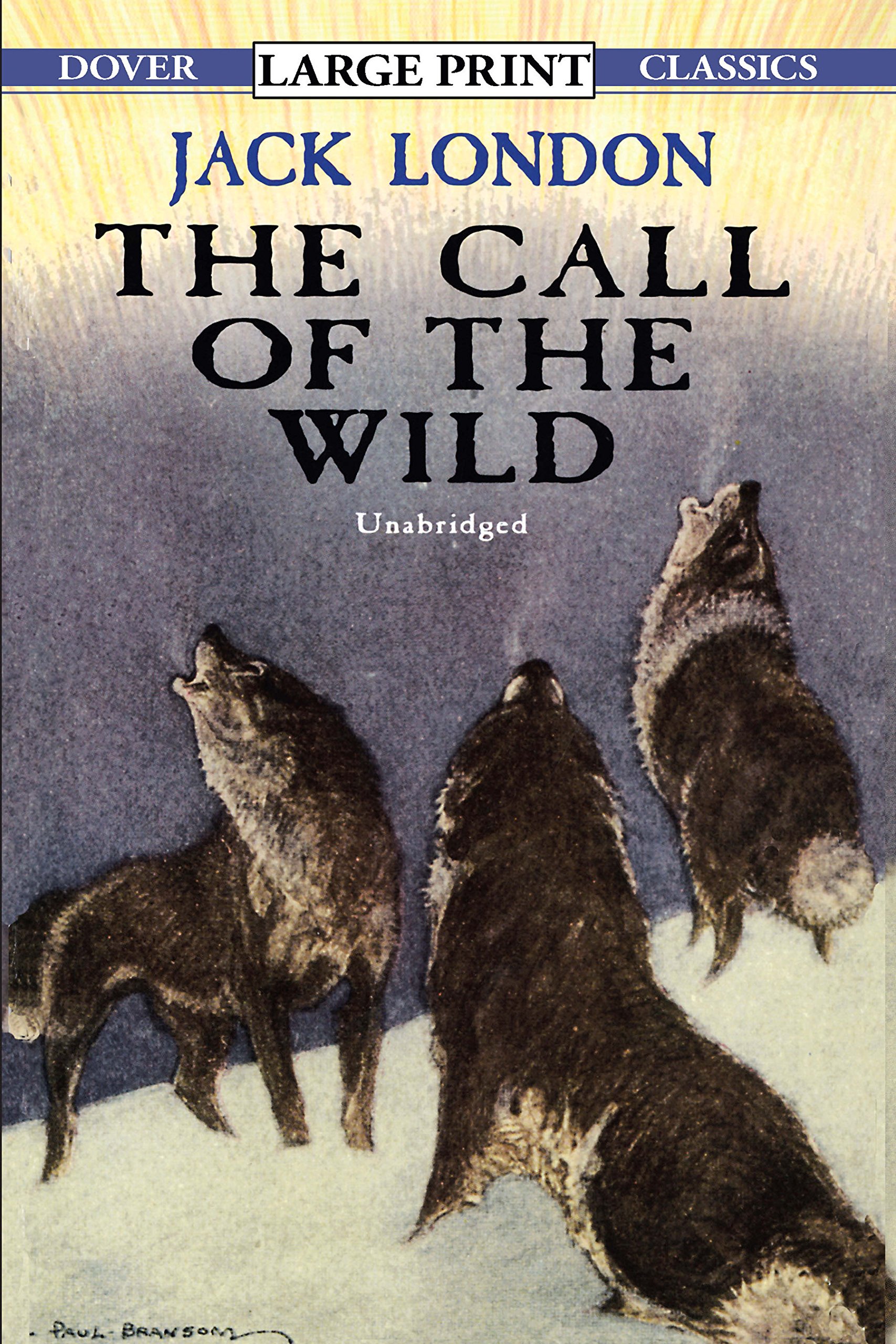



Jack London's novels and ruggedly individual life seemed to embody American hopes, frustrations, and romantic longings in the turbulent first years of the twentieth century, years infused with the wonder and excitement of great technological and historic change. The author's restless spirit, taste for a life of excitement, and probing mind led him on a series of hard-edged adventures from the Klondike to the South Seas. Out of these sometimes harrowing experiences — and his fascination with the theories of such thinkers as Darwin, Spencer, and Marx — came the inspiration for novels of adventure that would make him one of America’s most popular writers. The Call of the Wild , considered by many London's greatest novel, is a gripping tale of a heroic dog that, thrust into the brutal life of the Alaska Gold Rush, ultimately faces a choice between living in man’s world and returning to nature. Adventure and dog-story enthusiasts as well as students and devotees of American literature will find this classic work a thrilling, memorable reading experience. This edition features large, easy-to-read print. Novelist, journalist, and social activist Jack London (1876–1916) rose from abject poverty to international fame. The bestselling, highest-paid, and most popular author of his era, London created a substantial body of work in his short life, drawing upon his experiences as a cannery worker, sailor, railroad hobo, and prospector. Excerpt Chapter One: Into the Primitive "Old longings nomadic leap, Chafing at custom's chain; Again from its brumal sleep Wakens the ferine strain." Buck did not read the newspapers, or he would have known that trouble was brewing, not alone for himself, but for every tidewater dog, strong of muscle and with warm, long hair, from Puget Sound to San Diego. Because men, groping in the Arctic darkness, had found a yellow metal, and because steamship and transportation companies were booming the find, thousands of men were rushing into the Northland. These men wanted dogs, and the dogs they wanted were heavy dogs, with strong muscles by which to toil, and furry coats to protect them from the frost. Buck lived at a big house in the sun-kissed Santa Clara Valley. Judge Miller's place, it was called. It stood back from the road, half hidden among the trees, through which glimpses could be caught of the wide cool veranda that ran around its four sides. The house was approached by gravelled driveways which wound about through wide-spreading lawns and under the interlacing boughs of tall poplars. At the rear things were on even a more spacious scale than at the front. There were great stables, where a dozen grooms and boys held forth, rows of vine-clad servants' cottages, an endless and orderly array of outhouses, long grape arbors, green pastures, orchards, and berry patches. Then there was the pumping plant for the artesian well, and the big cement tank where Judge Miller's boys took their morning plunge and kept cool in the hot afternoon. And over this great demesne Buck ruled. Here he was born, and here he had lived the four years of his life. It was true, there were other dogs. There could not but be other dogs on so vast a place, but they did not count. They came and went, resided in the populous kennels, or lived obscurely in the recesses of the house after the fashion of Toots, the Japanese pug, or Ysabel, the Mexican hairless - strange creatures that rarely put nose out of doors or set foot to ground. On the other hand, there were the fox terriers, a score of them at least, who yelped fearful promises at Toots and Ysabel looking out of the windows at them and protected by a legion of housemaids armed with brooms and mops. But Buck was neither house-dog nor kennel dog. The whole realm was his. He plunged into the swimming tank or went hunting with the Judge's sons; he escorted Mollie and Alice, the Judge's daughters, on long twilight or early morning rambles; on wintry nights he lay at the Judge's feet before the roaring library fire; he carried the Judge's grandsons on his back, or rolled them in the grass, and guarded their footsteps through wild adventures down to the fountain in the stable yard, and even beyond, where the paddocks were, and the berry patches. Among the terriers he stalked imperiously, and Toots and Ysabel he utterly ignored, for he was king - king over all creeping, crawling, flying things of Judge Miller's place, humans included. His father, Elmo, a huge St. Bernard, had been the Judge's inseparable companion, and Buck bid fair to follow in the way of his father. He was not so large - he weighed only one hundred and forty pounds - for his mother, Shep, had been a Scotch shepherd dog. Nevertheless, one hundred and forty pounds, to which was added the dignity that comes of good living and universal respect, enabled him to carry himself in right royal fashion. During the four years since his puppyhood he had lived the life of a sated aristocrat; h