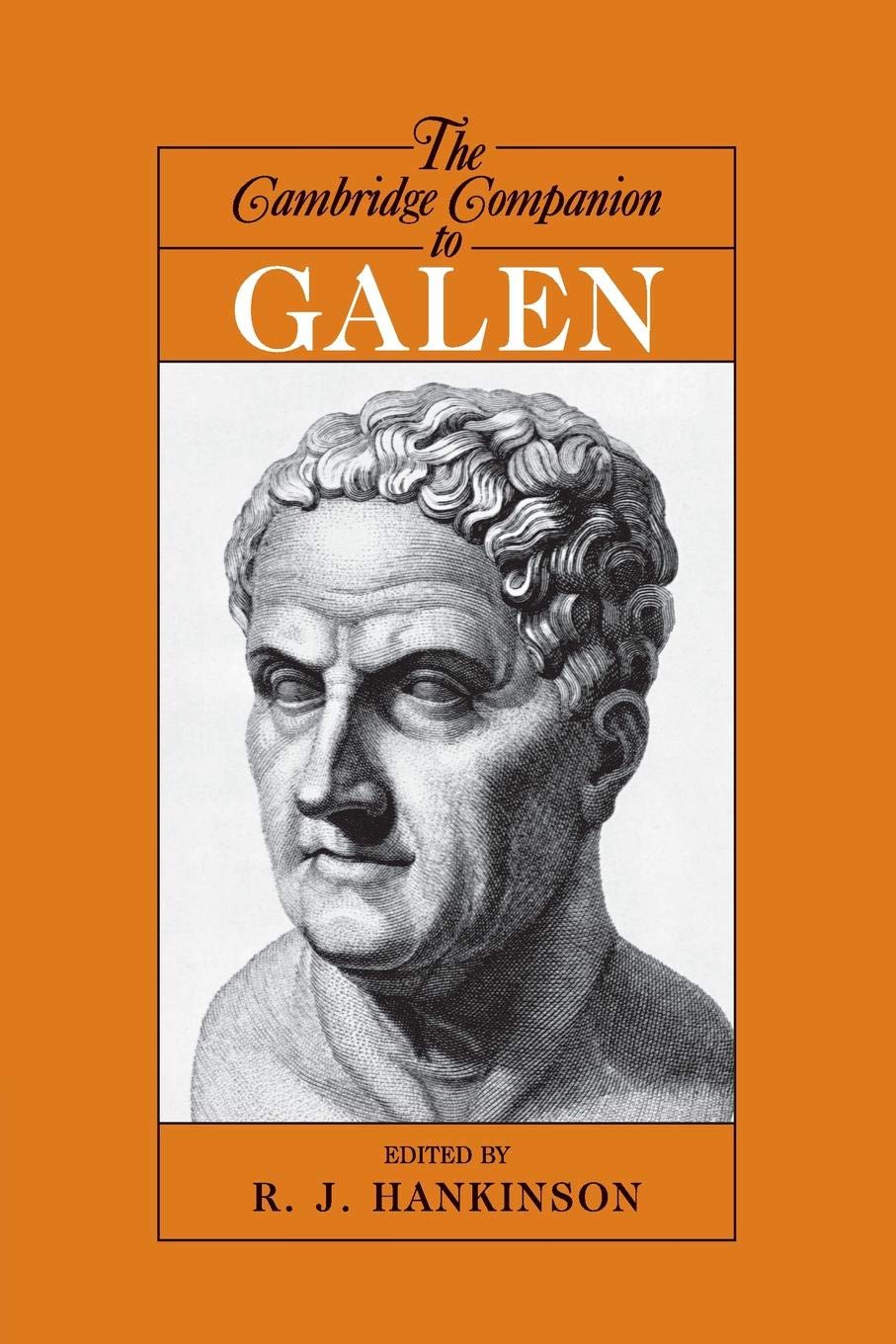
The Cambridge Companion to Galen (Cambridge Companions to Philosophy)
$25.55
by R. J. Hankinson



Galen of Pergamum (AD 129–c.216) was the most influential doctor of later antiquity, whose work was to influence medical theory and practice for more than fifteen hundred years. He was a prolific writer on anatomy, physiology, diagnosis and prognosis, pulse-doctrine, pharmacology, therapeutics, and the theory of medicine; but he also wrote extensively on philosophical topics, making original contributions to logic and the philosophy of science, and outlining a scientific epistemology which married a deep respect for empirical adequacy with a commitment to rigorous rational exposition and demonstration. He was also a vigorous polemicist, deeply involved in the doctrinal disputes among the medical schools of his day. This volume offers an introduction to and overview of Galen's achievement in all these fields, while seeking also to evaluate that achievement in the light of the advances made in Galen scholarship over the past thirty years. " Hankinson has produced a very useful and informative volume, which, much in keeping with new appreciation of Galen described by Nutton, addresses the many facets of Galen: physician and medical researcher, to be sure, but also philosopher and man of letters. " BMCR The most influential doctor of later antiquity, Galen wrote extensively on logic and the philosophy of science. R. J. Hankinson is Professor of Philosophy at the University of Texas at Austin. He is editor of Galen: On Antecedent Causes (1998, 2004) in the Cambridge Classical Texts and Commentaries series. Used Book in Good Condition