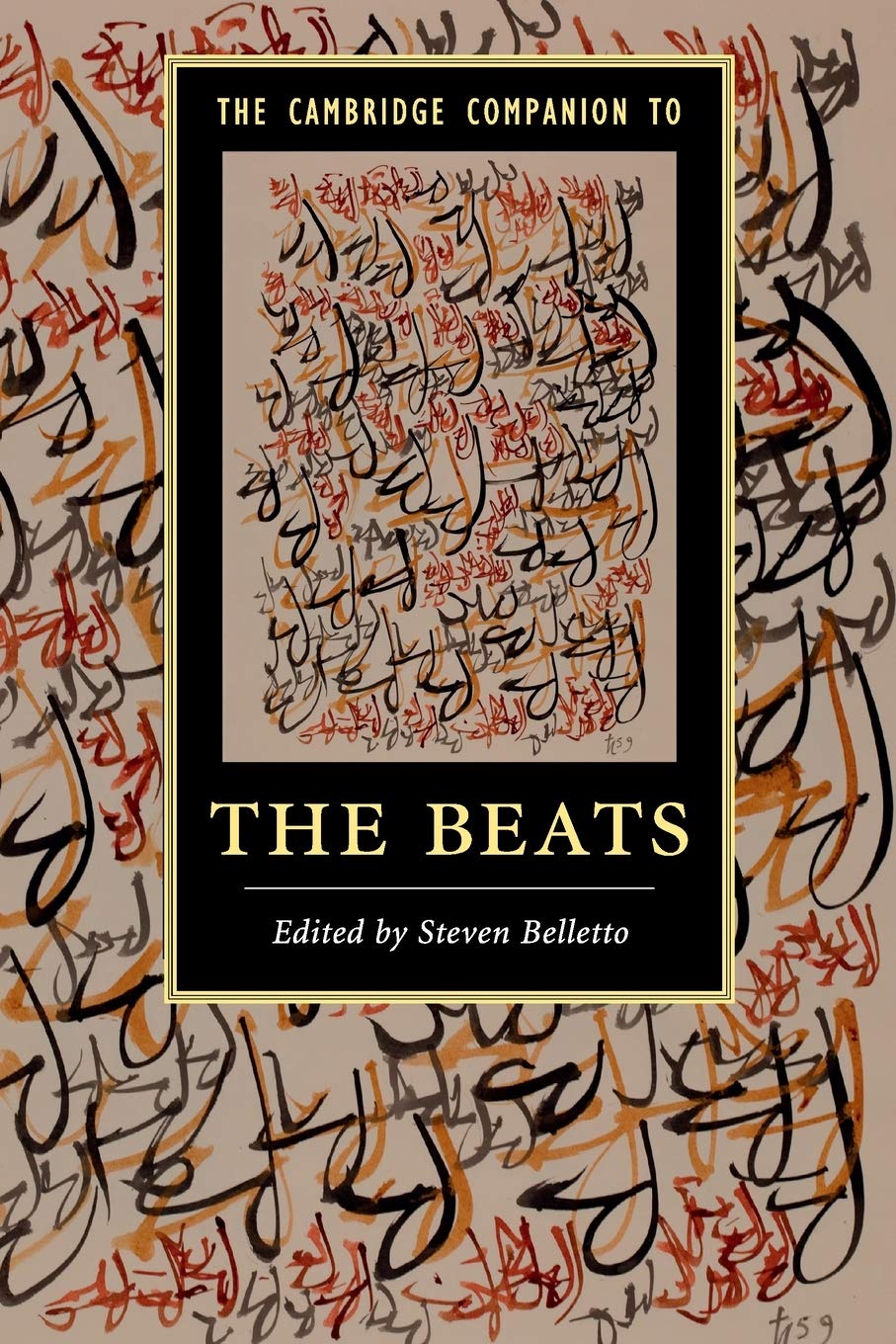
The Cambridge Companion to the Beats (Cambridge Companions to Literature)
$25.95
by Steven Belletto



The Cambridge Companion to the Beats offers an in-depth overview of one of the most innovative and popular literary periods in America, the Beat era. The Beats were a literary and cultural phenomenon originating in New York City in the 1940s that reached worldwide significance. Although its most well-known figures are Jack Kerouac, Allen Ginsberg, and William S. Burroughs, the Beat movement radiates out to encompass a rich diversity of figures and texts that merit further study. Consummate innovators, the Beats had a profound effect not only on the direction of American literature, but also on models of socio-political critique that would become more widespread in the 1960s and beyond. Bringing together the most influential Beat scholars writing today, this Companion provides a comprehensive exploration of the Beat movement, asking critical questions about its associated figures and arguing for their importance to postwar American letters. To encompass the breadth and depth of Beat studies for a diverse audience is a complex task and difficult task. The Cambridge Companion to the Beats will be beneficial as a guide both to students new to the topic and toseasoned Beat scholars. Taken together, the essays offer anauthoritative and nuanced overview with some original and freshinterpretations, frequently examining the more difficult andsophisticated questions of craft and criticism essential to any widerappreciation of the Beats in literary history. John Wrighton , Notes and Queries To encompass the breadth and depth of Beat studies for a diverse audience is a complex task and difficult task. The Cambridge Companion to the Beats will be beneficial as a guide both to the strongest chapters in the Cambridge Companion maintain a critical distance from the hyperbolic force of Beat mythology whiledirectly engaging with questions of how "Beat" can be defined andunderstood. . . . The strongest writing found in the Cambridge Companion . . . sets a standard of analysis that helps separate Beat scholarshipfrom repetition of received wisdom or enthrallment to Beat myth. Thom Robinson, Twentieth Century Literature a comprehensive collection of academic essays that covers multipleaspects of the literature of the Beat generation. The eighteen essays in this volume reach well beyond the traditional triumvirate of Burroughs, Ginsberg and Kerouac to explore the impact of other writers andartists. . . . [a] comprehensive volume.Allan Johnston, Journal of Beat Studies This work . . . goes above and beyond. . . . A necessary resource for anyone interested in 20th-century American letters. Highly Recommended. A.P. Pennino, Choice This Companion offers an in-depth overview of the Beat era, one of the most popular literary periods in America. Steven Belletto is Associate Professor of English at Lafayette College, Pennsylvania. He is author of No Accident, Comrade: Chance and Design in Cold War American Narratives (2012), co-editor of American Literature and Culture in an Age of Cold War: A Critical Reassessment (2012) and editor of the volume American Literature in Transition, 1950-1960 (Cambridge, forthcoming). He is also the author of numerous articles on post-1945 American literature and culture that have appeared in journals such as American Literature, American Quarterly, ELH, and Twentieth-Century Literature. From 2011 to 2016 he was Associate Editor for the journal Contemporary Literature, for which he is currently editor.