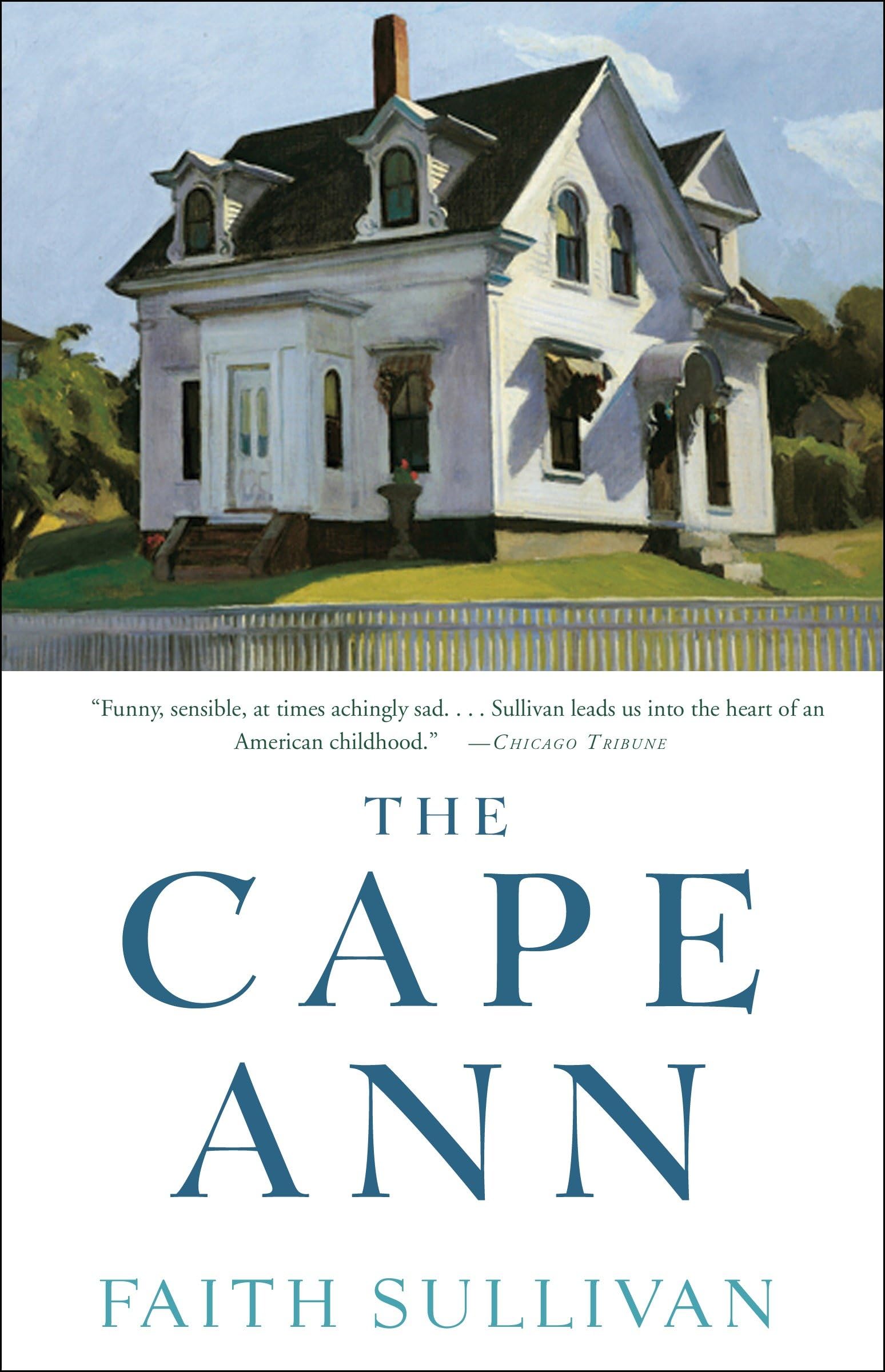



A disarmingly involving portrait of a family struggling to stay together through the Great Depression, The Cape Ann is an unforgettable story of life from a child’s-eye view. Lark Erhardt, the six-year-old narrator of The Cape Ann , and her fiercely independent mother dream of owning their own house; they have their hearts set on the Cape Ann, chosen from a house catalog. But when Lark’s father’s gambling threatens the down payment her mother has worked so hard to save, Lark’s mother takes matters into her own indomitable hands. “ The Cape Ann is the first-person story of a child’s loss of innocence, of a growing awareness of just how complex life can be.” — Washington Post Book World “The childish narrator is sweet and touching, without being sappy, and we believe her every recollection of life in a small Minnesota town at the end of the Depression.” — New York Times Book Review “Sullivan has written a fascinating, original novel.” — Minneapolis Star Tribune “Funny, sensible, at times achingly sad … Sullivan leads us into the heart of an American childhood.”— Chicago Tribune Faith Sullivan is the author of several novels including Gardenias , What a Woman Must Do , and Good Night, Mr. Wadehouse . She lives in Minneapolis with her husband, Dan. 1 "Next year at this time, I want carpenters working on our house," Mama said. Papa said nothing. He was reading the paper while Mama made supper. We were having fried pork chops, mashed potatoes with gravy, and Monarch brand canned peas. Mama had baked a couple of apple pies that morning. She never made fewer than two. Papa couldeat almost a whole pie at a sitting. Mama liked to bake pies, and everyone said she was the best pie baker in Harvester, Minnesota. "That's because the crust is thin and crisp," she had explained to me, "and the filling isn't runny." She'd added quickly, "But I never use tapioca or cornstarchto thicken up the fruit pies." Her tone implied that moral turpitude was responsible for pies with tapioca or cornstarch. Mama's hair was in pin curls because she was going to her bridge club after supper. Bridge club met every other week on Friday. Tonight Bernice McGivern was hostess. Mama carried the platter of chops and the bowl of peas to the table, then returned to the stove for the potatoes and gravy. Seating herself, she filled my plate, mashed potatoes first. I scooped out a well in the center for the gravy, and she took careto pour it into the depression. Mindfully laying my chop to one side of the potatoes, she spooned peas onto the other. Papa folded the paper and put it on the floor under his chair. Taking up his fork, he reached across and dragged the tines through my potatoes, laying waste to the dam. Then he laughed as though it were a great joke, which only Mama and I would fail tosee. "Why did you do that, Willie? You know she likes to save the potatoes for last." "For Christ's sake, Arlene. You gonna pick a fight over mashed potatoes?" he asked, continuing to laugh. Papa laughed a good deal, and everyone said he was a good-natured fellow. A real sport, they said. Mama set her jaw and passed him the chops. With my fingers and my spoon, I shored up the ravaged well. "Don't use your fingers, Lark," Mama admonished. Mama had chosen the name Lark. Lark Browning Erhardt. Browning was Mama's maiden name. Papa had wanted to call me Beverly Mary; Mary after the Blessed Virgin. Mama said she wouldn't hang a name like Beverly Mary on a pet skunk. Where she got the idea forLark, I don't know, although one time when I asked, she said that larks flew high and had a happy song. When Mama told Father Delias that I was going to be named Lark Browning, he said it wouldn't do; I had to have a saint's name. Mama, who was a convert, didn't understand that but she went along. On my baptismal certificate I was Lark Ann Browning Erhardt. Mama hated her own name, Arlene. "Arlene, Marlene, Darlene, they're all hayseed names," she deplored. Even more than Arlene, she hated "Lena," which she'd been called in school, growing up. Once when Papa called her Lena, just to get her goat, she threwa mustard jar at him. Rising, Mama came around to my side of the table, took my knife and fork, and helped me to cut my chop. "Next year at this time, I want carpenters working on our house," she repeated. It was the same thing she'd said earlier, the same thing she'd saida hundred times. Returning to her chair, she warned, "I won't go on living in this place. If we don't have carpenters building our house next year, I'm setting a match to this dump." She rose to fetch the coffee pot. "There are plenty of people in this townwho own their own homes, and they don't make as much money as you do," she told Papa, pouring coffee into his cup, then into her own. "What do I care what plenty of people do?" he asked, stirring cream into his coffee. Mama set the pot on the stove with a bang. "I'm seriou