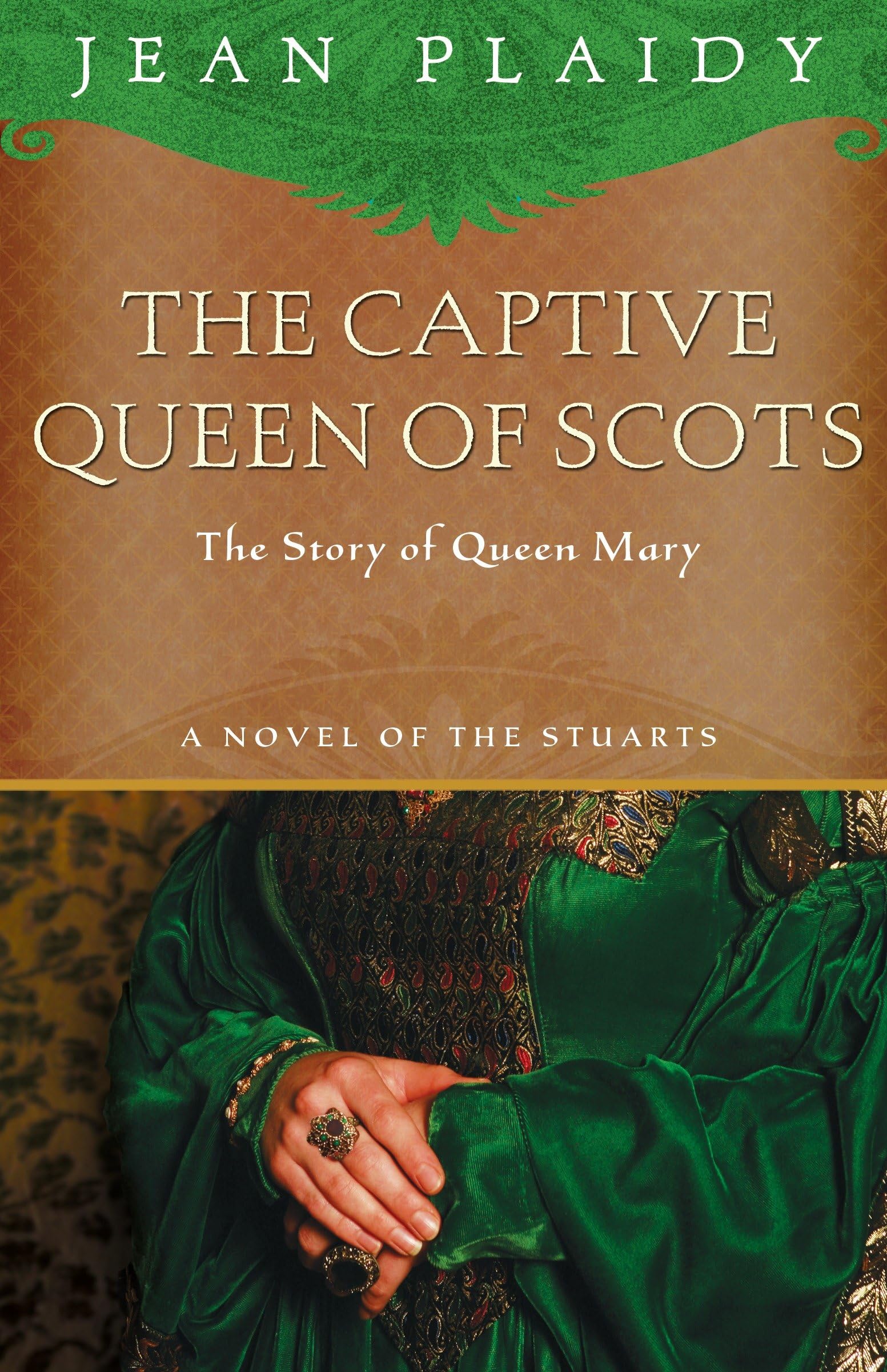
The Captive Queen of Scots: Mary, Queen of Scots (A Novel of the Stuarts)
$12.33
by Jean Plaidy



“Plaidy excels at blending history with romance and drama.”— The New York Times “Burn the murderess!” So begins The Captive Queen of Scots, the epic tale of the Scottish Queen Mary Stuart, cousin to Queen Elizabeth of England. After her husband, Lord Darnley, is murdered, suspicion falls on Mary and her lover, the Earl of Bothwell. A Catholic in a land of stern Protestants, Mary finds herself in the middle of a revolt, as her bloodthirsty subjects call for her arrest and execution. In disgrace, she flees her Scottish persecutors for England, where she appeals to Queen Elizabeth for mercy, but to no avail. Throughout Mary’s long years as the Queen’s prisoner, she conceives many bold plans for revenge and escaping to freedom—but the gallows of Fotheringhay Castle loom . . . Set against royal pageantry, religious strife, and bloody uprising—and filled with conspiracies, passion, heartbreak, and fascinating historical detail— The Captive Queen of Scots is an unforgettable tale of the intense rivalry between two powerful women of noble blood. JEAN PLAIDY is the pen name of the prolific English author Eleanor Hibbert, also known as Victoria Holt and Philippa Carr. More than 14 million copies of her books have been sold worldwide. Lochleven In the castle of Lochleven which was built on an island in the middle of the loch an exciting expectancy prevailed. All through the day, the serving men and maids had been aware that they must prepare for an important visitor, and rumor had seeped through to them that this was none other than the captive Queen. Ears were strained for the sounds of arrival; eyes continually turned to the strip of water which separated the island from the mainland on which could be seen the roofs of the houses of Kinross. She would embark there and the boat was ready, waiting for her. The castellan of the castle, Sir William Douglas, was uneasy; he did not relish the responsibility which had been given him; he foresaw trouble. Yet it was a commission which he dared not refuse; he should, he supposed, have been grateful because his half-brother, James Stuart, Earl of Moray, would wish him to be the Queen's jailor. Yet he knew that a tense and stormy period lay before him. Wherever Mary Stuart was, there was trouble; it was hardly likely that Lochleven would escape it. Now he was waiting for her arrival which surely could not long be delayed; and he decided that once more he must impress upon his mother the importance of the task which had been given them; and for this reason he made his way to her apartments. He found her seated at a window; like most people in the castle she was gazing out across the lake, and with her was William's younger brother George. Margaret Douglas looked eagerly at her elder son as he entered. He noticed with a twinge of jealousy that she looked younger than she had before they had received the news. He knew the reason; it was because, by keeping the Queen a prisoner at Lochleven, she would be serving Moray. Why had he felt the need to warn her of the importance of this duty when all that she did for Moray she would do well? "Is there news?" she asked, and the animation on her beautiful, though aging face, was startling. William shook his head. "I trust all will be well. Jamie will expect us to do our duty." "We shall do it, have no fear of that," William replied. He might have reminded her that Moray--now that the Queen was a captive--was the most influential man in Scotland, that before long he would be the ruler of Scotland, which was what he had always intended to be. If one hoped to live in peace in Scotland, one must obey Moray; he, William Douglas, castellan of Lochleven since the death of his father, Sir Robert Douglas, would have been prepared to do that even if Moray had not been his half-brother, and his mother's bastard. "Jamie will expect us to do this duty well," went on Margaret Douglas complacently. Young George clenched his hands in disgust; he was eighteen, romantic, and chivalrous and could not bear to contemplate his mother's dishonor. As for Margaret she was unaware of any dishonor, for in her opinion there was nothing but honor in bearing the bastard of a King. Often she delighted in Jamie's resemblance to his father. She had not been the only woman to catch the roving eye of James V of Scotland and to offer the world living proof of what had passed between them. To her he had been faithful for a while and she would never forget that. She had been jealous of the others. How she had hated Euphemia Elphinstone when he had borne the King her son Robert; not that Robert was the only one. James was a King who could be gay and melancholy, and when he was gay he was very gay; there had been numerous known bastards, and even James did not know how many unknown ones. Yet, she thought wistfully, all the Stuart charm was his and to have known it was to have drunk deep of pleasure. There were no regrets. And when she looked at her Jamie-