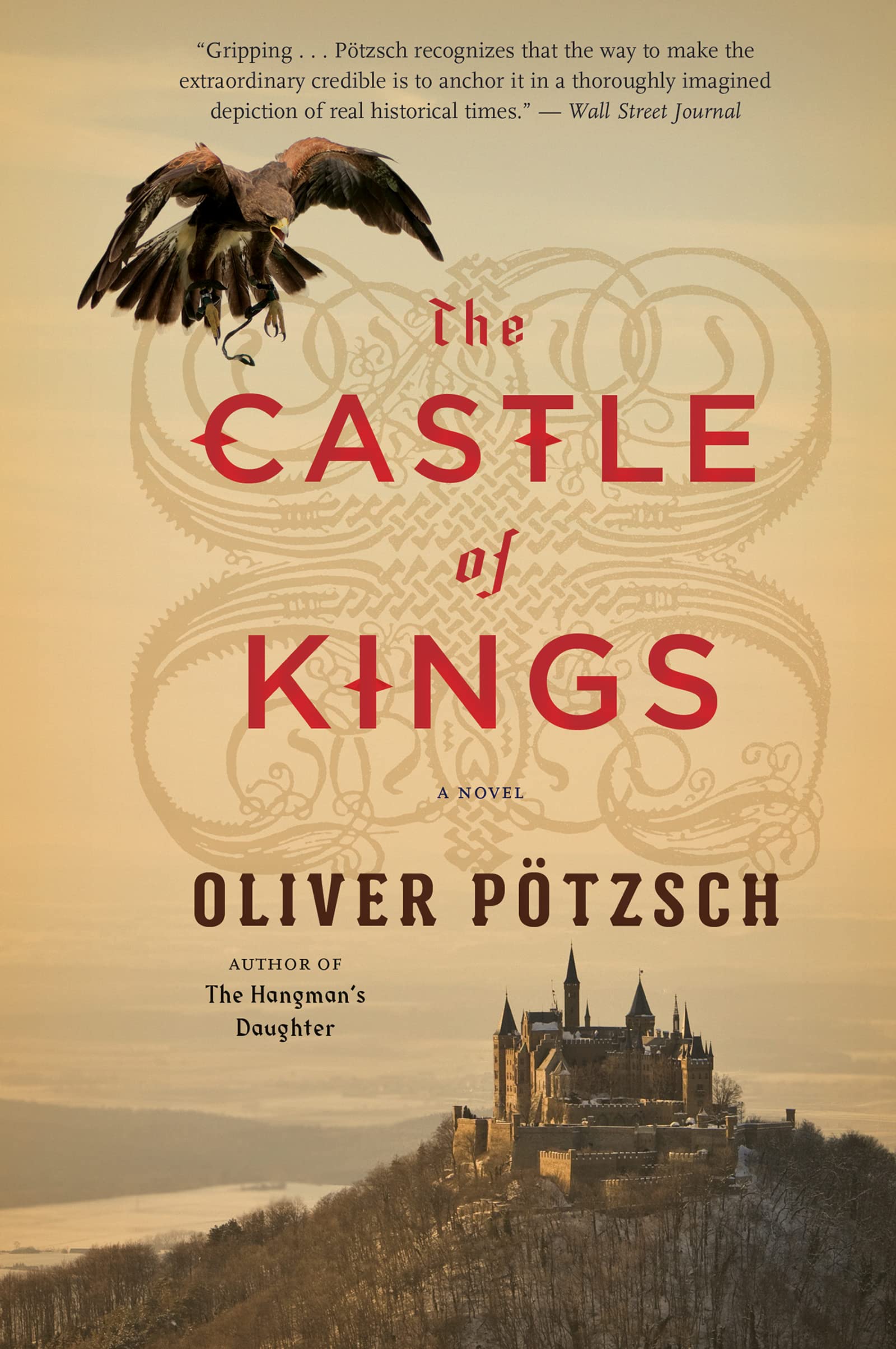
The Castle Of Kings: An Epic Historical Thriller of Mystery, Forbidden Love, and Adventure in 16th Century Germany
$15.99
by Oliver Pötzsch



An epic standalone novel of historical fiction tinged with mystery, set against the backdrop of medieval Germany's Peasant War from the best-selling author of the Hangman’s Daughter series. In 1524, in what is now Germany, hundreds of thousands of peasants revolted against the harsh treatment of their aristocratic overlords. Agnes is the daughter of one of these overlords, but she is not a typical sixteenth-century girl, refusing to wear dresses and spending more time with her pet falcon than potential suitors. There is only one suitor she is interested in: Mathis, a childhood friend whom she can never marry due to his low birth status. In the midst of war, Agnes’s falcon finds a mysterious ring, and Agnes begins having strange but seemingly meaningful dreams. Dreams that lead her and Mathis to run away from their home in Trifels Castle and into the midst of the tumultuous Peasants’ War, cast into an adventure that will lead them to shocking revelations about themselves and the future of the emerging German states. “Pötzsch paints picturesque landscapes, whether it’s damp, dark castles, the stink of a medieval tannery, or whirlpool-plagued Rhine River rapids . . . Combine Princess Bride with Germanic history circa 1500, add a dash of Lord of the Rings, and there’s a week of good fun.” ― Kirkus Reviews “The war scenes are grimly realistic, and the narration gripping . . . The author makes the fantastical elements work by harnessing them to the grim reality of the Peasants’ War, setting his far-fetched romance in an utterly convincing world of economic hardship, social strife and religious and political uncertainty.” ― Wall Street Journal “Mr. Pötzsch is the author of a sequence of five novels, collectively known as ‘The Hangman’s Daughter,’ which have sold half a million copies in English translation. ‘The Castle of Kings’ is likely to enjoy similar success—and deserves it . . . The war scenes are grimly realistic, and the narration gripping . . . The author makes the fantastical elements work by harnessing them to the grim reality of the Peasants’ War, setting his far-fetched romance in an utterly convincing world of economic hardship, social strife and religious and political uncertainty. Oliver Pötzsch recognizes that the way to make the extraordinary credible is to anchor it in a thoroughly imagined depiction of real historical times.” -- The Wall Street Journal “Combine Princess Bride with Germanic history circa 1500, add a dash of Lord of the Rings, and there's a week of good fun . . ." -- Kirkus Reviews Born in 1970, Oliver Pötzsch is the New York Times bestselling author of The Hangman’s Daughter series and the Leopold von Herzfeldt series and has worked for years as a scriptwriter for Bavarian television. A descendant of one of Bavaria’s leading dynasties of executioners, Pötzsch lives in Munich with his family. Book One: Dark Clouds March to June 1524 1 Queichhambach, near Annweiler in the Wasgau, 21 March, Anno Domini 1524 Did the boy whose neck the hangman was fitting the noose around look any older than Mathis? Probably not. He was trembling all over, and fat tears ran down his cheeks, smeared already with snot and grime. From time to time the lad let out a sob; apart from that he seemed reconciled to his fate. Mathis guessed that he was about sixteen summers old, with the first downy hair growing above his lip. The boy had probably been proud of it, and had used it to impress the girls, but now he would never go chasing girls again. His short life was over before it had really begun. The two men beside the boy were considerably older. Their shirts and hose were dirty and torn, their hair stood out untidily from their heads, and they were murmuring soundless prayers. All three stood on ladders propped against a wooden plank that had suffered from wind and weather. The Queichhambach gallows were massive and solidly built, and all local executions had taken place here for many decades, though recently there had been more and more of them. The last few years had brought winters that were too cold and summers that were too dry. Plague and other epidemics had afflicted the countryside. Hunger and oppressive feudal dues had driven many of the peasants of the Palatinate into the forests, where they joined bands of robbers and poachers. The three at the gallows had been caught red-handed poaching, and now they were about to pay the price. Mathis stood a little way from the gaping crowd that had assembled to watch the execution this rainy morning. The hill where the gallows stood was a good quarter of a mile from the village, but close enough to the road leading to Annweiler for travelers to get a good view. Mathis had been delivering some horseshoes ordered by the village steward of Queichhambach from Mathis’s father, the castle blacksmith at Trifels, but he happened to pass the gallows hill on the way back. He had meant to go on along the road ?— ?aft