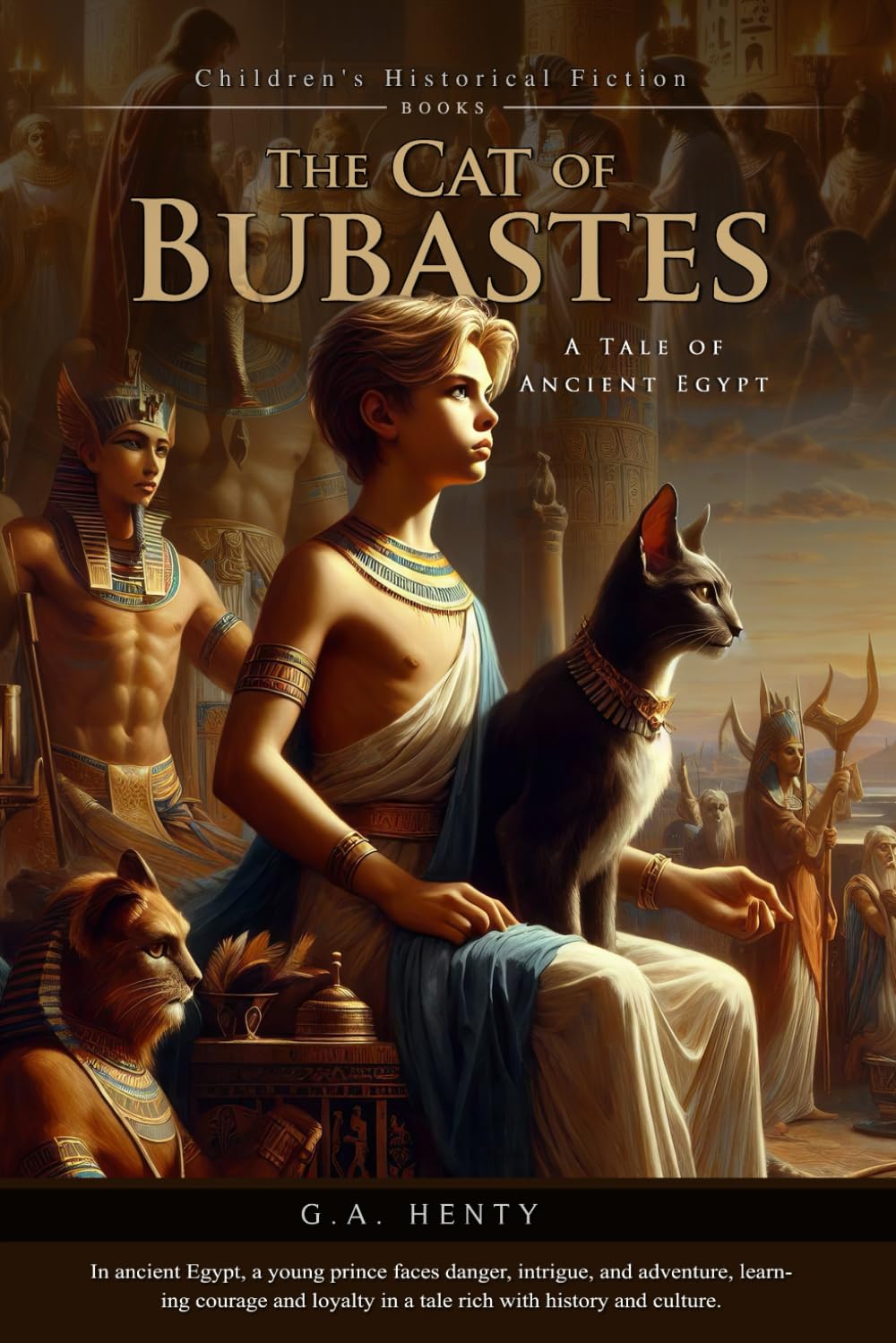
The Cat of Bubastes: A Tale of Ancient Egypt (Complete with Illustrated and Annotated
$10.99
by G.A. Henty



"The Cat of Bubastes: A Tale of Ancient Egypt" is a historical adventure novel written by G.A. Henty and set in the grandeur and mystery of ancient Egypt during the reign of Pharaoh Thothmes III. First published in 1889, the novel combines vivid descriptions of Egyptian civilization with a powerful story of faith, friendship, honor, and courage. It is especially known for its rich historical detail, moral lessons, and strong Christian undertones. The story follows a young prince named Amuba, heir to the Rebu people, a tribe from Asia Minor who are conquered by the Egyptians. After the defeat of his people, Amuba is taken as a captive along with his faithful servant and mentor, Jethro. They are brought to Egypt and made slaves in the household of Ameres, the high priest of Osiris in the city of Bubastes. Despite his captive status, Amuba is treated with kindness and receives a quality education, learning the ways, language, and customs of the Egyptians. Amuba quickly becomes close friends with Chebron, the son of Ameres. The two boys share a mutual respect for learning and ethics, and their friendship bridges cultural and spiritual divides. Chebron, despite being the son of a high priest in a polytheistic society, expresses doubts about the many gods of Egypt and shows an interest in the concept of one true God—a clear nod to monotheistic and especially biblical themes that Henty weaves into the narrative. The turning point in the story comes when a sacred cat—an animal revered in Egyptian religion—is accidentally killed. Since harming or killing a sacred animal is considered a grave offense in Egyptian law, Chebron and Amuba find themselves in mortal danger. Despite the accident, religious zealots and enemies of Ameres seek to use the event to discredit and destroy the priest's family. Tragedy strikes when Ameres is falsely accused and executed, and the boys are forced to flee for their lives. Thus begins a perilous journey filled with suspense and hardship. Amuba, Chebron, and Jethro face numerous threats as fugitives, including betrayal, pursuit by Egyptian soldiers, desert hardships, and the need to hide their identities. Along the way, they encounter both friends and enemies, and each experience tests their bravery, morality, and loyalty to one another. Throughout the journey, Jethro serves as a guiding moral force. A wise and courageous man of Hebrew origin, he quietly teaches principles of justice and monotheism. His influence is especially significant in Chebron’s spiritual journey as he questions the idols of Egypt and begins to believe in a single, sovereign God. The boys eventually reach the land of the Rebu, where Amuba regains his rightful position as prince and is reunited with his people. Chebron, now a believer in one God, chooses to return with Jethro to live a life guided by faith rather than power or status. Their shared experience cements a lifelong bond, shaped by truth, suffering, and the pursuit of higher ideals. Henty uses this adventure as a vehicle to explore several major themes: the clash between religious belief and state dogma, the virtues of courage and loyalty, and the triumph of truth over superstition. He portrays ancient Egypt with colorful imagery—its temples, palaces, rituals, and hierarchies—and balances action and introspection in a story designed for young readers, especially boys, in the Victorian era.