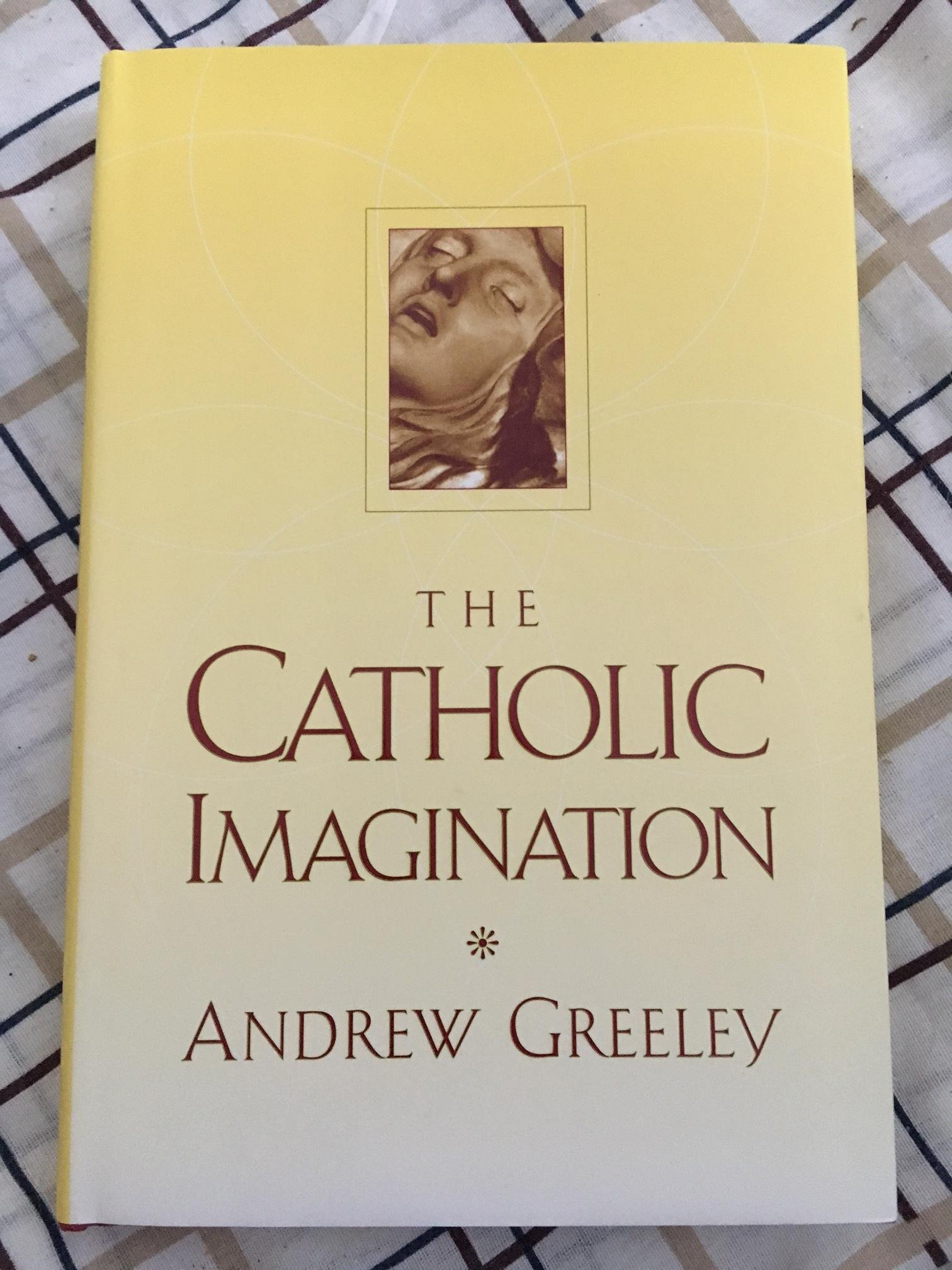



Catholics live in an enchanted world: a world of statues and holy water, stained glass and votive candles, saints and religious medals, rosary beads and holy pictures. But these Catholic paraphernalia are merely hints of a deeper and more pervasive religious sensibility that inclines Catholics to see the Holy lurking in creation. The world of the Catholic is haunted by a sense that the objects, events, and persons of daily life are revelations of Grace. In this fascinating discussion of what is unique about the Catholic worldview and culture and what distinguishes it from Protestantism, Andrew Greeley--one of the most popular and prolific authors writing today--examines the religious imagination that shapes Catholics' lives. In a lively and engaging narrative, Greeley discusses the central themes of Catholic culture: Sacrament, Salvation, Community, Festival, Structure, Erotic Desire, and the Mother Love of God. Ranging widely from Bernini to Scorsese, Greeley distills these themes from the high arts of Catholic culture and asks: Do these values really influence people's lives? Using international survey data, he shows the counterintuitive ways in which Catholics are defined. He goes on to root these behaviors in the Catholic imagination. As he identifies and explores the fertile terrain of Catholic culture, Greeley illustrates the enduring power of particular stories, images, and orientations in shaping Catholics' lived experience. He challenges a host of assumptions about who Catholics are and makes a strong case for the vitality of the culture today. The Catholic imagination is sustained and passed on in relationships, the home, and the community, Greeley shows. Absorbing, compassionate, and deeply informed, this book provides an entirely new perspective on the nature and role of religion in daily life for Catholics and non-Catholics alike. The Catholic Imagination is Andrew Greeley's attempt to summarize what is unique about Catholic culture. "Catholics live in an enchanted world, a world of statues and holy water, stained glass and votive candles, saints and religious medals, rosary beads and holy pictures," Greeley writes. "But these Catholic paraphernalia are mere hints of a deeper and more pervasive religious sensibility which inclines Catholics to see the Holy lurking in creation." In seven chapters, The Catholic Imagination considers some of the central themes of Catholic culture--sacrament, salvation, community, festival, hierarchy, erotic desire, and the mother love of God--particularly as they have been treated by Catholic artists. The book's theological and aesthetic observations gain force from its sociological insights. (Greeley teaches Sociology at the University of Chicago and the University of Arizona.). Read the chapter on "Sacred Desire" first. There's good stuff here on Bernini (later in the book he moves on to Scorsese, Mozart, and others); but even more fascinating is Greeley's empirical evidence that "Catholics have sex more often, they are more playful in their sexual encounters, and they enjoy sex more [than other Americans]." Greeley has written an "extended essay" in which he maintains that Catholics (both practicing and supposedly lapsed) have developed a religious imagination that inclines them to see the Holy lurking in all corners of creation. Greeley proposes that such religious imagination produces a sense of enchantment, which is reflected in high and not-so-high culture, in religious devotion, in community structures and relationships, and even in sexual enjoyment. This is not a new proposal for Greeley; he has been writing about it for the last dozen years or so. But this essay gives him the chance to pull many aspects together into a single coherent piece. Unfortunately, Greeley uses the book's format as an extended opinion piece to excuse himself from theological precision, and he continues his unsavory habit of resorting to jargon ("K?ln" and "Dom" rather than "Cologne" and "Cathedral," for example) to dress up his argument. Recommended for larger libraries and for those where Greeley's name will assure good circulation. -David I. Fulton, Our Lady of Victories Church, Baptistown, NJ Copyright 2000 Reed Business Information, Inc. Although more widely known for his best-selling novels, Greeley is a Catholic scholar and sociologist of depth and insight. In attempting to describe and analyze the unique, often mysterious culture of Catholicism, Greeley explains that the Catholic imagination is fueled by the presence of the divine in daily life. For Catholics all reality is sacramental, and even tactile objects are infused with grace, serving as concrete symbols of God's overwhelming love. Drawing parallels between Catholic high culture and Catholic popular culture, he finds evidence of the pervasive mysticism and enchanted imagination that infuse the collective Catholic soul in devotional practices embracing Mary, angels, souls in purgatory, statues, holy water,