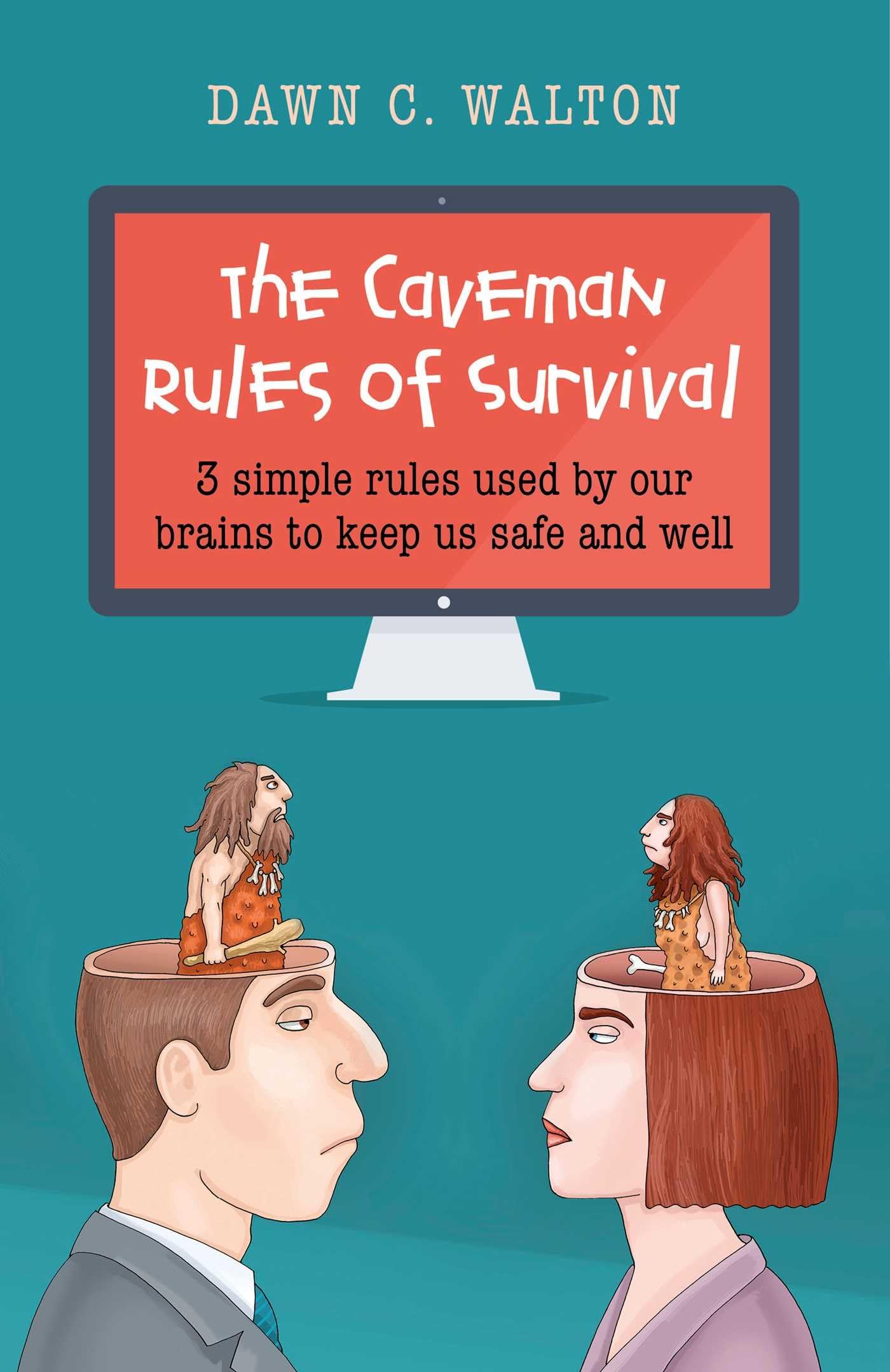
The Caveman Rules of Survival: 3 Simple Rules Used By Our Brains to Keep Us Safe and Well
$16.95
by Dawn C. Walton



The subconscious is overdue a software upgrade. This primitive and emotional part of your brain follows rules for keeping you safe and well based on the caveman days, where sabre-toothed tigers and other predators were the biggest threat. If you have ever had a battle going on in your head between what you believe you want to do, and the part of you that seems to hold you back, then this book is for you. Dawn Walton was born in North Wales in 1972. She is now a happily married mother of one girl and is a full-time Cognitive Hypnotherapist with her own practice in Dundee, Scotland. The Caveman Rules of Survival 3 Simple Rules Used by Our Brains to keep Us Safe and Well By Dawn C. Walton John Hunt Publishing Ltd. Copyright © 2014 Dawn C. Walton All rights reserved. ISBN: 978-1-78279-757-9 Contents Foreword, Introduction, The Subconscious and the Rulebook, The New Kid on the Block, The Subconscious is Like a Petulant Child, Writing the Rulebook, Child vs Adult Understanding, Caveman Rule Number 1 – React First or You'll Die!, Fight, Flight, Freeze, If Something Upsets You, You Are Going to Die!, Everything is a Sabre-Toothed Tiger, Why Me?, Getting Rid of the Trigger, Fooling the Child – Treating Fears as Real, Caveman Rule Number 2 – If Your Parents Don't Love You, You'll Die!, The Connection Between Caveman Rule Number 2 and Weight, Getting Rid of the Trigger, Fooling the Child – I Love You Even If ..., Caveman Rule Number 3 – If You Are Not Part of a Pack, You Will Die, We Can't Read Minds, The Connection Between Caveman Rule Number 3 and Weight, The Boy/Girl Issue, Getting Rid of the Trigger, Fooling the Child – Flip It!, Trauma – The Exception to the Rulebook, Birth Trauma, Childhood Trauma, What About the Other 10%?, Increasing Your Willpower and Self-control, Practical Steps to Taking More Control, So What?, In the DNA, In the Cells, Some Other Way?, Books That Inspired Me, CHAPTER 1 The Subconscious and the Rulebook Are you scared of spiders? If you're not, I bet you know someone who is. In the UK the top two phobias are spiders and snakes. The irony of this is that there are no venomous spiders in the UK and almost no snakes. Most people will never see a snake in the wild in their lifetime. Now think about the situation in which someone is scared of spiders. Is his behaviour normal? Is that person, when in fear, the same as he is when he is not in fear? A friend once described his male friend as being "a big girl" because when he saw a spider, he freaked. Clearly he was not himself. He was under the control of his subconscious, which is the part of the brain that is not rational; it is emotional and responsible for keeping you safe from harm. That part of his brain saw the spider as a threat. This altered state is typically referred to as a trance state by hypnotherapists and psychologists. This seemingly strong and together male lost it when confronted with a tiny creature that can easily be squished with a boot. If only fear was a rational thing! The reality is, whenever you are behaving in a way you would consciously choose not to, then you are in a trance state (i.e., your subconscious is in control). Have you ever driven through a set of traffic lights only to wonder if the light was actually on green? Trance. Have you ever walked out of your front door only to get halfway down the street and wonder if you really locked it? Trance. It's been said your subconscious is in charge for 90% of the day. Actually, some say that it's in control for 95% of the day, but I find it hard to believe we have so little control, even though I know it may well be right. Anyway I guess 5% is neither here nor there in the grand scheme of things. The point is that you are not the boss of you; your subconscious is. I suppose if that's the way it's meant to be, then there really shouldn't be a problem. However, let's consider for a moment the role of your subconscious. It's pretty simple really. The role of the subconscious is to do whatever is necessary to protect you and keep you alive. It is a primitive and emotional part of your brain, which is a bit of a problem when you consider how much of the time it is the boss of your actions! Consider for a moment the difference between animals and humans. Animals are driven by their basic instincts. These can be summed up simply as eating and procreating. Everything in between is about recovery from those two things. Animals don't think and analyse stuff because they don't need to. They exist, and they react, and they stay alive and safe to the best of their abilities in the environment in which they live. An animal doesn't need a purpose or a reason to exist. They just live in the moment. If you were to put a wild animal in a situation where there was plenty of food, most wouldn't store it. (Those that do only do it for the purpose of hibernation.) Food is for eating. They don't need the ability to resist th