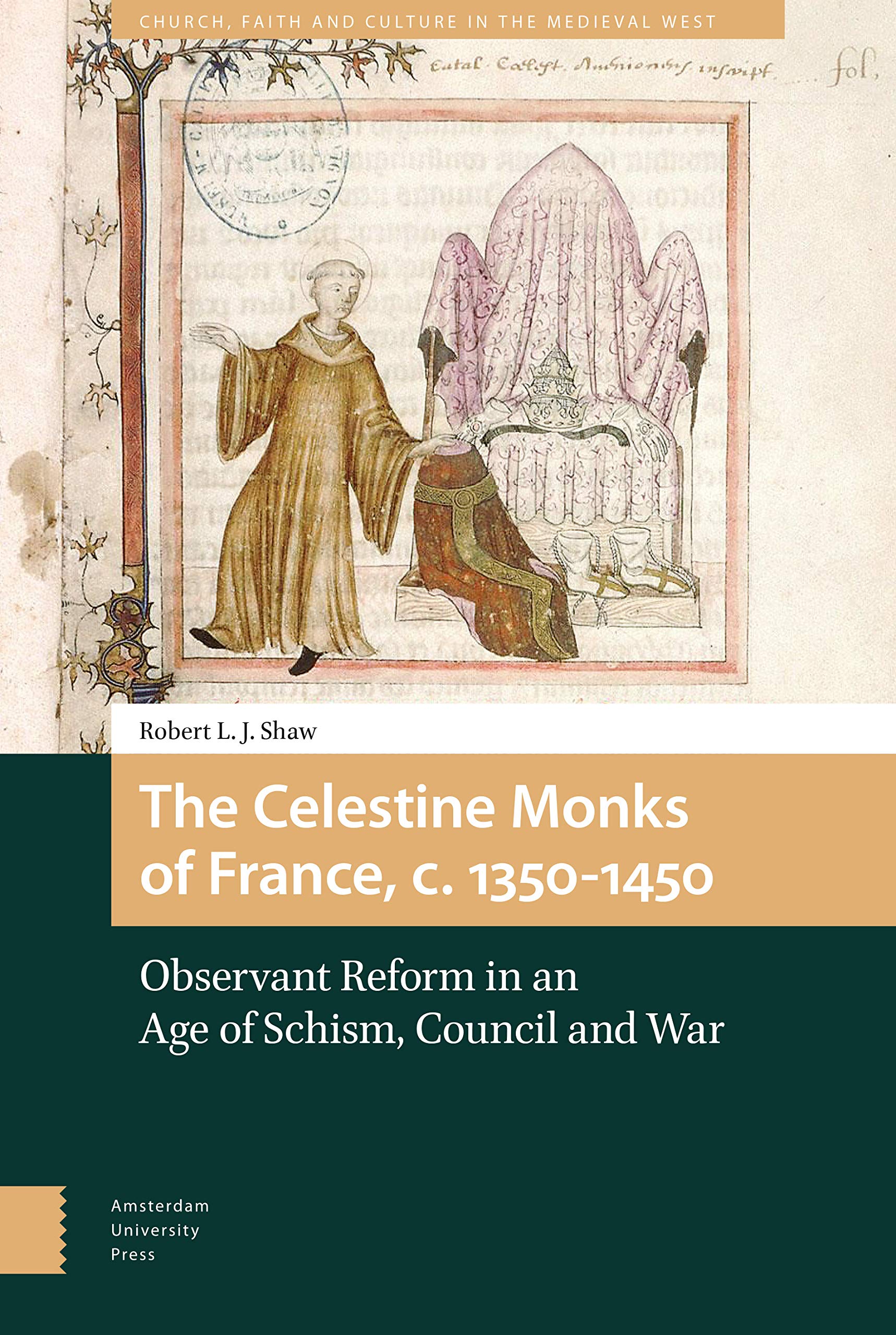
The Celestine Monks of France, c.1350-1450 (Church, Faith and Culture in the Medieval West)
$95.19
by Robert L.J. Shaw



The Celestine monks of France represent one of the least studied monastic reform movements of the late Middle Ages, and yet also one of the most culturally impactful. Their order - an austere Italian Benedictine reform of the late thirteenth century, which came be known after the papal name of their founder, Celestine V (St Peter of Murrone) - arrived in France in 1300. After a period of marginal growth, they flourished in the region from the mid-fourteenth century, founding thirteen new houses over the next hundred years, taking their total to seventeen by 1450. Not only did the French Celestines expand, they gained a distinctive character that separated them from their Italian brothers. More urban, better connected with both aristocratic and bourgeois society, and yet still rigorous and reformist, they characterised themselves as the 'Observant' wing of their order, having gained self-government for their provincial congregation in 1380 following the arrival of the Great Western Schism (1378-1417). But, as Robert L.J. Shaw argues, their importance runs beyond monastic reform: the late medieval French Celestines are a mirror of the political, intellectual, and Christian reform culture of their age. Within a France torn by war and a Church divided by schism, the French Celestines represented hope for renewal, influencing royal presentation, lay religion, and some of the leading French intellectuals of the period, including Jean Gerson. "This is a concise monograph on the development in the French territories of the late medieval Benedictine reform congregation known as the Celestines. [...] The great merit of this study is the way it weaves the French Celestine experience into the tapestry of the French religious and political world." - Bert Roest, Radboud University Nijmegen, Speculum 96/3 (July 2021) "This book is an important contribution to the study of Observant reform, especially as a case study that cogently highlights the diversity that characterized reform’s many inflections. [...] Thanks to Shaw’s book, [the] influence [of the French Celestines] is more visible and accessible than before, as is the challenge of recovering religious life’s many neglected late-medieval stories." - James D. Mixson, H-France Review, Vol. 19 (2019) "With his book, Robert Shaw has tackled a significant research gap that he has begun to fill with many more far-reaching results, putting research on the Celestines on a completely new footing." - Robert Friedrich, H-Soz-Kult, July 2019 (Translated from German) The Celestine monks of France represent one of the least studied monastic reform movements of the late Middle Ages, and yet also one of the most culturally impactful. Their order - an austere Italian Benedictine reform of the late thirteenth century, which came to be known after the papal name (Celestine V) of its founder (Pietro da Morrone / St Peter Celestine) - arrived in France in 1300. After a period of limited growth, they flourished in the region from c.1350: they added thirteen new houses over the next hundred years, taking their total to seventeen by 1450. Not only did the French Celestines expand in this century, they gained a distinctive character that separated them from their Italian brothers. More urban, better connected with both aristocratic and bourgeois society, and yet still rigorous and reformist, they characterised themselves as the 'Observant' wing of their order, having gained self-government for their provincial congregation in 1380 following the arrival of the Great Western Schism (1378-1417). But, as Robert L.J. Shaw argues, their importance runs beyond monastic reform: the late medieval French Celestines are a mirror of the political, intellectual, and Christian reform culture of their place and time. Within a France torn by war and a Church divided by schism, the French Celestines represented hope for renewal, influencing royal presentation, lay religion, and some of the leading French intellectuals of the period, including Jean Gerson. The Celestine monks of France represent one of the least studied monastic reform movements of the late Middle Ages, and yet also one of the most culturally impactful. Their order - an austere Italian Benedictine reform of the late thirteenth century, which came to be known after the papal name (Celestine V) of its founder (Pietro da Morrone / St Peter Celestine) - arrived in France in 1300. After a period of limited growth, they flourished in the region from c.1350: they added thirteen new houses over the next hundred years, taking their total to seventeen by 1450. Not only did the French Celestines expand in this century, they gained a distinctive character that separated them from their Italian brothers. More urban, better connected with both aristocratic and bourgeois society, and yet still rigorous and reformist, they characterised themselves as the 'Observant' wing of their order, having gained self-government for their provincial congregation in