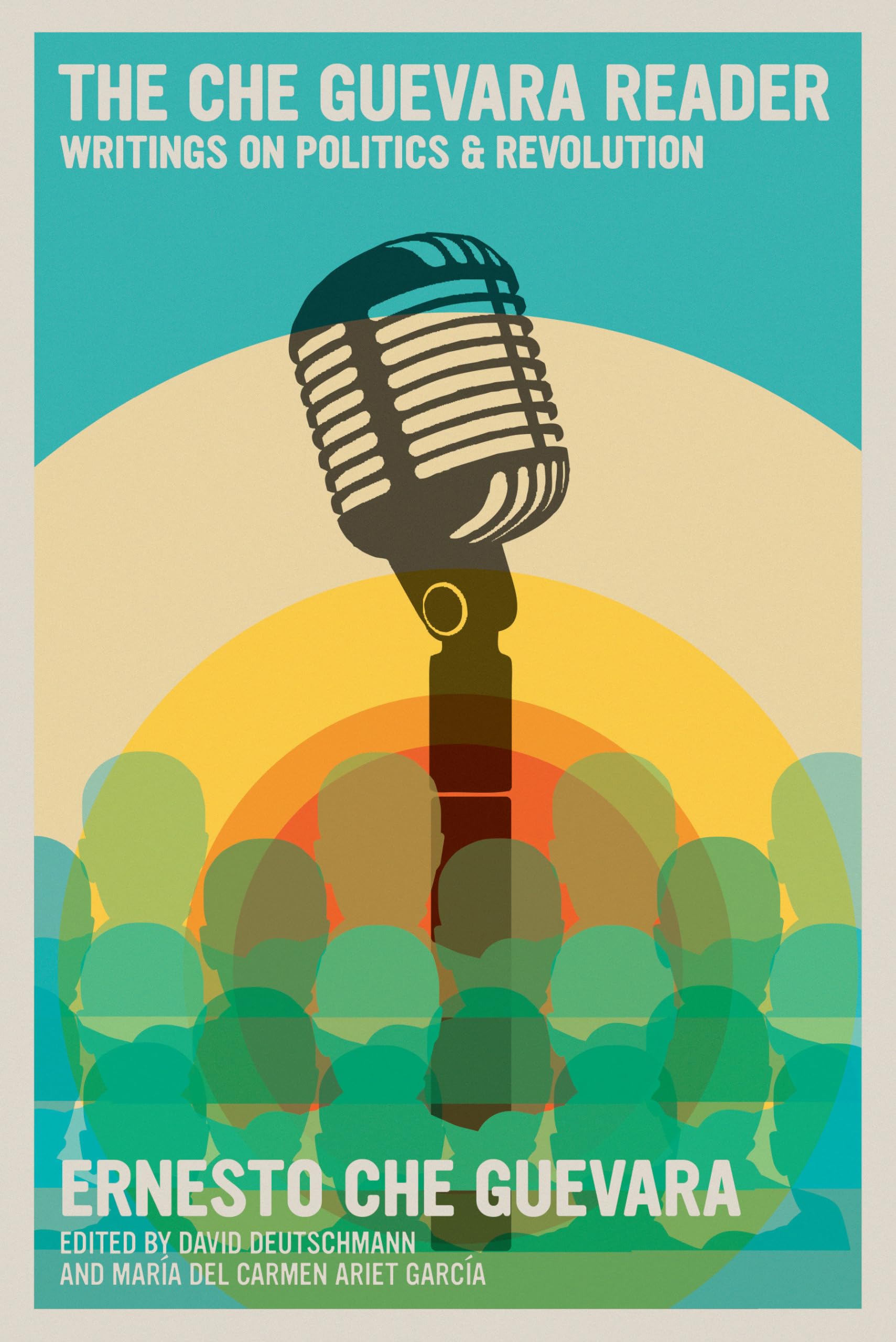
The Che Guevara Reader: Writings on Politics & Revolution (The Che Guevara Library)
$22.95
by David Deutschmann



Selected writings—speeches, essays, and letters—by one of the most widely known guerilla fighters, political theorists, and organizers, Che Guevara. Widely revered as a true revolutionary, this collection of writings from Ernesto Che Guevara highlight his principled politics and praxis in the fight against capitalism and US imperialism. Incisive speeches, critical essays, and personal letters not only serve as a primer of the Cuban revolutionary movement, but also analyze the importance of practicing international solidarity, reflect on violent resistance, and explicate the dangerous failures of capitalism. Accompanied by an extensive bibliography of Guevara's writing, a timeline of his life, and an all-encompassing glossary of individuals, organizations, and publications, the Che Guevara Reader provides insights into the historical, political, and cultural context for Guevara's radicalization. From some of his most famous speeches such as "Create Two, Three, Many Vietnams" to intimate, personal letters addressed to comrades around the world and his own children, this book extends Che's legacy and paints a stunning picture of a revolutionary struggling for a better world. "If I were to recommend one of Che’s books to readers who want an introduction to his bold ideas, dialectical thinking and his concise yet expressive style, I would recommend this one."—Jonah Raskin, Counterpunch ERNESTO GUEVARA DE LA SERNA was born in Rosario, Argentina, on June 14, 1928. While studying for a medical degree in Buenos Aires, he took a trip with his friend Alberto Granado on an old Norton motorcycle through all of Latin America, the basis for The Motorcycle Diaries . During his travels he witnessed the Bolivian revolution in 1953; and, in Guatemala in 1954, the overthrow of the democratically elected government of Jacobo Arbenz by US-backed forces. Forced to leave Guatemala, he went to Mexico City, where he linked up with exiled Cuban revolutionaries and met Fidel Castro in 1955. Che joined their expedition to Cuba, where the revolutionary war began in the Sierra Maestra mountains. At first Che was the troop doctor, and later became Rebel Army commander in July 1957. Following the rebels’ victory on January 1, 1959, he was a key leader of the new revolutionary government and also of the political organization that in 1965 became the Communist Party of Cuba. Introduction David Deutschmann This expanded edition of a book first published in 1997 on the 30th anniversary of Che Guevara’s death has a simple purpose: to make available to an English-reading audience a selection of articles, speeches and letters by Ernesto Che Guevara. It is not a biography nor a book of reminiscences by others — it is Che Guevara in his own words. In the almost four decades since his death, the world’s image of Che Guevara has become increasingly distorted and somewhat one-dimensional. The romanticized portrait known to many is that of the individual guerrilla fighter — heroic to some, to others an adventurer. His organic connection to the Cuban revolution fades in this picture. His work side by side with Fidel Castro for nearly a decade; his contributions to Marxist theory; his efforts as a government minister in the first years of the new Cuba after the overthrow of the Batista dictatorship; his tireless labor grappling with the problems of guiding the economic development of a backward country besieged and attacked by U.S. imperialism; his championing the interests of the people of Asia, Africa and Latin America — all this is missing from most popular portrayals of Che Guevara outside of Cuba. This is reflected in the fact that for two decades or more after his death his writings were largely unavailable in English. Several collections of speeches by Che were published in the 1960s, but most were long out of print. The 30th anniversary of his death saw several new biographies and many commentaries on his life and death, but still few efforts to publish the ideas of Che himself, in his own words. This book presents the political lessons drawn by Che Guevara from his experiences and the many tasks that he took on: as Rebel Army commander and strategist of guerrilla warfare; as a leader of the July 26 Movement, which played a central role in the overthrow of the U.S.-backed Batista dictatorship; as head of the National Bank and Ministry of Industry in the new government; as a forger of Cuba’s close ties with liberation movements throughout the African continent; and as a representative of the Cuban government on platforms throughout the world. In a speech given before one million people in Havana on October 18, 1967, at a memorial service for Che Guevara, Cuba’s Fidel Castro placed significant emphasis on the breadth of Guevara’s political contribution: “Those who attach significance to the lucky blow that struck Che down try in vain to deny his experience and his capacity as a leader. Che was an extraordinarily able militar