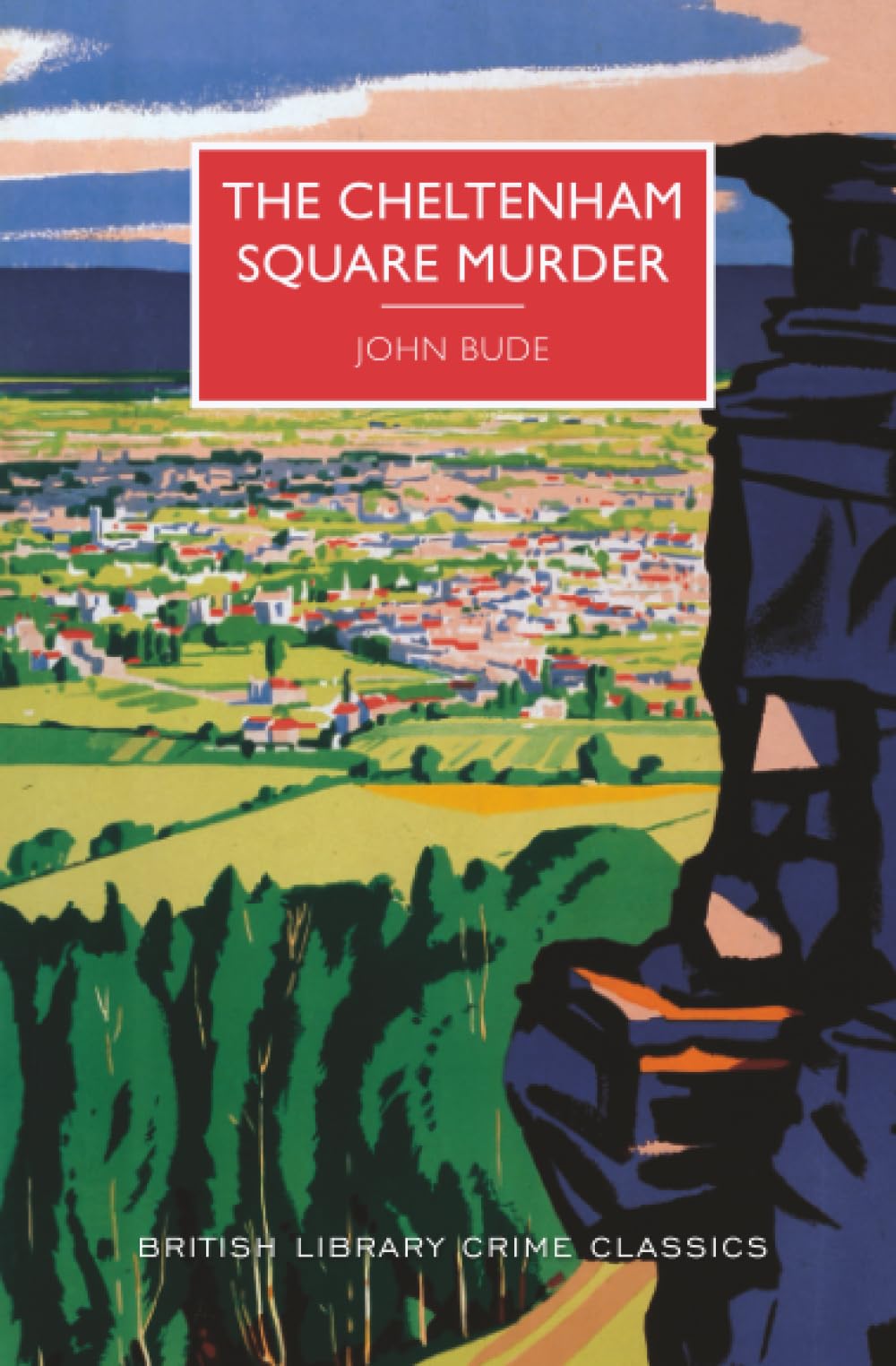



Mystery crime fiction written in the Golden Age of Murder "An absorbing head-scratcher." ― Booklist In the seeming tranquility of Regency Square in Cheltenham live the diverse inhabitants of its ten houses. One summer's evening, the square's rivalries and allegiances are disrupted by a sudden and unusual death―an arrow to the head, shot through an open window at no. 6. Unfortunately for the murderer, an invitation to visit had just been sent by the crime writer Aldous Barnet, staying with his sister at no. 8, to his friend Superintendent Meredith. Three days after his arrival, Meredith finds himself investigating the shocking murder two doors down. Six of the square's inhabitants are keen members of the Wellington Archery Club, but if Meredith thought that the case was going to be easy to solve, he was wrong... The Cheltenham Square Murder is a classic example of how John Bude builds a drama within a very specific location. Here the Regency splendour of Cheltenham provides the perfect setting for a story in which appearances are certainly deceiving. The Cheltenham Square Murder is an intriguing murder mystery of the gentle, cerebral variety. It is not fast paced the detective work could perhaps accurately be described as plodding but it is compelling. There is a real puzzle element to the murder that just demands to be cracked. It is a crime novel for those who enjoy unravelling complex plots, breaking seemingly airtight alibis and using the little grey cells to determine who is psychologically most likely to be a murderer.--Erin Britton " nudge-book " Bude, a popular British mystery writer during the 1930s and beyond, crafted a number of impossible murder novels that the British Library has reissued as part of a flood of resurrected mysteries written during the Golden Age of Murder.... An absorbing head-scratcher.--Connie Fletcher " Booklist " Originally published in 1937, this reissue in the British Library Crime Classics series is a clever closed-circle-of-suspects whodunit.-- " Publishers Weekly " JOHN BUDE was the pseudonym of Ernest Elmore (1901–1957), an author of the golden age of crime fiction. Elmore was a cofounder of the Crime Writers' Association, and worked in the theatre as a producer and director. The Cheltenham Square Murder By John Bude Poisoned Pen Press Copyright © 2016 Estate of John Bude All rights reserved. ISBN: 978-1-4642-0669-6 Contents Introduction, 1, I The Square Circle, 5, II Upset at Number Two, 16, III Death at Number Six, 25, IV Meredith Gets to Work, 38, V Burglary at Number Five, 47, VI Interviews, 55, VII The Empty House, 69, VIII Mystery on the Roof, 81, IX The Fitzgeralds Talk, 97, X April House, 113, XI Death Flies Again, 130, XII Suspect at Number One, 141, XIII Probables and Possibles, 159, XIV A Flutter at Number Seven, 173, XV The Raid at Charlton Kings, 192, XVI Pure Deduction, 206, XVII Jervis The Rake, 217, XVIII Startling Climax, 228, XIX Post Mortem, 241, CHAPTER 1 The Square Circle Perhaps one of the most attractive features about that famous and lovely town, Cheltenham Spa, is its squares. Planned at a period more spacious than ours of to-day, they bear with them an atmosphere of leisure, culture, and almost rural tranquillity. They all bear a family likeness, and Regency Square, though perhaps smaller and more exclusive than others in the vicinity, typifies perfectly its Georgian origins. It consists of only ten houses erected in the form of a flattened U with a quiet, residential road ambling across its open side. These ten well-proportioned domiciles face on to the central, communal square of grass, which is shaded here and there by rare trees and graceful, flowering shrubs. The architecture is varied, though pleasing, from the long, low façade of the White House, to the tall, flat-roofed simplicity of Number One on the opposite side of the square. None of these buildings, however, has more than three storeys, whilst most are ornamented with wrought-iron verandahs or carved stone balconies. As one faces into the square from the road one sees the left-hand arm of the U as a continuous frontage with a flat, crenellated roof and a series of four sets of stone steps leading down from four, solid-looking front-doors. To the right lies the White House in its own well-kept grounds and one other less distinguished, detached house which completes the right arm of the U. At the base of the U are five undetached houses, the chief feature of which are the french windows on the second floor which give out on to stone balconies, supported by the pillars of porticos which hood their respective front-doors. An uninterrupted pavement runs round the three sides of the square, shaded with silver birch trees, which, combined with a number of discreet lamps, divide the pavement from the road. The general effect is of a quiet, residential backwater in which old people can grow becomingly older, undisturbed by the rush and