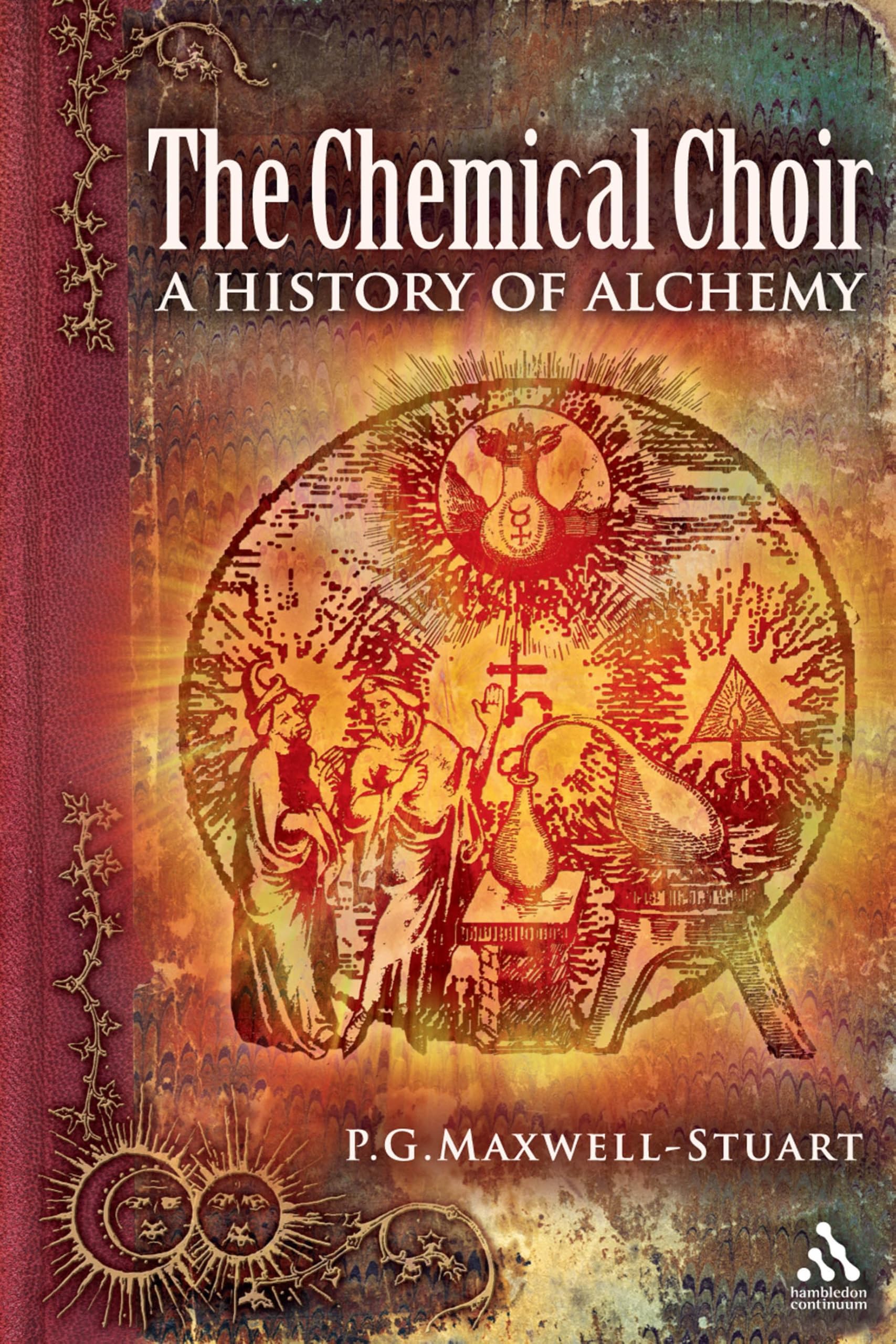



A pre-cursor to contemporary chemistry and physics, alchemy began as the pursuit of knowledge, initially in China as a search for the secret of immortality, and appearing independently in Egypt as an attempt to produce gold through the arts of smelting and alloying metals. In The Chemical Choir, P.G. Maxwell-Stewart authoritatively traces the fascinating history of alchemy from its earliest incarnations right up to its legacy in modern science as we know it today. Continuing from its roots in China and Egypt, alchemy received a great boost in Europe from work done by Islamic and Jewish alchemists, whose written accounts were translated into Latin and combined with what was known of Greek natural science to produce an outburst of attempts to manipulate matter and change it into transformative substances called the Philosopher's stone and the elixir of life. Alchemy's heyday in Europe was the sixteenth and seventeenth centuries, as practiced by the great minds of the age of Reason, including, among others, Sir Isaac Newton. During this time, demonstrations of the alchemist's art were performed in royal courts under conditions meant to obviate any fraud, and specimens of the gold so transmuted can be seen in various museums. During the nineteenth century, attempts were made to amalgamate alchemy with the religious and occult philosophies then growing in popularity; and in the twentieth century psychologists--principally Carl Jung--perceived in alchemy a powerful vehicle for aspects of their theories about human nature. At the same time, laboratory scientists continued to experiment in ways very similar to those of their medieval and early modern forebears. A lively overview of alchemy and its practitioners from the earliest times to the present, P.G. Maxwell-Stuart explores the changing importance and interest in alchemy through its historical, cultural, and intellectual contexts, revealing that the study of alchemy is not merely one of the stranger byways of antiquarianism, but rather a living part of the history of science itself. "There are marvellous stories of successful transmutation from various metals into gold, but [ Maxwell-Stuart also looks carefully at the influence of religion and politics...a coherent and interesting overview of an obsession that has gripped members of our species for 3000 years or more."- Emma Restall Orr, The Druid Network , June 2008 Mention - Book News , November 2008 "New age libraries and any interested in spiritual topics will find The Chemical Choir a fine review of alchemy and its evolution from early to modern times. The history of alchemy embraces changing human legacies and perceptions: chapters cover historical, cultural and religious changes accompanying changing ideas of alchemy and its practices. It's a fine, wide-ranging survey new age collections will welcome." - Midwest Book Review , December 2008 " The Chemical Choir helps make the arcane and often disrespected activities of alchemy more accessible and meaningful, not only to chemists and other scientists, but also to those interested in history and philosophy. Summing Up: Recommended. All libraries." -R. E. Buntrock, CHOICE , March 2009 'It breaks down a complex subject - the study of nature through experiments with chemicals - into ten easy-to-read chapters ... The reader who has always wondered about alchemy and has not yet read a history of the subject will find The Chemical Choir an entertaining starting point.' - Reviews in History Dr PG Maxwell-Stuart is an Honorary Lecturer in the School of History at the University of St Andrews. His many publications include Witchcraft - A History (Tempus 2000)and The Occult in Medieval Europe (Palgrave 2005). Used Book in Good Condition