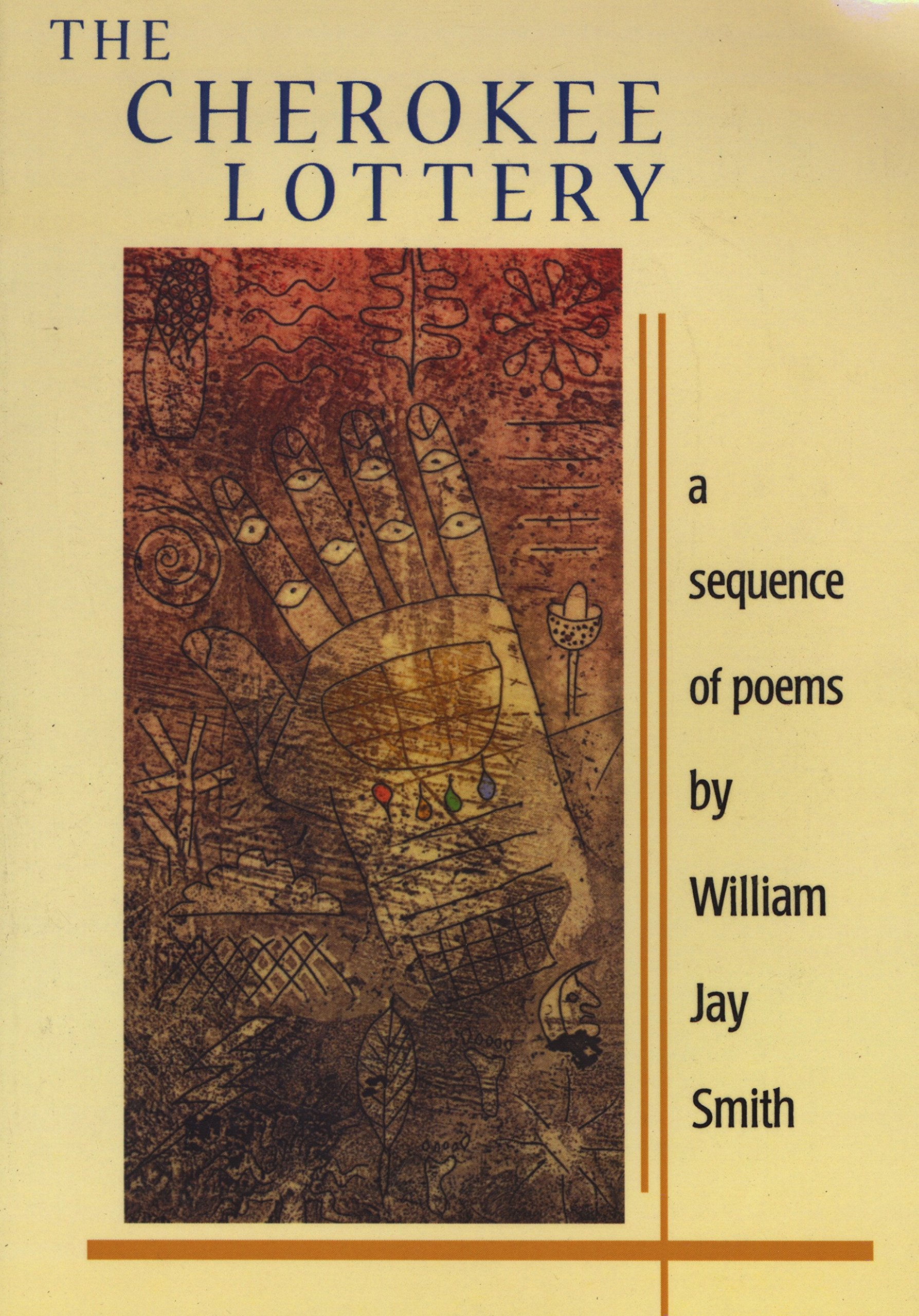



For the first time in poetic form, The Cherokee Lottery treats one of the greatest tragedies in American history, the forced removal of the Southern Indian tribes east of the Mississippi. When gold was discovered on Cherokee land in northern Georgia in 1828, the U.S. Government passed the Removal Act, and 18,000 Cherokees, along with other southern tribes—Choctaws, Chickasaws, and Creeks—were forcibly relocated to Oklahoma territory. Herded along under armed guard, they traveled in bitter cold weather and as many as a quarter died on what became known as "The Trail of Tears." In powerful poetry of epic proportions, which Harold Bloom has called his best work, Smith paints a stark and vivid picture of this ordeal and its principal participants, among them Sequoyah, the inventor of the Cherokee alphabet, and Osceola, the Seminole chief. Smith's sequence of moving, extraordinarily visual poems brings us to the heart of one of the nation's greatest tragedies and, many say, sins--the "removal" of the five civilized tribes, via the Trail of Tears, from their homelands in the eastern U.S. to the Oklahoma territory. Part Choctaw himself, Smith uses several different voices in the sequence, such as those of an old Choctaw on the trail, remembering the "buzzard man" who presided over funeral rites, while mourning the many who died without such appropriate ritual; the great Choctaw chief, Pushmataha, who traveled to Washington in a failed attempt to gain a hearing for his people; and artist Charles Banks Wilson, sketching the last of the purebloods in the melting pot of Oklahoma. Many of the poems appear in the book's signature stanza, a lopey, three-line, roughly pentametric form that sounds sometimes reportorial, sometimes Shakespearean, sometimes both at once. Moving, humane, unforgettable. Patricia Monaghan Copyright © American Library Association. All rights reserved "William Jay Smith has been one of our best poets for more than sixty years, and The Cherokee Lottery is his masterwork; taut, harrowing, eloquent, and profoundly memorable." —Harold Bloom "[This] is a powerful collage of occasions having to do with the "removal" of the southern trives to the west, and each glimpse is made striking and poignant by the pen of William Jay Smith. The book tells much that I had not known, and tells it with compelling art." —Richard Wilbur "[William Jay Smith's] exploration of a shameful episode in American history, in verse moved by irony and humor as well as by tragedy, is a major work by one of our most accomplished poets."—Daniel Hoffman William Jay Smith (born 22 April 1918) was an American poet. The author of ten collections of poetry, he was appointed the nineteenth Poet Laureate Consultant in Poetry to the Library of Congress from 1968 to 1970. His work appeared in both Harper's Magazine and The New York Review of Books, and he was a member of the American Academy of Arts and Letters from 1975 until his death in 2015. Used Book in Good Condition