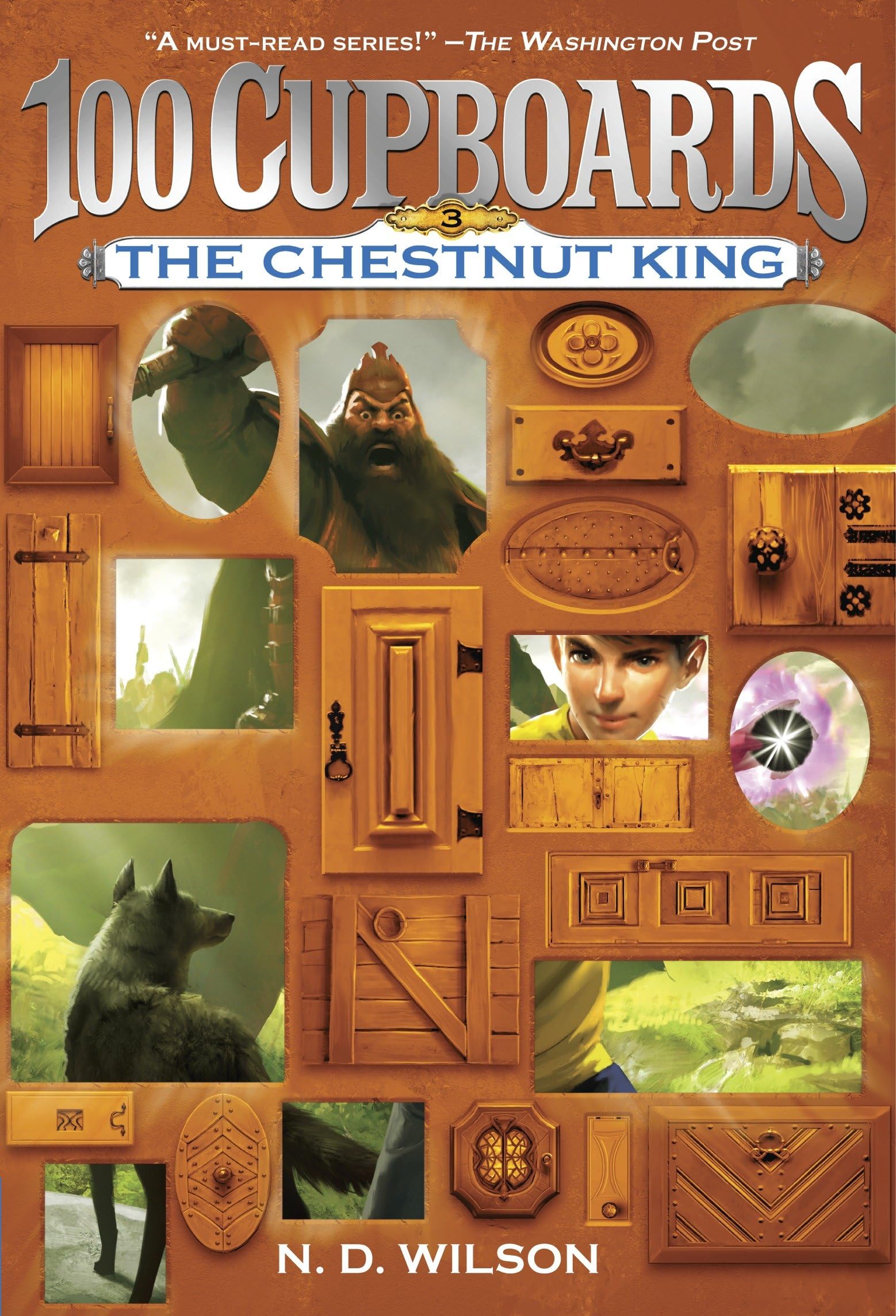



The bestselling and highly acclaimed 100 Cupboards series concludes with one final, epic battle in The Chestnut King. Perfect for readers who love Percy Jackson, the Unwanteds, and Beyonders! Hidden cupboards behind Henry’s bedroom wall unlocked portals to other worlds that Henry and his cousin Henrietta couldn’t resist exploring. But they made one terrible mistake—they released the undying witch Nimiane. Her goal? To drain all life from every world connected to the cupboards. Henry must seek out the Chestnut King to defeat her, but doing so will force Henry to make a terrible, irreversible choice. With the fate of the worlds and everyone Henry loves hanging in the balance, will he have the courage to do what is needed to destroy the witch once and for all? "A must-read series." — The Washington Post "An entirely satisfying finish." —Kirkus Reviews "Well crafted and gratifying." —School Library Journal "This is my favorite kind of fantasy, combining the secret and the ordinary." —Tamora Pierce, New York Times bestselling author "One of the most fascinating new fantasy worlds grown on American soil since Oz." —MuggleNet.com "Highly appealing characters whom readers will want to encounter again." — The Horn Book Magazine "Henry becomes a stronger and more resourceful kid as he tests his mettle against the creatures in the cupboards." — The Bulletin "The story is chilling, but the creepy quotient never exceeds the book’s target audience." — Booklist N. D. WILSON lives and writes in the top of a tall, skinny house only one block from where he was born. But his bestselling novels, including the highly acclaimed 100 Cupboards series, have traveled far and wide and have been translated into dozens of languages. He and his wife have five young storytellers of their own, along with an unreasonable number of pets. You can visit him online at ndwilson.com. Chapter One Every year, Kansas watches the world die. Civilizations of wheat grow tall and green; they grow old and golden, and then men shaped from the same earth as the crop cut those lives down. And when the grain is threshed, and the dances and festivals have come and gone, then the fields are given over to fire, and the wheat stubble ascends into the Kansas sky, and the moon swells to bursting above a blackened earth. The fields around Henry, Kansas, had given up their gold and were charred. Some had already been tilled under, waiting for the promised life of new seed. Waiting for winter, and for spring, and another black death. The harvest had been good. Men and women, boys and girls had found work, and Henry Days had been all hot dogs and laughter, even without Frank Willis’s old brown truck in the parade. The truck was over on the edge of town, by a lonely barn decorated with new No Trespassing signs and a hole in the ground where the Willis house had been in the spring and the early summer. Late summer had now faded into fall, and the pale blue farmhouse was gone. Kansas would never forget it. Dry grass rustled against the barn doors and stretched up the sides of the mud-colored truck. Behind the barn, in the tall rattling grass, Henry York was crouching beside the irrigation ditch. Sweat eased down his forehead from beneath the bill of his baseball hat. A long piece of grass dangled between his teeth, and a worn glove hung on his right hand. The field across the ditch was as black as any parking lot, and the sky above him held only the smoky haze that had so recently been wheat and the late-afternoon sun, proud to have baked the world. Henry slapped a fist into his glove, shifted in his crouch, and flashed two fingers down between his legs. “Again?” Zeke Johnson asked. Henry smiled and nodded. It was his favorite pitch to catch. He watched the tall boy wind up, arms tight, leg high, and then Zeke uncoiled, striding forward, arm extending, and the ball—string wrapped tight around a rubber core, all stitched up in leather—came spinning toward him. Zeke was throwing hard, and Henry, crouched with his left arm behind him and his right arm stretched out, tracing the ball, had no mask, no shin guards, no chest protector, no catcher’s mitt. He didn’t care. He didn’t even notice. People who had known Henry in Boston would have had trouble recognizing him, even though his looks hadn’t changed that drastically. To Kansas, he was the same boy who’d once been plucked crying out of an attic cupboard by an old man, who had returned twelve years later, fragile and afraid. But to Kansas, a tadpole is the same thing as a frog. Henry was a little taller, his shoulders were a little wider, and his jaw was scarred, but it was the boy inside the body that had really changed. And his eyes. His eyes would go the color of midnight when they really wanted to see. When he let them. When he couldn’t stop them. They were black now, following Zeke’s curve ball as it carved through the air. To Henry’s eyes, strings of force trailed the bal