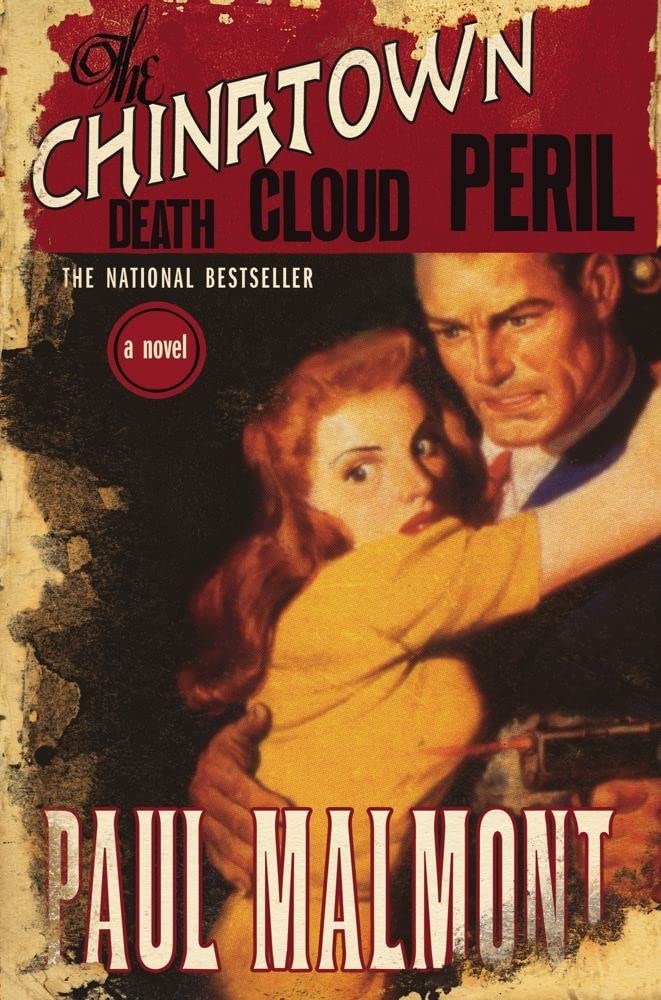



An astounding literary debut that brings a beloved genre of the past roaring into the twenty-first century, The Chinatown Death Cloud Peril casts the rivalry between two of pulp fiction's most legendary writers into its own amazing saga, which bursts from the pages with blood, cruelty, fear, mystery, vengeance, courageous heroes, evil villains, dames in distress, secret identities and disguises, global schemes, hideous deaths, beautiful psychics, deadly superweapons, cliff-hanging escapes, and other outrageous pulp lies that are all completely true. The Chinatown Death Cloud Peril is a swashbuckling, breathtaking romantic epic of magic and love, marriage and fatherhood, ambition and loss, and writers who never forget their deadlines even when facing the end of the world. In its pages is a tale that deftly weaves the lives of its real-life characters into a lie of outrageous proportions that just may tell the truth, but is always thrillingly, unapologetically pulp. "The very definition of a gripping yarn, with infamous villains, nefarious plots, and hairbreadth escapes. That the square-jawed heroes are also writers -- pulpateers -- makes the game a whole new kind of thrill ride. Pulp fiction at its best." -- Glen David Gold, author of Carter Beats the Devil "As someone who cut his literary teeth on Lester Dent's Doc Savage books, who's an ardent fan of Walter Gibson and pulp writing in all its incarnations (okay, and who frequents Greenwich Village's White Horse Tavern), I was halfway through this novel by the time the shipping envelope hit the floor and had finished it not long after. Rest assured, though, you don't need to fall into any of the above categories to thoroughly enjoy author Malmont's marvelous work. It's a thrilling adventure the likes of which we haven't seen in a long while." -- Jeffery Deaver, author of The Cold Moon and The Sleeping Doll Paul Malmont works in advertising. He lives in New Jersey with his wife and two children. Please visit the author at www.paulmalmont.com. You can follow his blog postings at amazon.com or on Facebook. The Chinatown Death Cloud Peril By Paul Malmont Simon & Schuster Copyright © 2007 Paul Malmont All right reserved. ISBN: 9780743287869 Episode One "You think life can't be like the pulps?" Walter Gibson asked the other man. "Let me tell you a story. You tell me where real ends and pulp begins." The cigarette in his left hand suddenly disappeared. The young man, whose most distinguishing characteristic, in spite of his stocky build and shock of red hair, was his powerfully forward-thrusted jaw, blinked in mild surprise at the magic trick, then nodded agreeably. "All right," Ron Hubbard said. The cigarette, a filterless Chesterfield, reappeared in Gibson's right hand. He took a long sip from his whiskey and washed it down with a sip of beer and an involuntary shudder. He was getting drunk and it was too early. He knew it. He didn't even want to be here tonight. Well, he did want to be in the White Horse Tavern drinking. But he didn't want to be here drinking with the youthful and ambitious president of the American Fiction Guild, who had been hectoring him relentlessly to speak about his writing at the weekly gathering of pulp mag writers in the Grand Salon of the old Hotel Knickerbocker. John Nanovic, his ed at Street & Smith, had begged, pleaded, and in the end agreed to pay for a few of this evening's drinks if he would agree to do it. Nanovic had told Gibson that it was important for him, as the number one bestselling mag writer in America, to take an interest in the new writers, the young writers. To help groom them. Gibson felt that what Nanovic really wanted him to do was to find his successor in case he stumbled in front of a trolley car some drunken evening. Ultimately he had to admit that it was a fair concern for an editor to have about him. So, here he was having drinks with Lafayette Ron Hubbard, a writer of moderately popular but pedestrian (in Gibson's opinion) westerns, and at twenty-five, fifteen years younger than he. One of the new writers. One of the young ones. They were seated at a small table next to the bar and treating themselves to waiter service. Hubbard was one of those writers who acted like they really cared about writing and had launched into a theory that the sort of adventure pulp Gibson wrote was somehow less valid than the westerns and two-fisted tales he wrote because at least his stories were based on history or reality. Gibson knew the kid was impressed by him. Hubbard had practically been begging him for a sit-down for weeks. Every now and then Gibson would see Hubbard looking around the saloon as if he could recognize somebody he knew who might come over and interrupt the conversation. If that had happened, he might then have the opportunity to say to them, "Excuse me, but can't you see I'm having drinks with Walter Gibson? That's right, the guy who writes T he Shadow Magazine .