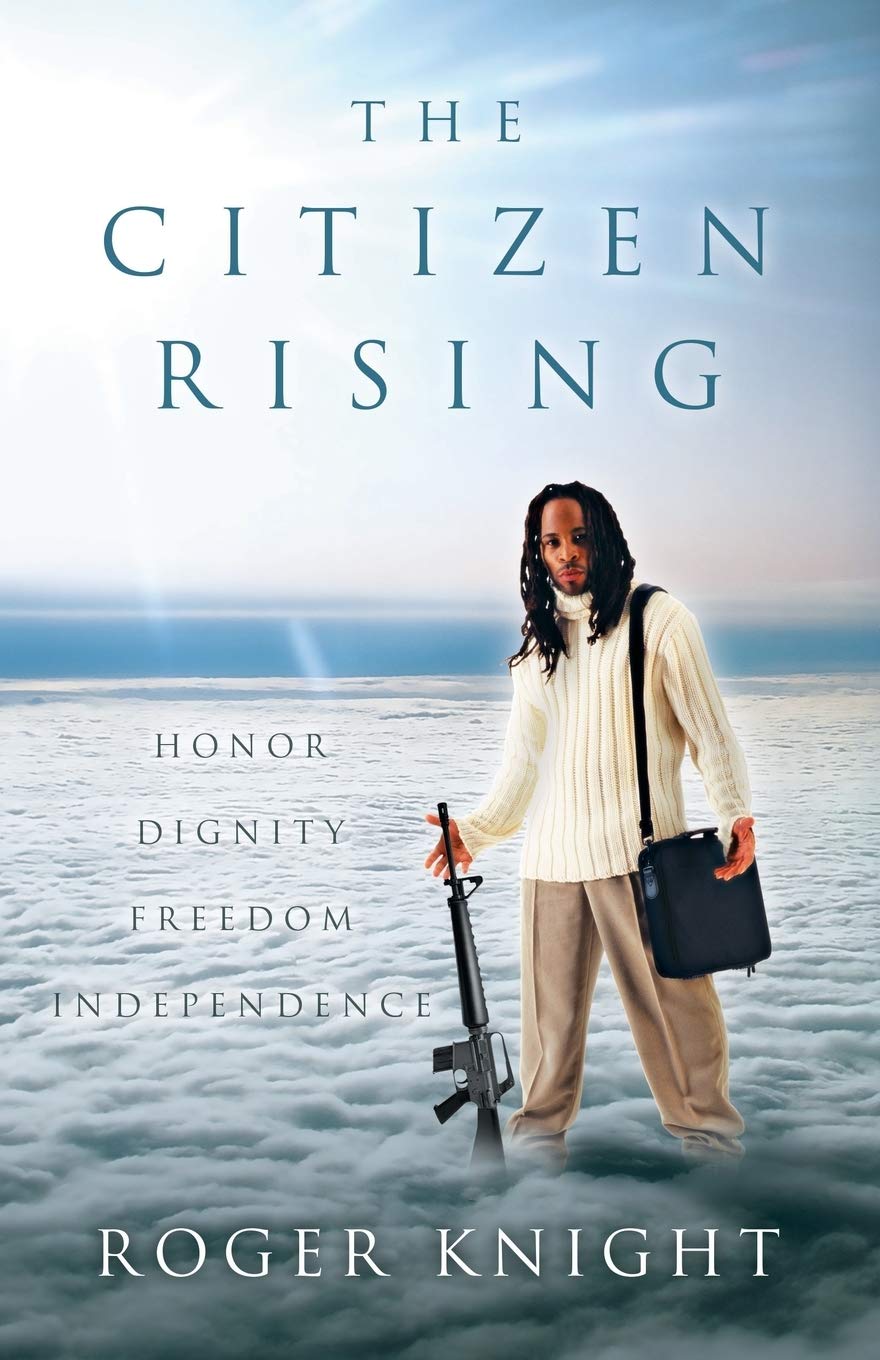



While growing up within a loving African American family, a little boy develops a deep understanding of right and wrong and the responsibility that accompanies his choices. Some forty years later, Rohillio Jabel recognizes that it is only through God's grace and mercy that he has been successful in life. Buoyed by his ideals, innovative ideas, and commitment to helping those less fortunate than himself, Rohillio begins to rise in his south New Jersey community. Rohillio, now known as "the Citizen" is disenchanted about the biases that plague the American justice system and tired of belonging to a powerless race. Determined to change the black experience for the better, Rohillio recruits eight people-including ministers, a college professor, a teacher, a banker, a beautician, and drug dealers-to help him in his mission to start a new political movement that he hopes will transform their town. But as the eclectic group attempts to fulfill Rohillio's mission, it soon becomes evident that their road to success will be lined with many more challenges than they ever imagined. The Citizen Rising shares the tale of one man's journey to change the mind-set of a city with the help of a group of black citizens determined to help him realize his dream. The Citizen RISING By Roger Knight iUniverse LLC Copyright © 2013 Roger Knight All rights reserved. ISBN: 978-1-4917-1673-1 CHAPTER 1 He sat in his computer room for hours. He had never been in such emotional pain and anguish; the factory was destroyed, burned to the ground. But more importantly a dozen people were killed, engulfed by the fire, including one of his close friends, who was not killed by the fire but actually murdered. A beautiful woman, also a close friend, was disfigured. He could still hear the screams of all the burned victims, and he would never forget that putrid smell of burning flesh. He believed he was responsible for all of this because of his ideas and his ideals; he had underestimated his enemies. As these thoughts were going through his head, he felt devastated, angry, and defeated. He knocked over the computer monitor to the floor, turned his desk over, and proceeded to tear the entire room apart as he let out some of his anger and frustration that was beginning to overflow in his system. Then he sat down and thought about everything that had happened these past four-plus years. Four years earlier. The Meeting of the Minds The trial was over; the policemen were acquitted. As he was leaving the courtroom in Albany, New York (the capital of New York State), Rohillio remembered the community board meetings he used to attend many years ago when he was married and living in the Bronx (one of the five boroughs that make up New York City), especially when the police and politicians attended and gave talks. He was a little shy back then, so whenever someone would ask him his name, he would just say he was a concerned citizen. But his personality, comments, and ideas were so profound and innovative that people started calling him the Citizen, and that name stuck. That's where he first met the district attorney from the Bronx, Ronald Jackson. The two of them had exchanged ideas. One of the Citizen's ideas was to open the schools for youth community centers in the evenings and on weekends, using the money taken from drug busts and other crimes. The amount of money taken during the busts would be listed in the legal notices in the city newspaper. Once nobody claimed the money, the money would be put back into the neighborhood where it was found. Businesses like McDonald's and Burger King, Pepsi, etc., would then match those funds to pay for councilors and general operating costs so it would not affect the city's budget. His idea was only modestly successful. A few schools did get after-school programs, but a lot of money went into Ronald Jackson's youth program. Ronald Jackson stole Rohillio's idea, and he did a bad job in court. Rohillio didn't like Ronald then, and he didn't like him now. However, Rohillio got more involved in political and social reform by writing letters to local politicians. He authored a few articles in the local newspaper and a magazine article from time to time. Rohillio would always sign his name "A Concerned Citizen." More and more often, his friends and associates began to refer to him as the Citizen or Citizen Jabel. It was drizzling on the day he left the courtroom. He asked himself why he thought the trial would have ended any other way. If the people didn't have the power to hold the trial in the county where the crime was committed, why was he stupid enough to think there could possibly be a conviction? The police had never been convicted of killing a black man, so why did he think this would be any different? This was especially true in Albany, where they hadn't convicted a policeman in a hundred years. He felt like a fool as the answers to his questions came to him. He had allowed himself to believe