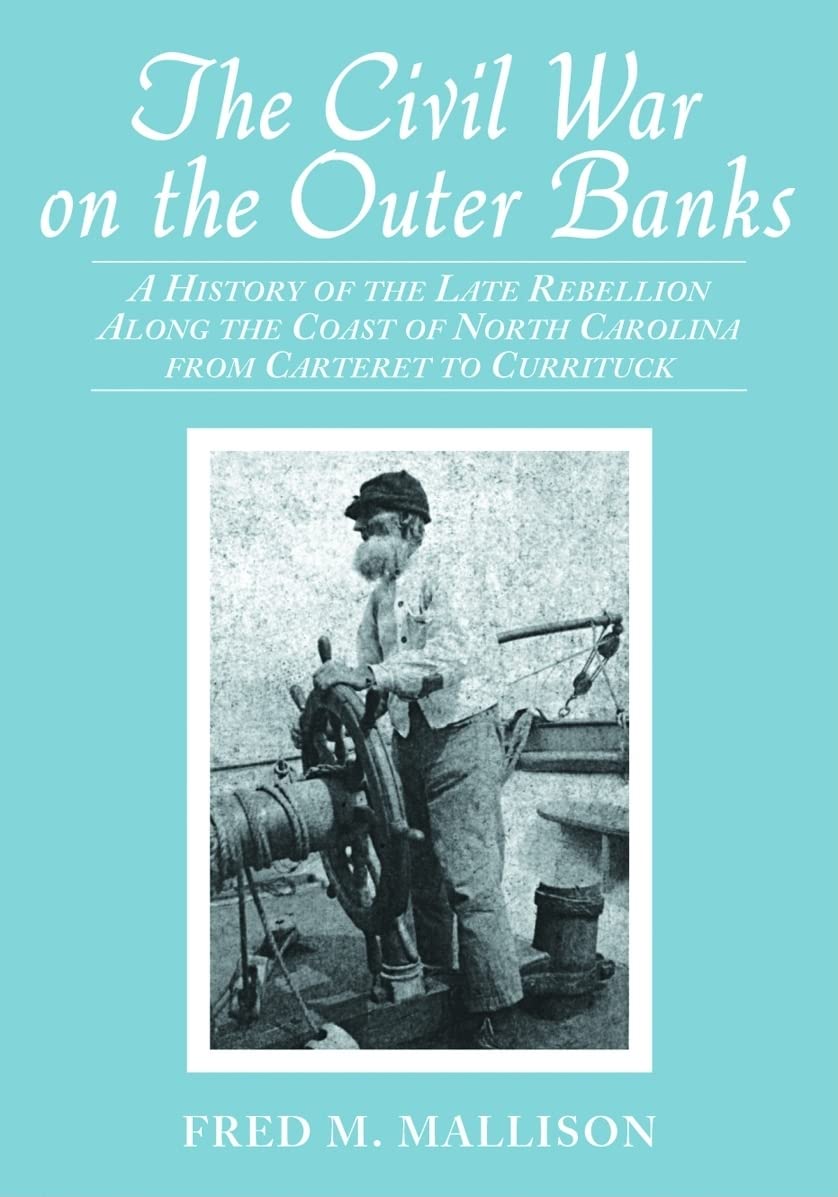
The Civil War on the Outer Banks: A History of the Late Rebellion Along the Coast of North Carolina from Carteret to Currituck, with Comments on
$31.00
by Fred M. Mallison



The ports at Beaufort, Wilmington, New Bern and Ocracoke, part of the Outer Banks (a chain of barrier islands that sweeps down the North Carolina coast from the Virginia Capes to Oregon Inlet), were early involved in the chaos that grew into the Civil War. Though smaller than their counterparts in South Carolina, the small river ports were useful for the import of war materiel and the export of cash producing crops, through their use of the inlets that led from sounds to sea. Written from official records, contemporary newspaper accounts, personal journals of the soldiers, and many unpublished manuscripts and memoirs, this is a full accounting of the Civil War along the North Carolina coast. “a fine example of the new Civil War scholarship that focuses on the war’s effect on regions and regiments”― C&RL News ; “masterfully written...excellent”― North & South ; “excellent...of interest”― The Civil War Courier ; “fascinating”― Our State ; “does full justice to these battles...brings out how reactions to the Yankee invasions varied from island to island and why”― Crossfire ; “draw[s] from a large body of sources rich in official reports, newspaper reports, anecdotes, contemporary testimony, and retrospective regimental histories”― North Carolina Libraries ; “enumerate[s] the factors that made the Outer Banks strategically important to its residents, the Confederacy and the Union”― The Civil War Courier ; “looks at the importance of the small river ports along the coast for the import of war material and export of cash-producing crops”― Carolina Country ; “accurate and well-told account”― The Ensign. The late Fred M. Mallison was a graduate of N.C. State University and East Carolina University. He lived in Washington, North Carolina. Used Book in Good Condition