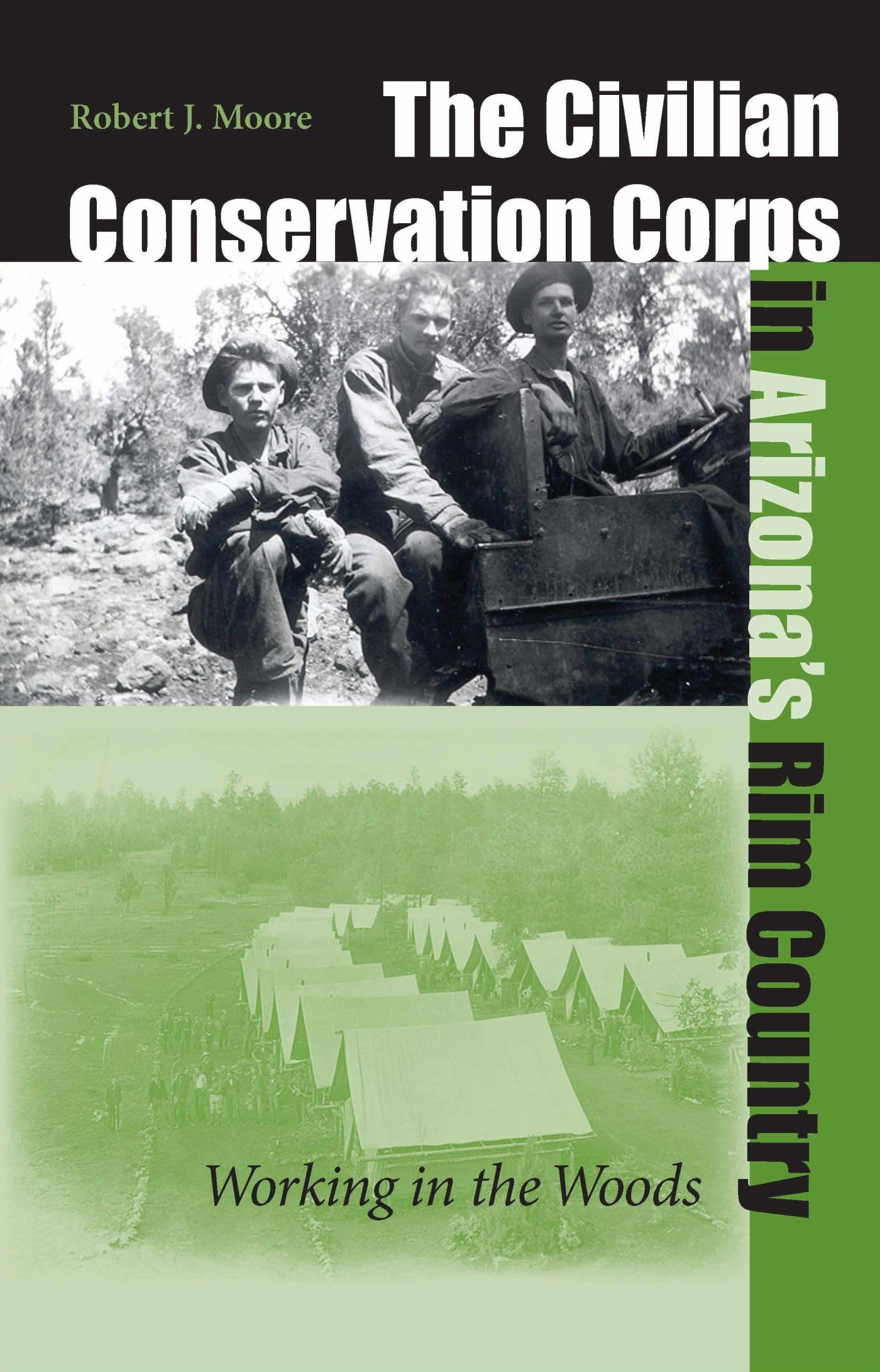
The Civilian Conservation Corps In Arizona's Rim Country: Working In The Woods (Wilbur S. Shepperson Series in Nevada History)
$34.95
by Robert J. Moore



Part of the massive relief effort of Roosevelt's New Deal, the ccc was created in 1933 to give young men an opportunity to work and make money to help families devastated by the Great Depression, and to participate in forest and conservation projects across the country. In Arizona, thousands of young men, many of them from the industrial Northeast, served in the state's ccc forest camps. Arizona's Mogollon Rim is a spectacular expanse of cliffs that slices through half the state, stretching from Sedona eastward to New Mexico. Along with the White Mountains, it includes the largest contiguous forest of ponderosa pine in America. Remote and little-visited in the 1930s, the Rim Country offered copious outlets for the ccc men's energies: building roads, public campsites, hiking trails, fire lookout towers, and administration buildings; fighting fires; controlling erosion; eliminating vermin; and restoring damaged soils. " . . . a solid social history of the New Deal program in this region." -- Environmental History -- Neil M. Maher ― Environmental History Robert J. Moore was an American history teacher in the Scottsdale, Arizona, school district. He also worked for many years as a seasonal interpretive ranger in the Apache-Sitgreaves National Forests in Arizona. He currently lives and teaches in Verona, Wisconsin. "I can truly say that the CCC was the best time in my life. Without hesitation, the CCC turned this country around and built its superstructure back to Grade A. For the men, it meant life or death to thousands, in fact millions, of men who were just existing at the time, rather than fully living."