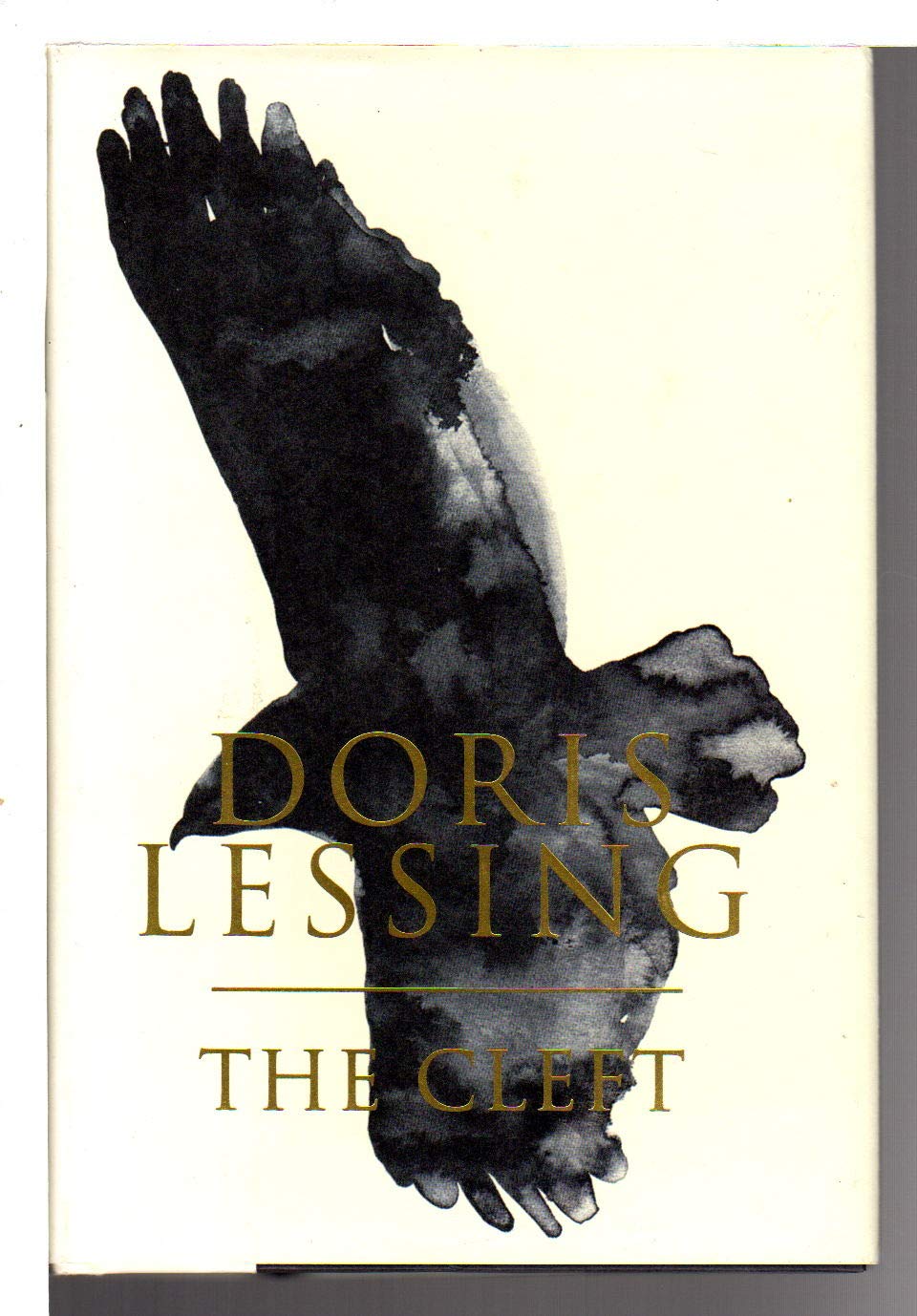



From Doris Lessing, "one of the most important writers of the past hundred years" ( Times of London), comes a brilliant, darkly provocative alternative history of humankind's beginnings. In this fascinating and beguiling novel, Lessing confronts the themes that inspired much of her early writing: how men and women manage to live side by side in the world and how the troublesome particulars of gender affect every aspect of our existence. In the last years of his life, a Roman senator retells the history of human creation and reveals the little-known story of the Clefts, an ancient community of women living in an Edenic coastal wilderness. The Clefts have neither need nor knowledge of men; childbirth is controlled through the cycles of the moon, and they bear only female children. But with the unheralded birth of a strange new child—a boy—the harmony of their community is suddenly thrown into jeopardy. Outspoken, prolific, and influential, Lessing has cycled through an array of literary genres in her quest to tell stories that protest prejudice, fathom consciousness, and chart the entrenched battle between the sexes. In her newest audacious, ludicrously titled novelyes, The Cleft does refer to the aspect of the female anatomy you suspect it mightLessing employs a classic framing device. During Nero's rule, a Roman senator with a much younger and more sexually adventurous wife is working through "a mass of material accumulated over ages," pertaining to a prehistoric all-woman tribe. The Clefts loll about in the surf and are mysteriously impregnated by the sea, until nature plays one of its tricks, and they suddenly give birth to what they call Monsters, but which we recognize as males. After the females' attempts to kill off the baby boys fail, thanks to the intervention of giant eagles, the two adversarial groups gradually discover that they need each other to reproduce, and that just as their bodies are different yet complementary, so, too, are their temperaments. As the good Roman chronicles, to the best of his ability, the way these early, contentious humans formed families and opened themselves to love, he marvels over the processes by which memories morph into myth, and history is assembled. As for Lessing, she overcomes initial narrative awkwardness to forge a mordantly entertaining fable rich in incident, discernment, and reflection. Seaman, Donna “One of postcolonial fiction’s brightest lights makes mythic the battle of the sexes. . . . A dark parable, powerful . . . ” - Kirkus Reviews “A superb and daring work…An extraordinary vision of the establishment of human life on Earth that overturns every other way of seeing it…As speculative and outrageous as it is, it is also convincing in the way all fine art is convincing…What an amazing book, bringing together as it does Lessing’s radicalism, her feminism and her propensity for speculative fiction in a marvelous…gift from one of the great mothers of the contemporary novel.” - Alan Cheuse, Chicago Tribune “Doris Lessing-iconoclast and feminist icon…stirs up debate…She has written a revised origin of species…ironic, provocative, epic, heretical, post-modern…vividly descriptive” - Elsbeth Lindner, Miami Herald “Lessing, as she so often does, begins with stereotypes and ends with archetypes…This, she says is how it is and always has been with men and women.” - John Leonard, Harper's Magazine “Eminent novelist Lessing offers an alternative origin story for the human race.” - Publishers Weekly “Like Philip Roth’s EVERYMAN, [THE CLEFT] has the feeling of a conceptual fable, a pared down form that perhaps only writers who have tried so much can permit themselves. Where Roth gave us life told as a tale by a mortal and altogether male body, Lessing gives us a myth of origin and a speculation on how sexual difference tumbled us into history where generation is key.” - Lisa Appignanesi, The Times (London) “Thought-provoking and compelling…This multifaceted account of life, love, gender, history, and the power of story is engrossing." - Library Journal “Lessing satirizes the unchanging behavioral patterns of men and women…Her engaging tale is told with the simplicity of an aural history committed to memory.” - New Statesman “The raw excitement of life in an age when fire was a novelty, and notions of time, family, morality, were completely alien, is well captured…Pure entertainment; an amusing series of what-ifs by one of the world’s great storytellers.” - Sunday Telegraph “A distinctly feminine fiction…A measured acknowledgement of a universal ignorance, which compels men and women to be only belatedly aware of what makes them most themselves.” - Times Literary Supplement (London) “A bold, inventive and challenging book from a writer who continues to enlighten and astonish us.” - Michael Arditti, Arts & Book Review “At the age of 87, the grande dame of British letters has lost none of the grit or political drive that has propelled and compelled he