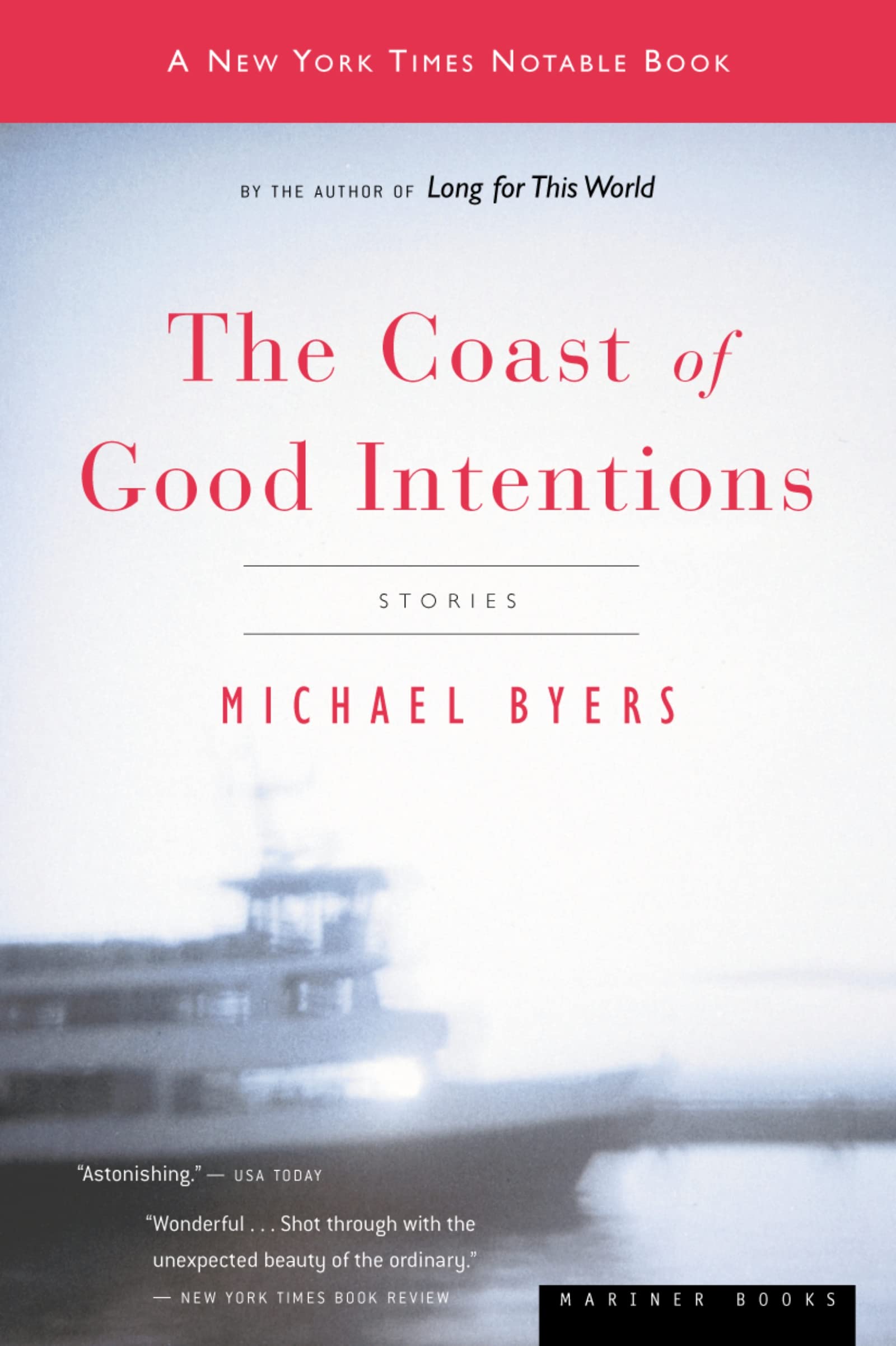
The Coast Of Good Intentions: A Poignant Short Story Anthology of Unresolved Pacific Northwest Lives
$11.16
by Michael Byers



Michael Byers’s award-winning collection The Coast of Good Intentions tells graceful tales of achingly unresolved lives on the Pacific Northwest coast. Byers captures the lives of ferry workers, carpenters, park rangers, and adolescents leaving home, against a backdrop of crab factories, cranberry bogs, the fog-shrouded shore, and the Seattle skyline. A poignant collection, these stories are “richly peopled with compelling characters whose wisdom and experiences span the generations” (San Jose Mercury News). "Micheal Byers writes about the passions that govern and shape our lives with breathtaking skill and knowledge of the heart. It's hard to imagine so much knowledge of life coming from so young a writer" Michael Byers’s story collection The Coast of Good Intentions won the Sue Kaufman Prize for First Fiction from the American Academy of Arts and Letters and was a finalist for the PEN/Hemingway Award. Long for This World was featured on the History Channel's “Mavericks, Miracles, and Medicine.” The recipient of a Whiting Foundation Writer’s Award, Byers lives in Pittsburgh with his wife and two children. The Coast of Good Intentions By Michael Byers Mariner Books Copyright © 2004 Michael Byers All right reserved. ISBN: 0618446516 Chapter One Settled on the Cranberry Coast This I know: our lives in these towns are slowly improving. When Rosiegrew up in the old reservation houses, the roads were dirt and the crabfactory still wheezed along, ugly and reeking, and in early summer thefactory stayed open all night--it was the only work you could get--andthe damp dirty smell of the crab cooking in its steel vats blew off theocean, all the way to Aberdeen, even farther, for all I knew. I rememberdriving home from movies in high school, the windows open, the sweetpulp-mill smell of Aberdeen tinged with that distant damp cardboard ofTokeland's cooking crab. But when the harvest failed fifteen years ago, the state jumped in withsome money, and almost at once Tokeland plumped with antique storesand curiosity shops, and the old clapboard hotel became a registeredlandmark and got a profile in Sunset. The Shoalwaters did all right,too--three years ago they sold their fishing rights to the Willapa and votedto put the money into the market, mostly into technology stocks. A lot ofthem have managed to live off the dividends, and now they buy fishinglicenses like the rest of us. Their trawlers are easily the nicest around,you'll notice them moored under the bridge in Aberdeen, the big sleekpowerful monsters with aluminum hulls, blue-striped, the new nets, newradar. Rosie never married, and neither did I. We went to high school together,but we didn't travel in the same crowd. She was half Indian,and she tended to hang with the tough guys, pretty mild by today'sstandards, I guess--the kids who wore leather jackets, who smoked andoverdid the hair gel. Rosie was beautiful, with thick brown shiny hair thatreached the middle of her back, but I didn't have a chance at her. She wasout of reach entirely, in another world. Her friends, if they droveanything at all, drove pickups instead of cars, and on Friday afternoonsthey'd motor out to the ocean, pitching and hurtling over the dunes andthen speeding down the beach, big V-8s wide open. I envied them, in away, but I didn't want to be them. Tokeland back then was not a goodplace to be from. It meant the clapboard shacks for the Indians, andouthouses, and pump wells instead of piped water, all of it on an openspit of land that caught the worst of the ocean winds. Winters, Rosiewould say later, the wind would blow all day, all night, until it was partof your soul, an extra function of your body, like your heart, or your breath. I lost track of Rosie for a while after high school. I went off to college,lived in the East for a few years with a woman I thought I would marry,but things, to make a long story short, didn't work out, and I came home.I took a job teaching high school history in Ocosta and kept at it fortwenty-seven years, fishing during the summers and doing some casualcarpentry, building rooms onto my house until my back yard was justabout gone. Occasionally in the hardware store I'd see someone fromRosie's rough old crowd, most of them prosperous fishermen or at leaston their way, the luckiest having inherited their fathers' boats, walkingnow with the casual swagger of money, wearing designer blue jeans andmonogrammed dress shirts. Some of these guys made two hundredthousand dollars in a good year, I knew, and they always had the newesttrucks, skinny wives with tousled hair and high heels. They'd recognizeme from school, a lot of them, and I'd listen to them worry about theirkids sleeping on the beach, the girlfriends and boyfriends, getting intothis or that drug, trouble at school, and sometimes they'd ask me foradvice. I'd try to tell them their kids would grow out of childhood, just asthey themselves had, and privately I wondered why they co