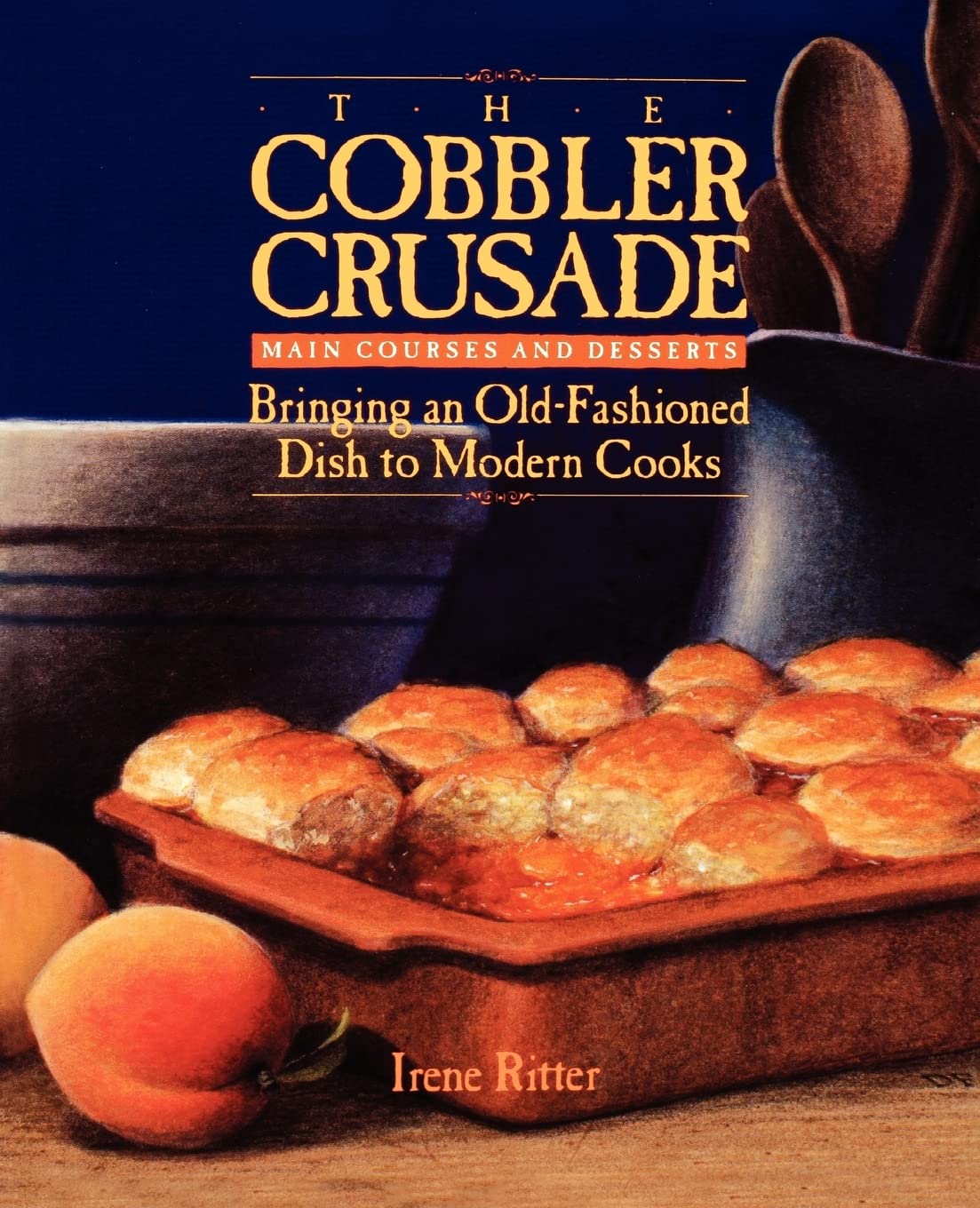



A variety of savory and sweet ideas for breakfast, brunch, lunch, dinner. Irene Doti-Ritter, is the author of The Cobbler Crusade and Italian Desserts (by Irene Doti). The Cobbler Crusade expands the notion of cobbler to include savory meat, seafood and vegetable main dishes. "Anyone--and I mean anyone--can make these cobblers because they're so easy," says Irene. "All you need is a bowl and a wooden spoon." The Cobbler Crusade was inspired when Irene lived in a mountain hamlet in the Columbia Gorge surrounded by wild blackberries and huckleberries. "As an urban girl from Chicago, I was amazed when I found all of this wild fruit of the Pacific Northwest growing right in my backyard," she said. "Then I thought: Why not sprinkle a cobbler's biscuit crust with herbs; then place the herb biscuits over a fabulous seafood roué recipe that's totally Pacific Northwest?" Her second book, Italian Desserts, written under her maiden name of Doti, which literally means a "dowry collector" in Italian, features tantalizing recipes such as Apricot Marsala Biscotti; Nuns' Chatter Cookies; Sicilian Sesame Brittle with Almonds; Lemon-Ricotta filled Panettone; Chocolate-Espresso Cream Tarts; Date-Walnut Cassata and an incredibly easy and rich Zabaglione. Irene is a Chicago native who inherited a rich tradition of Italian dessert making from her Sicilian born mother, Carmelina Siracusa Doti. Carmelina's recipes, along with her sisters' Francesca and Margareta, passed on a legacy of recipes that can be found in "Italian desserts." "Sicilians practically invented desserts in Europe," says Irene. Desserts were created in convents by nuns and by chefs in the wealthy homes of aristocratic families. Doti's maternal great grandfather, Francesco Conti, began the family's legacy of "dolce" when he owned successful bakeries along Sicily's eastern coast that were destroyed by Fascists. Now, the legacy lives on in this insightful book that combines classic Italian desserts with rich family stories. Irene now lives near the beaches of Southern California and travels extensively throughout the country searching for inspiring recipes and stories. Check out Irene Doti's Italian Desserts on Amazon.com What is a Cobbler? New Englanders sometimes refer to them as grunts or slumps. But most people know them as cobblers. Not only are there different names for this all-American dessert, cooks also argue about what truly makes a cobbler a cobbler. One battle among cobbler lovers rages over crust. Should crusts be made of biscuit, pastry, crumbled cookie dough or cake batter? Should they line the bottoms or tops of fruit; or be latticed or shaped like cobblestones? There's even more confusion over shape. Should cobblers be rectangular or round?And how do you define cobbler when there are so many variations?instead of coming up with a clear-cut definition of a cobbler, I would like to challenge cooks to make up a few of their own. Let's start by expanding the notion of cobblers to include savory brunch and dinner options. Thus, a variety of ingredients may be introduced into a basic biscuit recipe-like nuts, coconut and cream cheese for dessert crusts; or herbs, cheeses, sour cream, chopped onions, poppy seeds and rye flour for brunch or dinner crusts. Though we're breathing new life into cobblers, we can't ignore a cobbler's humble beginnings as a Colonial American breakfast dish. So, in step with the early settlers' virtues of practical home economics, many of the recipes are quick and easy to prepare with fresh ingredients. How Cobblers Were Named Some food experts claim a shoe-cobbler's wife created the dish, while others suggest a cobbler may once have been a tall, iced drink of wine, rum or whiskey and sugar. To date, the most plausible answer is that cobblers were named after cobblestones. Picture a fruit, meat or vegetable filling covered with mounds of crust. Doesn't it bring to mind a cobblestone alley straight out of a medieval fairy tale? Cobbler Crusts As for cobbler dough, there are two schools of thought. Many chefs consider pastry or pie crust-made without baking powder-to be true cobbler crust. Though, there's nothing wrong with good pastry dough, The Cobbler Crusade adheres to the more traditional practice of beginning with a basic biscuit crust. Then a host of other ingredients can be added to complement or vary textures. For example, eggs tend to turn dough a bit like batter, yielding a cake-like consistency to the biscuit. Baking with brown sugar strongly signals the aroma and flavor of molasses. Granulated sugar, cornmeal and chopped pecans create crunchy textures. Combining white and whole-wheat flours or rolled oats and raisins renders a substantial, hearty crust; while heavy creams, sour cream and buttermilk are best for buttery, shortcake biscuits. Copyright © 2000 Fisher Books. All rights reserved.