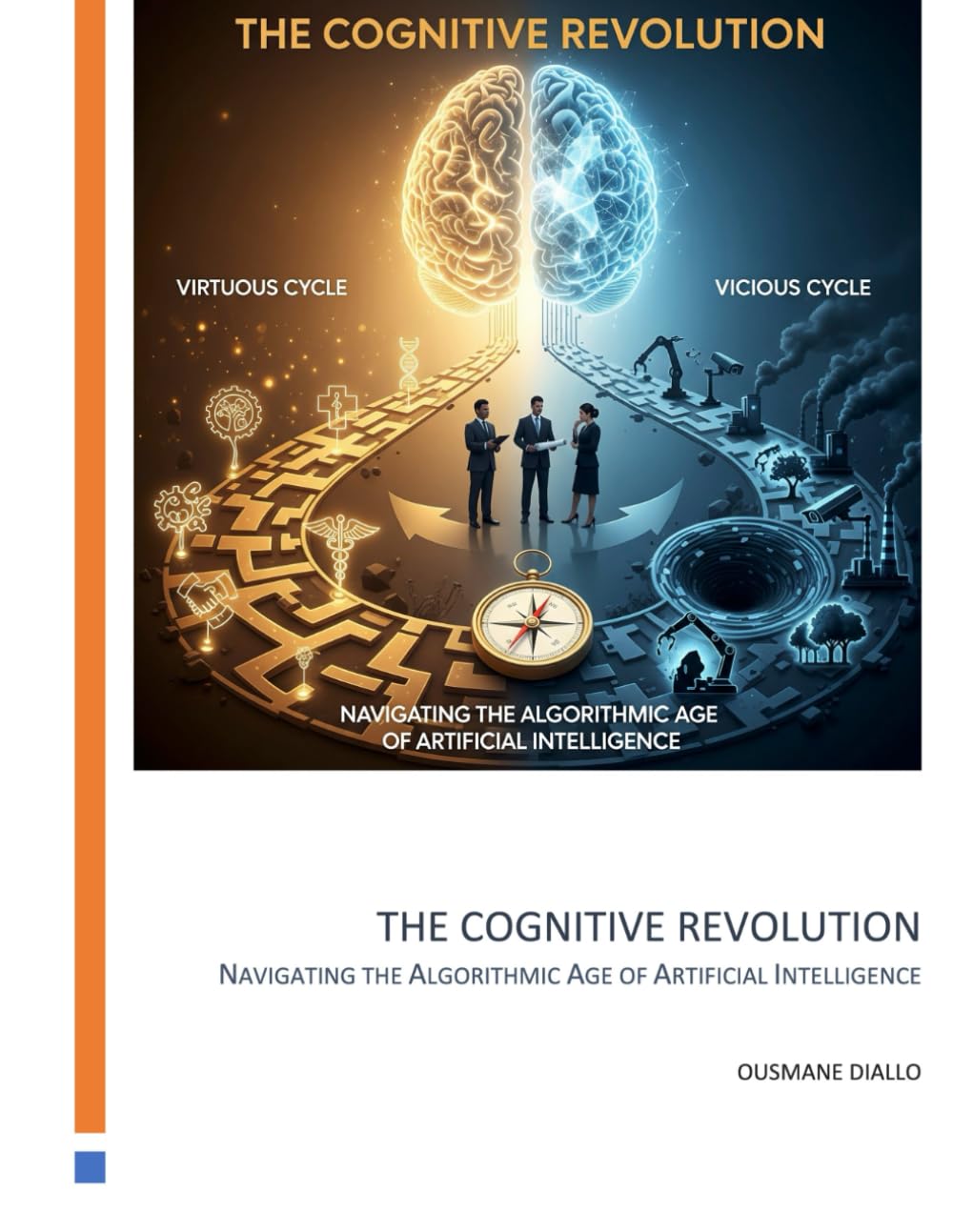
The Cognitive Revolution: Navigating the Algorithmic Age of Artificial Intelligence
$24.99
by Mr. Ousmane Diallo



The Cognitive Revolution: Navigating the Algorithmic Age of Artificial Intelligence We are living through a profound transformation — a Cognitive Revolution — in which Artificial Intelligence is quietly reshaping how we work, learn, and make sense of the world. This revolution reaches far beyond technology; it touches the very essence of what it means to think, create, and connect as humans. The question is not just where AI is taking us, but how we choose to journey with it. In The Cognitive Revolution , Ousmane Diallo — systems thinker, strategist, and innovation leader — offers a calm, deeply human framework for understanding and navigating this new era. Drawing on over 25 years of experience guiding organizations through complexity, Diallo invites readers to look past the noise and engage with the deeper patterns shaping our future. Rather than hype or alarm, this book offers clarity — a way of thinking that blends systems thinking , emotional intelligence , strategic foresight , and anticipatory governance into a practical toolkit for leaders, educators, policymakers, and citizens alike. Through reflective insights and grounded examples, The Cognitive Revolution explores: How the exponential pace of AI challenges the slower rhythm of our institutions and ethics - The evolving relationship between human capability and machine intelligence - The moral and social questions AI forces us to confront — from bias and fairness to autonomy and accountability - How AI can either accelerate or hinder progress toward sustainability and shared prosperity - What it means to lead, work, and live with wisdom in an age defined by algorithms Ultimately, this is not a book about machines — it is a book about us : our choices, our empathy, and our capacity to shape a future where innovation serves humanity rather than overwhelms it. Suppose you are seeking thoughtful guidance, grounded reflection, and a renewed sense of agency in the face of rapid change. In that case, The Cognitive Revolution will serve as your compass through complexity — helping you approach the age of AI with clarity, calm, and purpose. Review: Five Stars Must read 🏆 The future of cognitive computing has arrived - this is an essential guide This is a provocative, well-constructed, and thorough narrative which chronicles progress through innovation from a balanced perspective weighing the opportunities it presents with realities that pose risks due to the speed and scale of acceleration. It is brought into perspective as the author, Diallo, illustrates the difference between widespread proliferation of ChatGPT in worldwide usage over the past year versus the 17 years it took to reach that level of adoption with the internet. The focus on the possibilities for amplification of intelligence as opposed to the previous more utilitarian functions of connectivity and mechanization of the internet is a notable differentiation in strategic value. He describes this transformation of the cognitive dimension as more pervasive and personal and issues a stark warning that along with other measures of progress, there is a mental health crisis associated with algorithmic engagement and other challenge when faced with max uncertainty. The book's outlining of the structural geopolitical interdependencies and the impending inference economy is forward-thinking and not without challenges, a timely, complex topic worth further exploration. The emphasis on systems thinking and feedback loops is an essential aspect of a digital society as is the innovative governance models that can adapt to changing circumstances. He differentiates between novel outputs that are patterns of training data and the kinds of original human ability to generate creative and culturally meaningful forms of expression is of critical importance in maintaining a human in the proactive process of co-creation. It supports the principles of building trustworthiness by outlining the different frameworks, laws, and international governing bodies' role in establishing ethics, principles to protect human rights, freedoms, and increase transparency, and environmental protections, and calls for a new social contract. It does not rely on any one source, but recommends a multi-stakeholder approach across diverse roles in society and institutions. The examples of virtuous cycles further highlight how these technologies can be applied towards specific examples of SDG's. As information on this topic is saturated, this assimilation of topics is thorough, balanced, and includes depth of supporting research. It portrays the information in an accessible format that is a suggested 'must read' for organizational leaders who need to wrangle through these issues by mitigating risks and designing solutions that can best meet some of the most urgent and critical issues as well as advancement through innovation. In addition to the accuracy and thoroughness, Diallo brings a level of humanness in appro