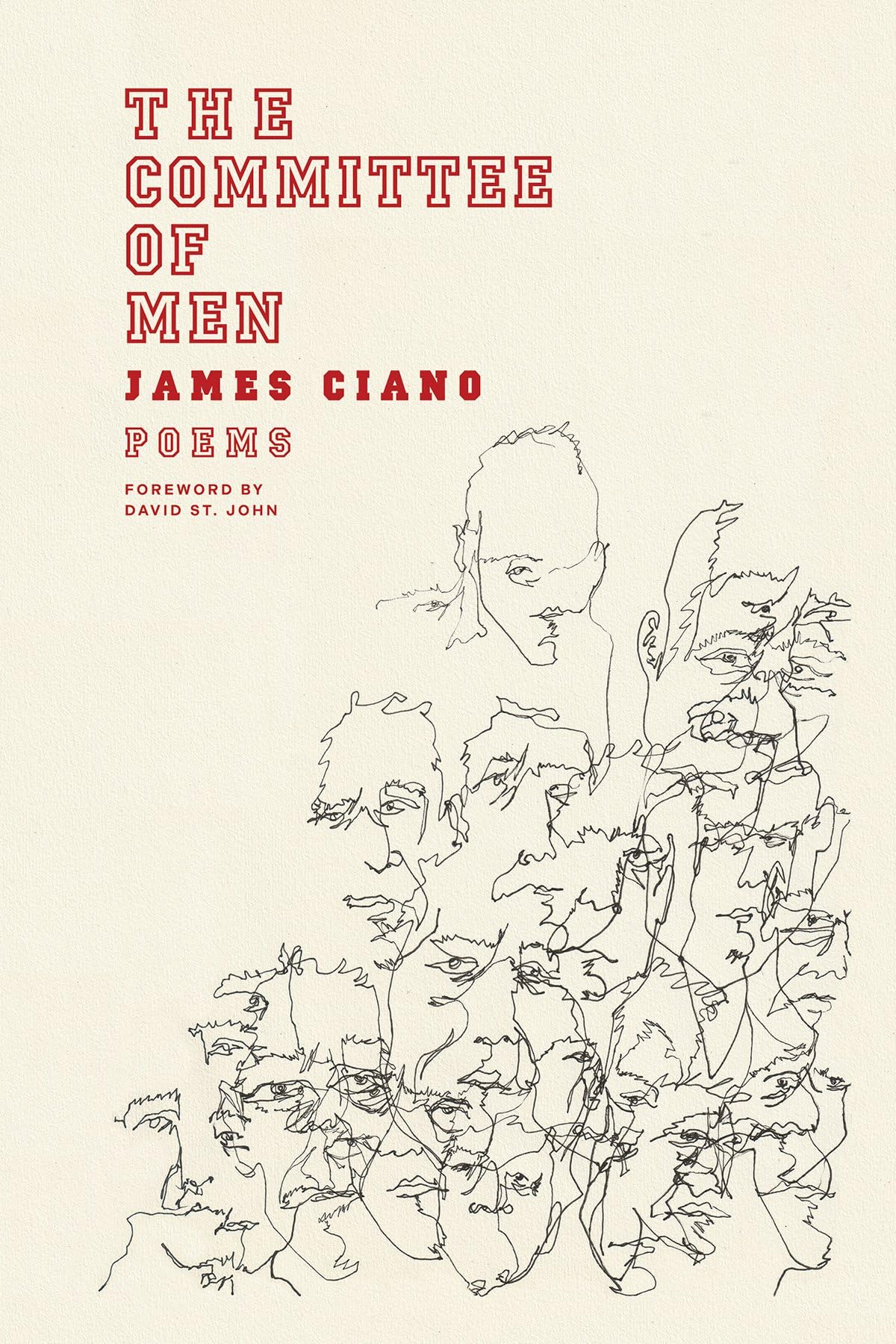



James Ciano’s debut collection, The Committee of Men , explores the cycles of violence men inflict on one another and themselves, examining how silence, shame, and inherited expectations shape masculine identity. Rooted in the speaker’s experience as a college athlete from a family of athletes—including a father who is a high school football coach—these poems confront the emotional weight of tradition and the often-unspoken struggles of male intimacy, mental illness, and familial pressure. Through sharp lyricism and emotional honesty, Ciano delves into themes of belonging and exile, accountability and forgiveness, and the quiet damage done by historically unexamined masculinity, asking what it means to break these generational cycles without severing connection, and how healing might emerge in places where vulnerability is discouraged or denied. The result is a collection that is both unflinching and deeply humane—an urgent, resonant debut that refuses to look away. The Committee of Men also includes a foreword by acclaimed poet David St. John, whose introduction situates Ciano’s work within a broader conversation about masculinity and poetic tradition, and underscores the collection’s emotional depth and significance. “In this haunted and haunting book of initiations, James Ciano takes on a past and a subject matter seldom encountered in poetry—the harsh, glaring, unpoetical world of grueling masculinity. With John Keats and James Wright as two of his guides, he uses the transformative power of poetry to confront and transfigure his longstanding demons. This deeply humane collection left me shaking, shocked, and enthralled.” —Edward Hirsch, author of Stranger by Night “James Ciano’s exquisite debut, The Committee of Men , offers striking meditations on masculinity reminiscent of B.H. Fairchild and Philip Levine. Brilliantly tender, after reading it, this collection will compel you to do as the speaker’s beloved asks: ‘Start again, from the beginning.’” —Nicole Sealey, author of The Ferguson Report: An Erasure “In poems that slalom vertiginously between tenderness, self-reproach, an insider’s vexed relationship to toxic masculinity, and love, James Ciano portrays with great deftness a young man’s coming-of age. ‘I never said yes, but I never said no,’ admits the speaker as he tries to understand, without making excuses for himself, a past that troubles him. Reading these wide-ranging, unpredictable poems, I find myself swept into a world of boys and men pressured to perform a certain kind of masculinity; I also find myself terribly moved by the speaker’s vivid, unsparing, and ultimately loving portraits of his family, with whom he seems both insider and outsider. The emotional depth and maturity of these poems is a remarkable achievement, one that speaks from a pact of silence rarely broken. Perhaps what I most admire is Ciano’s unwillingness to point fingers, holding himself accountable as he carries his readers into a mind aswirl with grief, longing, disbelief, and empathy.” —Catherine Barnett, author of Solutions for the Problem of Bodies in Space David St. John is an American poet born in Fresno, California. He is known for his collections of poetry, essays, and libretti for opera and choral symphonies. He is currently a professor at the University of Southern California. The Committee of Men (brothers) Three brothers small brothers in the yard the basement broken barstool over a back teeth white moon white moon like a hole burnt through a black feather muddy brothers running in a pack punching open the door latch the stairs palms on the stairs no lights on brothers with sticks brothers beating fists against the table hungry brothers brothers holding other brothers in the night names of brothers swimming in the summer on bicycles in beds of trucks brothers wrestling in the boiler room asleep on the floor brothers hiding brothers under the sofa soft brothers with bats bloody brothers running home from the park running to the park away from home laughing brothers in branches brothers bandaged in front of box fans the cat the brothers find hit by the car the bag the brothers place it in and bury in the yard