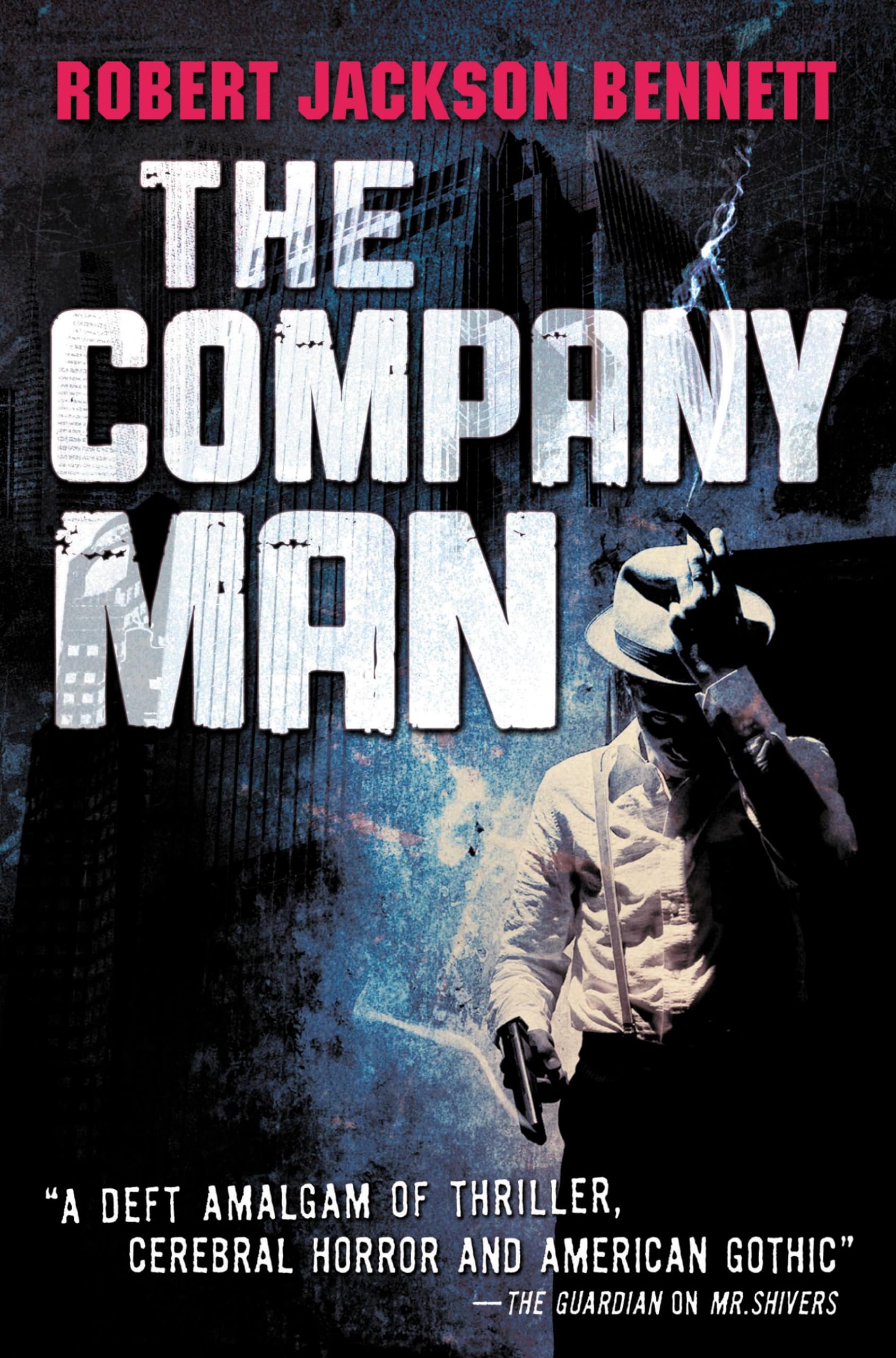



The year is 1919. The McNaughton Corporation is the pinnacle of American industry. They built the guns that won the Great War before it even began. They built the airships that tie the world together. And, above all, they built Evesden-a shining metropolis, the best that the world has to offer. But something is rotten at the heart of the city. Deep underground, a trolley car pulls into a station with eleven dead bodies inside. Four minutes before, the victims were seen boarding at the previous station. Eleven men butchered by hand in the blink of an eye. All are dead. And all are union. Now, one man, Cyril Hayes, must fix this. There is a dark secret behind the inventions of McNaughton and with a war brewing between the executives and the workers, the truth must be discovered before the whole city burns. Caught between the union and the company, between the police and the victims, Hayes must uncover the mystery before it kills him. Robert Jackson Bennett was born in Baton Rouge, Louisiana. Winner of the Shirley Jackson Award, the Sydney J. Bounds Award, and an Edgar Award, he is the author of the novels Mr. Shivers, The Company Man, The Troupe, American Elsewhere , the Founders trilogy, and the Divine Cities trilogy, which was a 2018 Hugo Awards finalist in the Best Series category. Find out more about the author at www.robertjacksonbennett.com. The Company Man By Bennett, Robert Jackson Orbit Copyright © 2011 Bennett, Robert Jackson All right reserved. ISBN: 9780316054706 CHAPTER ONE The canal was a gray, rotting thing, so polluted and turgid that what it contained could hardly be called water at all. It wound below the stone arches and the spiderweb trusses of its many bridges, and at each bend it gained yet more refuse. At one turning enough sediment and muck had happened to gather and dry to become something like soil. There small, mousy reeds grew and clutched at the passing garbage, forming a staggered little delta that curved out across the canal. Hayes looked at the little nest and saw something shining on the edge. He examined the sludge around the channel and frowned at his shoes, then sighed and found the best purchase and leaned forward. He scooped up the prize and took out his handkerchief and cleaned off the mud. It was a coin, underneath it all. A politician’s stern face glared back, on the other side a state bird or some creed. He smiled and laughed and held it up to the sky, trying to find a rare stream of sunlight falling through the towering buildings of the surrounding neighborhood. Finding none, he gave up. “Hey!” called a voice. He turned and saw Garvey looking down at him from the top of the hill. “Yes?” said Hayes. “We hooked him,” Garvey said. “Good for you,” said Hayes. “Come on over.” “Why?” “Come on over,” said Garvey again. “I don’t particularly want to. I’m enjoying myself here,” Hayes said, gesturing to the river. “Look, I found a quarter.” “You don’t want to see him?” Garvey asked. “I don’t need to see him. You’re not going to file it just by seeing him.” “That’s not the point. Come on, get over here.” Hayes walked to Garvey at the top of the hill, Garvey glaring at him all the while, and then they both descended into the other side of the canal. It was an immense construction, a blank gray canyon with shanties and tumbling lean-tos grouped down closer to the water. All of them had been abandoned as the police first invaded. Garvey and Hayes picked their way down around soiled vagrant beddings and miles of graffiti. On one spot there were the faded bones of a hopscotch game. Hayes tried to imagine children playing next to this reeking Styx and abandoned it. The morning mist was lifting and Hayes could just make out the other officers milling away down on the bank. Something white and smooth floated out on the waters ahead. The air was so cold and wet it stung and Hayes pulled his scarf tight. On cold mornings like this he ached for the sour honey warmth of bourbon in his belly, but he steeled himself and tried to push those thoughts from his mind. “Say, who is this on this quarter?” he said. He held it out. “I can never keep track of your politicians.” “He was spotted a ways down the canal,” said Garvey, ignoring him. “Head down, drifting our way. Looks like someone sent him on a swim.” “Doesn’t seem to be a very good swimmer,” said Hayes. “No. No, he doesn’t.” They both approached the bank slowly. Garvey moved with the practiced plod of a harassed policeman, already resigned to face the terrible day. A uniform scurried up to match his pace and Garvey nodded absently as he rattled off a few facts and details about the sight ahead, none of which amounted to anything. The uniform waited expectantly, hoping for some commendation or at least acknowledgment from the big detective, but Garvey’s face betrayed nothing. He just sniffed and put his hands in his pockets as though enjoying any pleasant stroll. Crestfallen, the uniform departed, and Hayes resumed