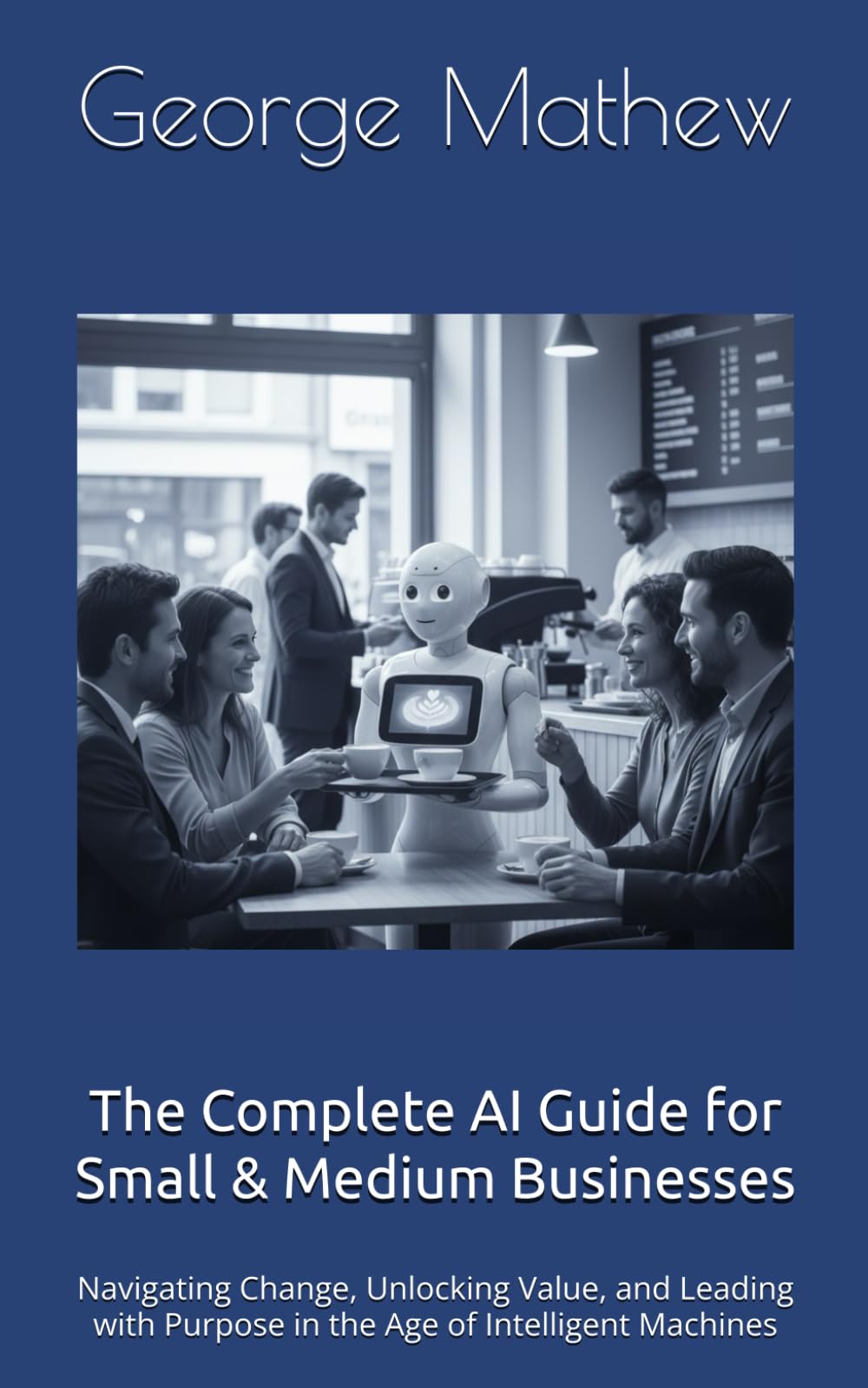
The Complete AI Guide for Small & Medium Businesses: Navigating Change, Unlocking Value, and Leading with Purpose in the Age of Intelligent Machines
$16.90
by George Mathew



Artificial Intelligence has rapidly transitioned from science fiction to a business imperative. For small and medium-sized enterprises (SMEs), understanding and adopting AI is no longer optional - it's becoming a crucial survival skill in 2025. Despite its immense potential, AI is often shrouded in misconceptions that prevent businesses from leveraging it effectively. This book cuts through the hype, providing a practical, no-nonsense guide for smart AI integration. Discover how to bust common AI myths • AI is too expensive: Learn about affordable or even free AI tools, scalable subscription models, and how cloud computing avoids large initial investments. • AI will replace staff: Understand how AI supports and augments human employees by automating routine tasks, increasing productivity, and reducing administrative burdens. • You need to be a tech expert: Explore user-friendly AI tools designed with simple drag-and-drop interfaces, requiring no computer science degree. • AI is a new, major investment: Realize you're likely already using AI through existing software like Microsoft Office 365, email spam filters, or virtual assistants. • It's hard to identify the right products due to hype: Focus on identifying a specific business problem first, then seek the technology that solves it.This guide addresses general barriers to AI adoption, offering solutions for lack of understanding, financial constraints, integration challenges, time limitations, data privacy concerns, and skilled employee shortages. The book outlines 7 smart AI adoption strategies for SMBs: 1. Start with a Strategy – Not a Shiny Tool: Prioritize value by identifying repetitive tasks and areas for improvement. 2. Use What You Already Have – or What’s Free: Opt for no-coding, low-cost, or freemium tools that integrate into existing workflows. 3. Seek the Right Help – Without Hiring a CTO: Leverage affordable external expertise from freelance platforms, universities, or AI concierge tools. 4. Train for Curiosity, Not Mastery: Ensure everyone understands AI's possibilities, even without coding, and appoint an 'AI Champion. 5. Target Micro-Changes, Not Mega Projects: Focus on small, compounding efficiencies rather than overwhelming transformations. 6. Prioritize Functions Ripe for AI: Identify key areas like Sales, Customer Service, Marketing, Operations, and Finance as starting points. 7. Be Mindful of Risk – Especially with Data: Implement safeguards against sensitive information leakage, intellectual property loss, and 'hallucinations,' emphasizing 'human-in-the-loop' workflows. You'll gain insight into the 'AI Iceberg,' understanding that the journey can be complex, with critical issues like data readiness, bias, and the need for independent advice lurking beneath the surface. Learn the crucial 'Art of Framing the Problem,' an empathetic and rigorous approach to defining the right problem before rushing to solutions, ensuring your AI initiatives deliver real value and avoid 'pilot purgatory.' Ultimately, this book demonstrates that AI's true superpower is augmentation, not replacement. It's about offloading 'inhuman tasks' to empower your team to become more human, fostering innovation, resilience, and growth in an AI-augmented world. This is your essential roadmap to confidently navigate the AI landscape and unlock unprecedented potential for your business. Thought Provoking and Practical Leveraging a vast wealth of knowledge and experience, George Mathew presents a highly pragmatic approach to AI. This book cuts through the perceived complexities of AI, busting the myths surrounding it whist championing the humanity of those that it will serve. As you read, you'll be energised and empowered to take practical steps in your AI journey. Joshua Groenestyn, Director, Sydney Packaging