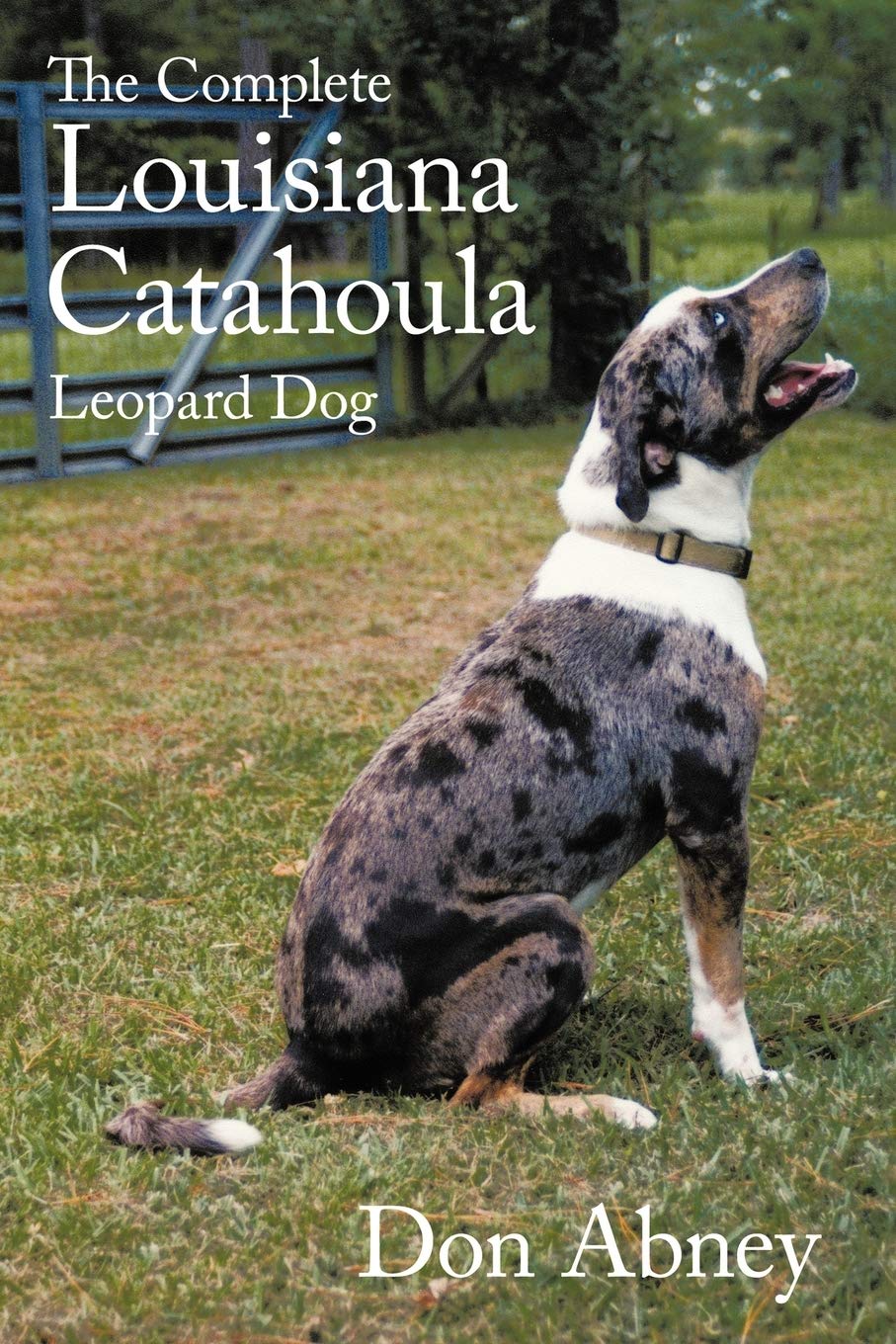



Goes way beyond a typical breed book. The author’s breadth of research, resources, insights and details are priceless. This book is a must-have for Catahoula owners! Nikki Ott breeder of champions in conformation, obedience, hog hunting and baying I strongly feel that anyone who owns or wishes to own a Catahoula should read this book, and everyone breeding Catahoulas or wishing to breed them MUST read this book. Don Abney is a man “who knows his own mind.” He is not afraid to form his opinions based on facts as he knows them to be, with total disregard to popular folklore. This is the best book on the Catahoula I have ever read! John Sumrall 40 years’ experience breeding championship and working cattle dogs Don’s new book contains information you cannot find elsewhere. I have learned a lot from reading it. As a breeder with over 40 years’ experience, I will have it on my shelf and reference it often. I could not put it down. Aubrey Aden also breeding working and championship cattle dogs for 40 years. The Complete Louisiana Catahoula Leopard Dog By Don Abney AuthorHouse Copyright © 2011 Don Abney All right reserved. ISBN: 978-1-4567-5523-2 Contents Preface................................................xiAcknowledgements.......................................xiiiIntroduction...........................................xvHistory................................................1A Dog of Distinction...................................15Conformation Standard..................................21Genetically Speaking...................................29Coat...................................................35Eyes...................................................41Deafness...............................................45Hips...................................................51Parasites..............................................57Diseases and Vaccines..................................73Facts About Food.......................................79General Care...........................................95Catahoulas at Work and Play............................101Selecting The Breeding Pair............................113Understanding The Heat Cycle...........................121Breeding Age and Frequency.............................125Breeding Styles........................................131Breeding Methods.......................................135The Breeding...........................................139Pregnancy – Care and Feeding.....................143Whelping...............................................147Post Delivery..........................................151Reproduction Problems..................................157Unplanned Breeding.....................................161Afterword..............................................163About the Author.......................................165Bibliography...........................................169 Chapter One History In the early 1500s, the Indians in and around Louisiana used the Red Wolf 's cunning ability to aid them in locating game much in the same manner as modern-day hunters use their dogs. The wolves, though wild, would maintain a safe distance at the outskirts of the Indian camps in search of food that might be left behind. By tossing scraps of food to the wolves, a bond was established, enabling the Indians to use the wolf's expertise and tracking ability in the pursuit of game. By forming this bond with the wolves, the Indians were able to hunt within the same vicinity as the wolf packs without concern of having their position exposed and, ultimately, scaring off the game. The American Indians could be perceived as the original naturalists. Primitive in their lifestyle as compared to that of the explorers to come, the Indians were nomadic, moving with the herds of animals and changes in weather, and never claiming the land on which they lived. The Indians would not kill an animal for the sport of killing, but would do so for food to support the village or to defend against an attack. The pelts or skins of the animals were used to fashion clothing, so there was very little waste. There are some historians who point to breeds other than those carried by DeSoto as being a part of the Catahoula's inception. Some of the breeds mentioned are Xoloitzcuintli, Peruvian Inca Orchid, and Carolina Dog. I offer the following information. The Xoloitzcuintli is a small dog native to Mexico and Central and South America. It is similar in appearance to the Pharaoh Hound and known to be the dog of the Aztecs. This breed ranges in size from nine to 30 pounds. In addition to its small stature, this breed is known for the dominant trait of hairlessness and has upright ears. Although considered an ancient breed, it could not have endured the winters of northern Louisiana. The Peruvian Inca Orchid originated in Peru and lived in the homes of the Inca nobility, as was discovered by Spanish explorers in the early 1500s. This places a very l