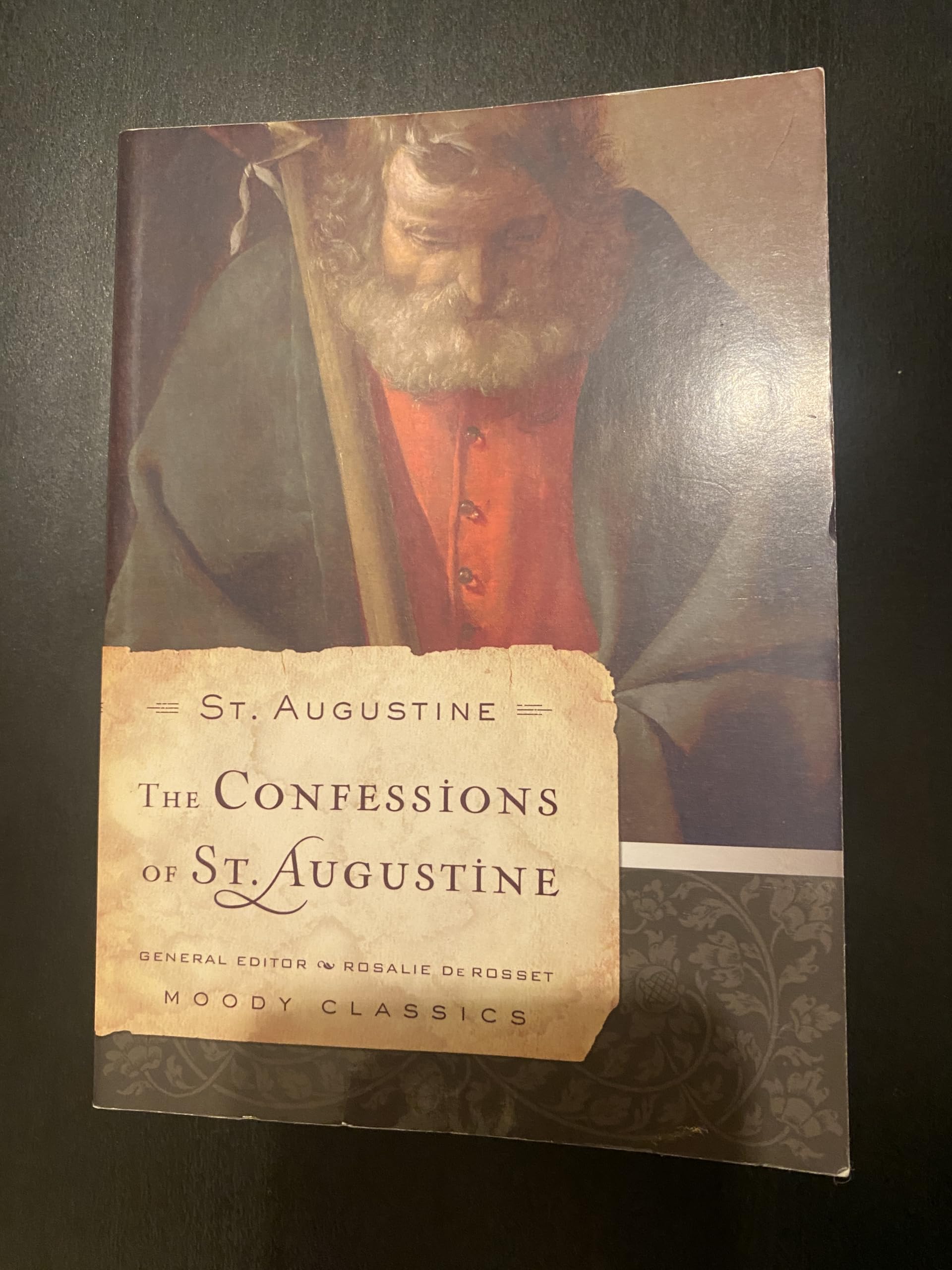



"Augustine never thought of God without thinking of his sin, nor of his sin without thinking of Christ." St. Augustine grates hard against "the anatomy of evil" while dealing succinctly and honestly with his own proneness toward sin. From his infatuation with its initial beauty to the discounting of his previously wasted life, Augustine leaves little to the imagination regarding his need to be saved from himself. Most of Augustine's Confessions are spent in a nearly catastrophe tug of war. From insult and injury to passion, lost love, and the arts--this work leads through and beyond a world where God's timing is absolutely perfect. Nothing has really changed since then. Sin is still sin--and God is still God. Moody Classics Of all the factors influencing our spiritual growth and development, pivotal books play a key role. Learning from those who have walked the path and fought the fight brings wisdom and strengthens resolve. And hearing the familiar chords of kingdom living sung by voices from other times can penetrate cultural barriers that limit our allegiance to the King. To this end, Moody Publishers is honored to introduce the first six volumes in what is to be an ongoing series of spiritual classics. Selected for their enduring influence and timeless perspective, these new editions promise to shape the lives of spiritual pilgrims for generations to come. "Augustine never thought of God without thinking of his sin, nor of his sin without thinking of Christ." St. Augustine grates hard against "the anatomy of evil" while dealing succinctly and honestly with his own proneness toward sin. From his infatuation with its initial beauty to the discounting of his previously wasted life, Augustine leaves little to the imagination regarding his need to be saved from himself. Most of Augustine's Confessions are spent in a nearly catastrophic tug-of-war. From insult and injury to passion, lost love, and the arts--this work leads through and beyond a world where God's timing is absolutely perfect. Nothing has really changed since then. Sin is still sin--and God is still God. AUGUSTINE OF HIPPO (354-430) was one of the foremost philosopher-theologians of early Christianity and the leading figure in the church of North Africa. He became bishop of Hippo in 396 and held that position until his death. Before becoming a Christian, Augustine lived a very secular life. His mother Monica prayed for him diligently and at age 32, during a trip to Milan, Augustine heard the preaching of St. Ambrose, was convicted by the Holy Spirit, and became a Christian. His numerous written works, the most important of which are his Confessions and City of God, shaped the practice of biblical exegesis and helped lay the foundation for much of medieval and modern Christian thought. DR. ROSALIE DE ROSSET is a professor of Literature, English and Homiletics at Moody Bible Institute where she has been for forty-two years. She earned her M.A. in English from Northeastern Illinois University, M.Div. from Trinity Evangelical Divinity School, and Ph.D. in Language, Literacy, and Rhetoric from The University of Illinois at Chicago. In addition to teaching, she regularly appears on Moody Broadcasting Network programs as a guest and co-host, and speaks at conferences and seminars. She lives on the northside of Chicago. The Confessions of St. Augustine MOODY PUBLISHERS Copyright © 2007 MOODY BIBLE INSTITUTE All right reserved. ISBN: 978-0-8024-5651-9 Contents INTRODUCTION.........................9THE FIRST BOOK.......................19THE SECOND BOOK......................44THE THIRD BOOK.......................58THE FOURTH BOOK......................78THE FIFTH BOOK.......................102THE SIXTH BOOK.......................126THE SEVENTH BOOK.....................153THE EIGHTH BOOK......................183THE NINTH BOOK.......................212THE TENTH BOOK.......................243NOTES................................299TO THINK ABOUT.......................304 Introduction Augustine's Confessions Who will give me help, so that I may rest in you? Who will help me, so that you will come into my heart and inebriate it to the end that I may forget my evils and embrace you, my one good? - Book 1, Chap. 5 That Augustine was one of the greatest minds who has ever been in the church is a given, and his most well-known work, the Confessions, has a unique place among the world's great classics, The line that appears in the opening paragraph of Book 1, "our heart is restless, until it rest in thee," is quoted everywhere, though not everyone who quotes it or hears it knows where it came from and may even think it's a biblical saying. Many people also know that Augustine was the son of Monica, a mother who prayed faithfully and arduously for him for years, and that he was finally converted from a rebellious and promiscuous life. Sadly, however, too few mainstream Christians outside of academia or a classr