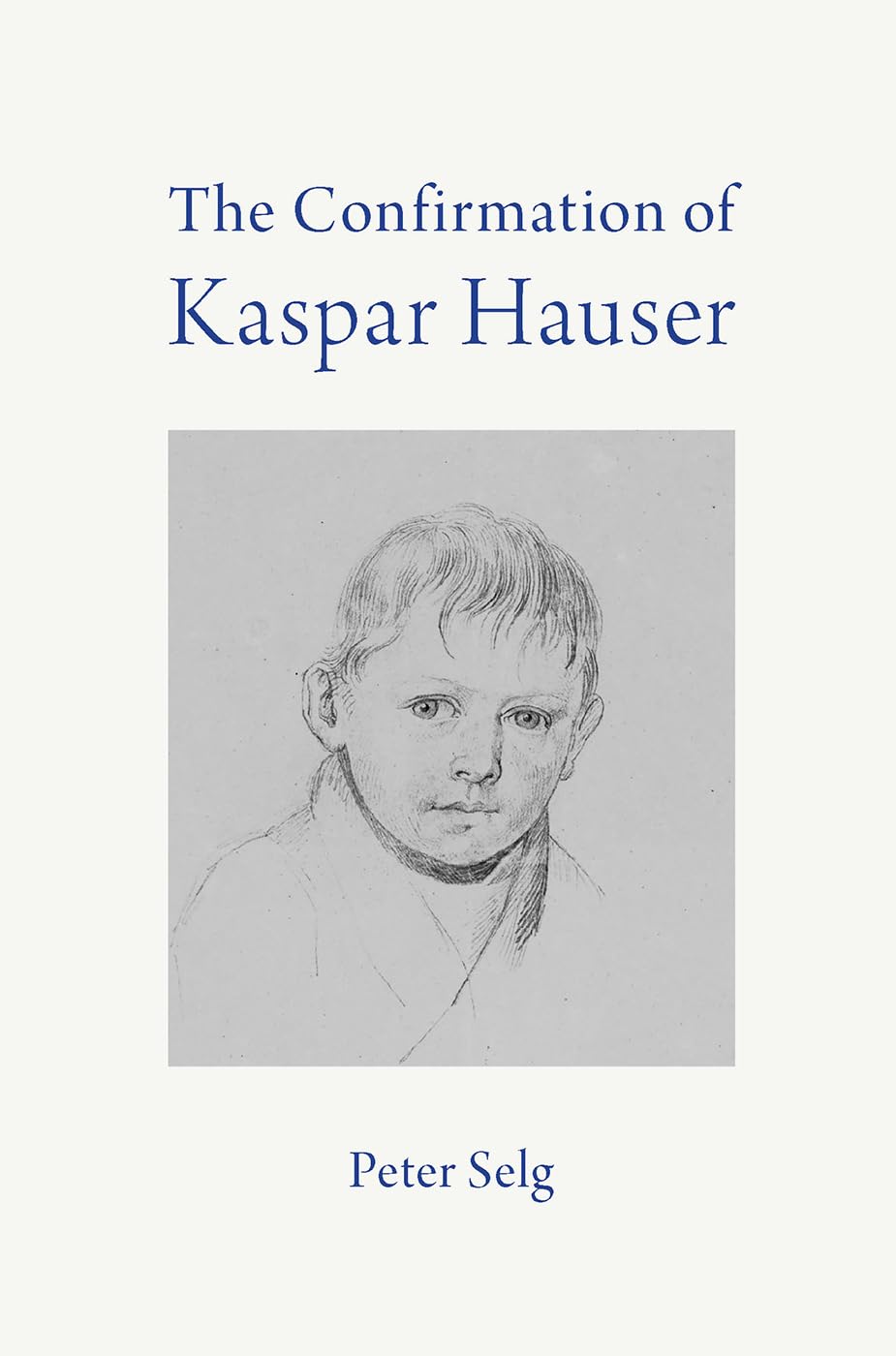



During the 2018 Kaspar Hauser Festival in Ansbach, Germany, Peter Selg assumed the task of understanding the individuals in Kaspar Hauser’s life and comprehending their significance for his destiny. He begins by unfolding the sociopolitical and philosophical milieu during Hauser’s life, starting with Friedrich Hölderlin and other significant luminaries of the time. A fellow student and friend of Hölderlin said of Kaspar Hauser, “His fine facial features, his gentle expression, his beautiful bearing, his carefully tended attire, and the unmistakable loftiness expressed in his being have always remained with me,” saying further, “Whoever saw him loved him, and whoever became acquainted with him remained his friend.” Selg compares the biographies of Kaspar Hauser and Rudolf Steiner, who stated, “If Kaspar Hauser had not lived and died as he did, the contact between the earth and the spiritual world would have been completely broken.” And Selg points out, “Through his path of suffering, Hauser prepared something that would allow new life and a new ‘teaching’ to enter the earthly realm.” “It was not only fame that Kaspar Hauser and Rudolf Steiner shared, but also the common fate of suffering under the methodical campaign of their opponents. From the very beginning, the aim was to divert Hauser from his task―indeed, from his very individuality―through subjecting him to long years of confinement, through the assassination attempt in Nuremberg, and finally the fatal stabbing in the Hofgarten in Ansbach.” ― Peter Selg We are also able witness Kaspar Hauser’s confirmation ceremony of May 20, 1833, in the Swan Knight Chapel of the Gumbertus Church in Ansbach. Eckart Böhmer, director of the Kaspar Hauser Festival, wrote, “Kaspar Hauser’s confirmation, probably in his 21st year, is possibly the brightest event of his short life.” This book is a translation from German of the book Schicksals-Weihe. Die Konfirmation Kaspar Hausers (Verlag des Ita Wegman Instituts, Stuttgart, 2018) and chapters 1 & 2 from Das andere Deutschland. Über Friedrich Hölderlin, Kaspar Hauser und Rudolf Steiner (Verlag des Ita Wegman Instituts, Stuttgart, 2016). Peter Selg studied medicine in Witten-Herdecke, Zurich, and Berlin and, until 2000, worked as the head physician of the juvenile psychiatry department of Herdecke Hospital in Germany. Dr. Selg is director of the Ita Wegman Institute for Basic Research into Anthroposophy (Arlesheim, Switzerland), professor of medicine at the Alanus University of Arts and Social Sciences (Germany), and co-leader of the General Anthroposophical Section at the Goetheanum. He is the author of numerous books on Rudolf Steiner, anthroposophy, medical ethics, and the development of culture and consciousness. Chapter 1 (excerpt) Dear Friends, Today we look back to an event that took place on May 20, 1833, in Kaspar Hauser’s twenty-first year of life. It is generally referred to as his confirmation, but I believe it could also be considered an adult baptism―Kaspar Hauser’s Christian baptism. A letter that was supposedly written by a “house maid” was found on Kaspar Hauser when he appeared in Nuremberg on Whit Monday in 1828, saying “this child has been baptized.” But there was another letter, supposedly written by his mother, which was, however, found to have been written by the same hand as the first; and as we now know, both letters were full of lies and inconsistencies. It seems clear that the mention of a baptism is just not true. The assertion that he had been “raised as a Christian” is also definitely false. The celebration of Kaspar’s confirmation on May 20, 1833, took place in the Ansbach Gumbertus Church in the Chapel of the Knights of the Swan. The most prominent Ansbach families gathered expectantly in this late Gothic chapel, including those who had accompanied Kaspar Hauser’s path in recent years. Georg Friedrich Daumer, however, was not among them, but it is likely that Anselm von Feuerbach, the District President Stichaner, and a few others were there, whom the Pastor Fuhrmann referred to as “caretakers and guides” in the course of the service. Not all these people filled that role; we only have to think of the teacher Meyer in whose house Kaspar had been living since 1831. Nevertheless, they all came to the celebration. “ We are here to perform a deed ,” said Johann Simon Heinrich Fuhrmann. He was a gifted pastor with an awareness of the cultus, as I will soon show. Fuhrmann began by addressing the Father God: May the solemn celebration on this day penetrate deeply into his [Kaspar’s] heart so that its imprint may remain with him forever. The celebration of the sacrament was to provide Kaspar with “a holy light in the final battle,” Fuhrmann said. So it was, even if the pastor could not imagine that this “final battle” stood so soon before him. Only seven months later, on December 20, 1833, Fuhrmann would speak words of blessing at his grave and then hold a sermon for Kaspar Hauser to a wider c