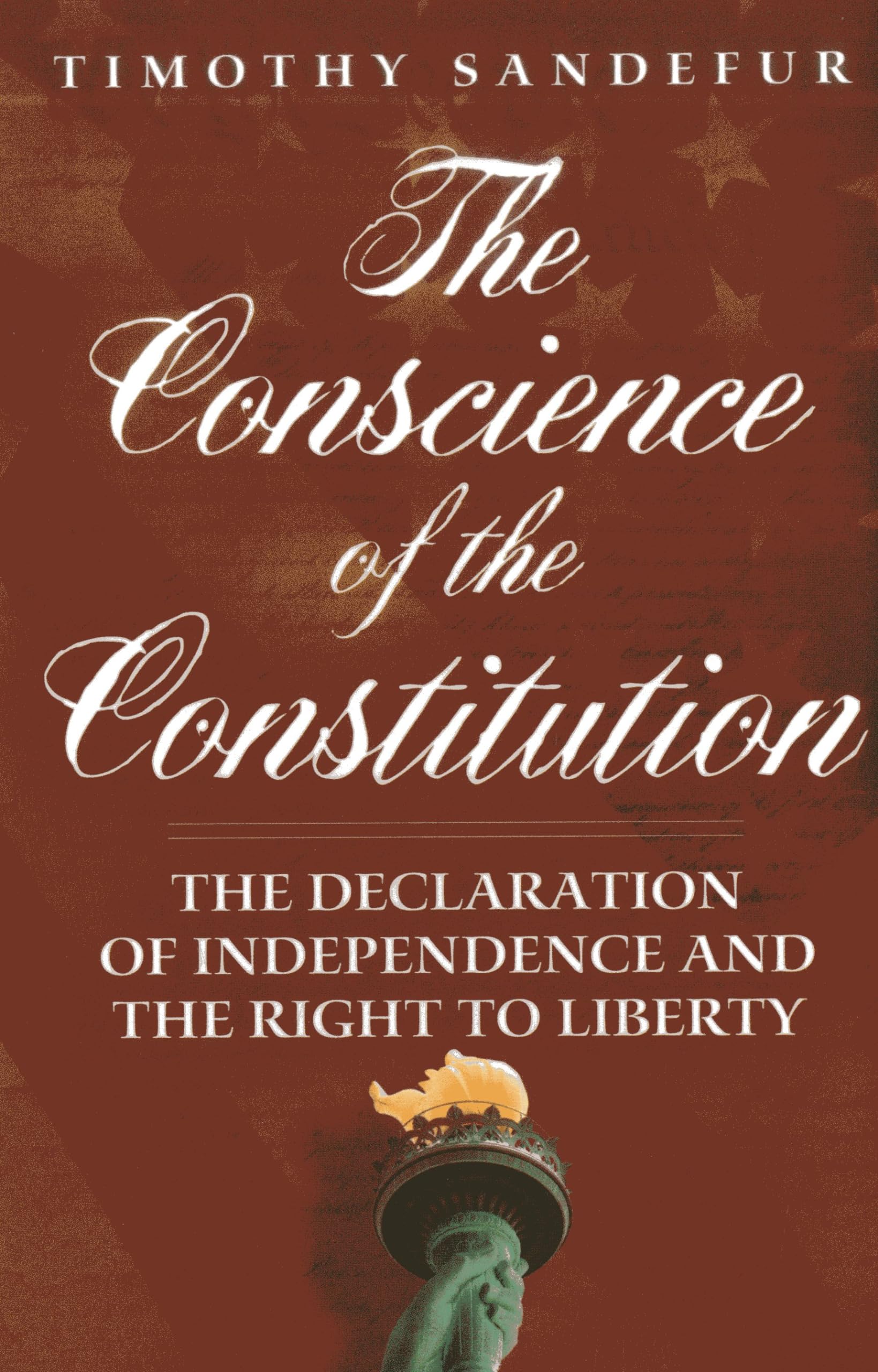
The Conscience of the Constitution: The Declaration of Independence and the Right to Liberty
$16.52
by Timothy Sandefur



Is liberty or democracy the primary constitutional value? At a time when Americans are increasingly facing violations of their civil liberties, Timothy Sandefur's insightful new book explains why the Declaration of Independence, with its doctrines on the primacy of liberty, the natural rights of man, and the limits on legitimate government, should serve as the guidepost for understanding the Constitution. The author takes the reader through the ideas of substantive due process and judicial activism and defends them from mainstream criticisms while drawing on examples from literature, television, and Supreme Court cases. The Conscience of the Constitution: The Declaration of Independence and the Right to Liberty argues that modern legal doctrines, which value democracy over liberty, are endangering individual rights and corrupting our civic institutions. "Now the nation no longer lacks what it has long needed, a slender book that lucidly explains the intensity of conservatism's disagreements with progressivism. For the many Americans who are puzzled and dismayed by the heatedness of political argument today, the message of Timothy Sandefur's The Conscience of the Constitution: The Declaration of Independence and the Right to Liberty is this: The temperature of today's politics is commensurate to the stakes of today's argument." -- George Will, The Washington Post "This is an excellent book. I was just going to write it myself.... This book should be in everyone's library." --Hadley Arkes "A passionate and vigorous defense of the constitution of liberty." --Jeffrey Rosen, National Constitution Center "A wonderful book.... One of the best minds on Con Law in the U.S." --Hugh Hewitt " The Conscience of the Constitution posits a role for the Fourteenth Amendment in protecting natural rights from abuse at both the federal and state level. It is a great defense of individual liberty." --Senator Rand Paul The Conscience of the Constitution: The Declaration of Independence and the Right to Liberty documents a vital, forgotten truth: our Constitution was written not to empower democracy, but to secure liberty. In fact, the word "democracy" does not occur in either the Constitution or the Declaration of Independence. Yet, to author and constitutional scholar Timothy Sandefur, the overemphasis on democracy by today's legal community--rather than the primacy of liberty, as expressed in the Declaration of Independence--has helped expand the scope of government power at the expense of individual rights. Now, more than ever, the Declaration of Independence should be the framework for interpreting our fundamental law. It is the conscience of the Constitution. "Liberty comes first and order arises from it," states Sandefur. "We have gone astray in our constitutional understanding because we have upended that relationship." The Conscience of the Constitution traces this upheaval back to the timeless conflict between freedom and power that gave rise to the Civil War and that was revived again by the Supreme Court's disastrous ruling in the 1873 Slaughter-House cases. Sandefur then examines the origins of controversial legal theories such as "substantive due process" and "judicial activism" and defends them against a wave of arguments from both left and the right. Although both sides of the political spectrum criticize the courts today for protecting individual rights too effectively, Sandefur shows that in reality judges have often abdicated their duty to rein in government abuses. Today, more and more Americans are witnessing their individual freedoms threatened and destroyed by the continually expanding grasp of government. While Americans will always differ over important political issues, our Constitution was meant to ensure that some things should not be settled by majority vote. In The Conscience of the Constitution, Timothy Sandefur presents a dramatic, richly compelling new challenge to the status quo of constitutional law. Timothy Sandefur is an adjunct scholar at the Cato Institute, an attorney at the Pacific Legal Foundation, and the author of The Right To Earn a Living: Economic Freedom and the Law and Cornerstone of Liberty: Property Rights in 21st Century America . He lives near Sacramento, California.