The Corner of the Living: Ayacucho on the Eve of the Shining Path Insurgency (First Peoples: New Directions in Indigenous Studies)
$36.49
by Miguel La Serna



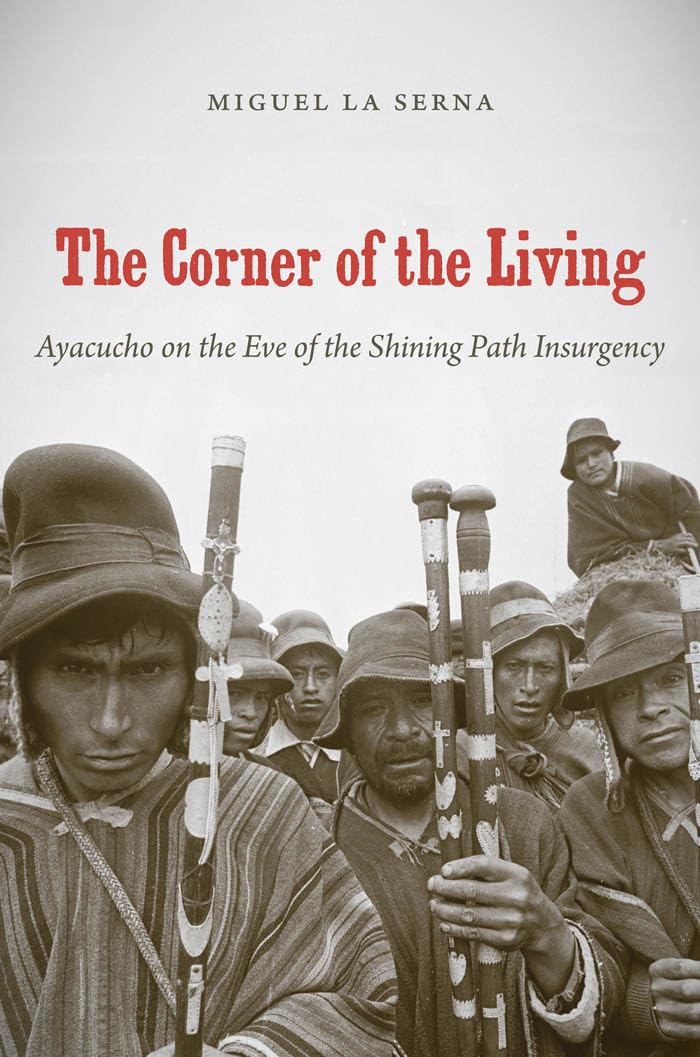
Peru’s indigenous peoples played a key role in the tortured tale of Shining Path guerrillas from the 1960s through the first decade of the twenty-first century. The villagers of Chuschi and Huaychao, high in the mountains of the department of Ayacucho, have an iconic place in this violent history. Emphasizing the years leading up to the peak period of violence from 1980 to 2000, when 69,000 people lost their lives, Miguel La Serna asks why some Andean peasants chose to embrace Shining Path ideology and others did not. Drawing on archival materials and ethnographic field work, La Serna argues that historically rooted and locally specific power relations, social conflicts, and cultural understandings shaped the responses of indigenous peasants to the insurgency. In Chuschi, the guerrillas found indigenous support for the movement and dreamed of sparking a worldwide Maoist revolution. In Huaychao, by contrast, villagers rose up against Shining Path forces, precipitating more violence and feeding an international uproar that took on political significance for Peru during the Cold War. The Corner of the Living illuminates both the stark realities of life for the rural poor everywhere and why they may or may not choose to mobilize around a revolutionary cause. "Engagingly written and well-researched, La Serna’s book is an invaluable contribution for understanding the rise of the Shining Path and communities' responses to it. — The Americas “Represents a major and original contribution.” — Journal of Latin American Studies “La Serna’s argument is compelling and persuasive. . . . The writing is vivid, the research impressive, and the analysis lucid.” — Steve Stern, The Historian “Well written, engaging and accessible. . . . La Serna has produced a work that will stand as a key source for understanding Peru’s Shining Path war and indigenous peasants’ complex participation in the conflict.” — Canadian Journal of History “Highly recommended. All levels/libraries.” — CHOICE “This book adds a new dimension to our understanding of Peru’s war by focusing on two mountain villages at the very center of the storm. La Serna’s knack for storytelling and clear, smart prose make the book accessible to both lay and undergraduate readers. His empathy for the villagers enables him to bring to life their motivations and sensibilities and gives us new insight into the predicament of the rural poor everywhere.” — Orin Starn, Duke University The influence of two Peruvian indigenous communities on Cold War politics Peru's indigenous peoples played a key role in the tortured tale of Shining Path guerrillas from the 1960s through the first decade of the 21st century. The villagers of Chuschi and Huaychao, high in the mountains of the department of Ayacucho, have an iconic place in this violent history. Emphasizing the years leading up to the peak period of violence from 1980 to 2000, when 69,000 people lost their lives, Miguel La Serna asks why some Andean peasants chose to embrace Shining Path ideology and others did not. Peru's indigenous peoples played a key role in the tortured tale of Shining Path guerrillas from the 1960s through the first decade of the 21st century. The villagers of Chuschi and Huaychao, high in the mountains of the department of Ayacucho, have an iconic place in this violent history. Emphasizing the years leading up to the peak period of violence from 1980 to 2000, when 69,000 people lost their lives, Miguel La Serna asks why some Andean peasants chose to embrace Shining Path ideology and others did not. Miguel La Serna is assistant professor of history at the University of North Carolina at Chapel Hill. Used Book in Good Condition