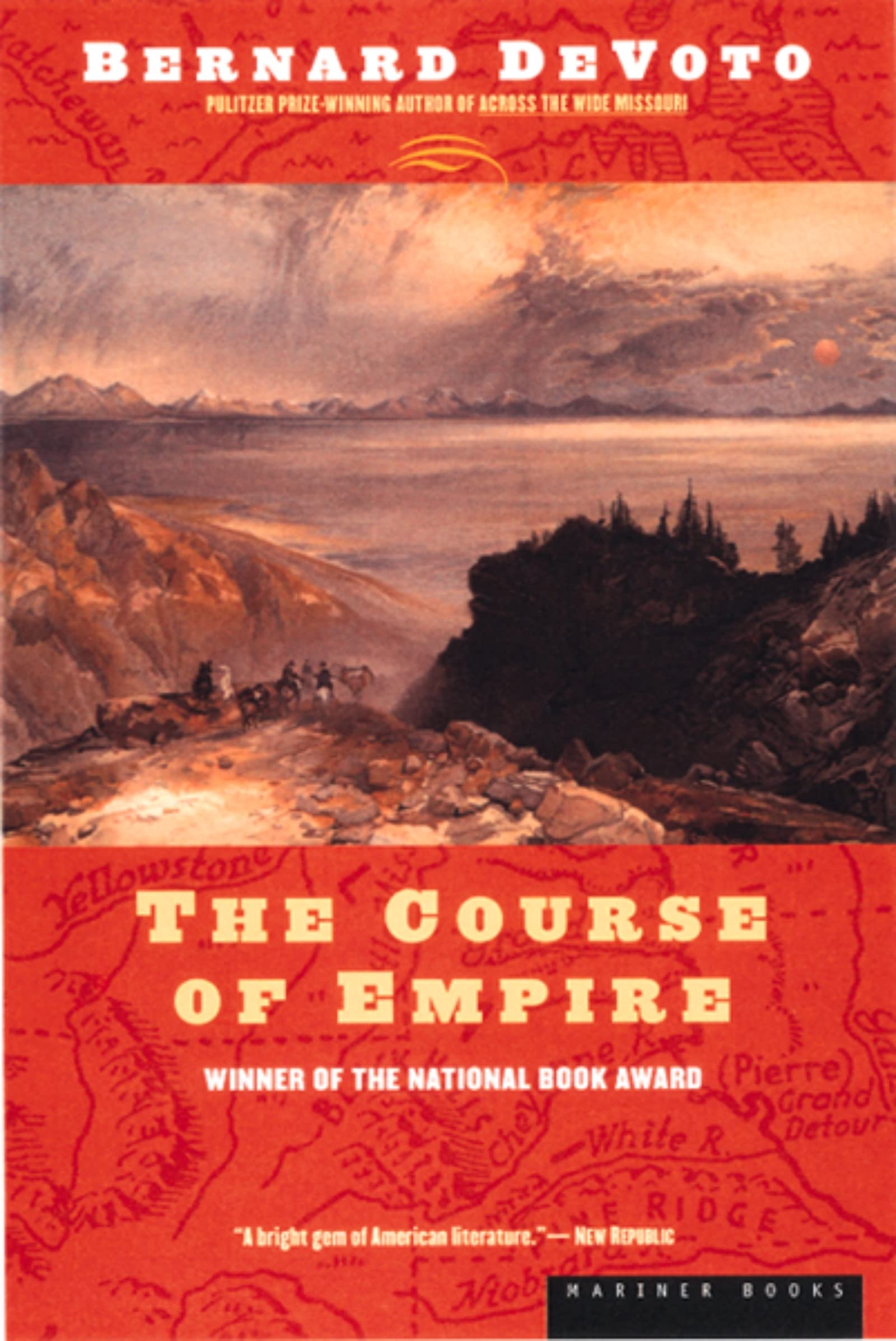
The Course Of Empire: The Dramatic History of Exploration That Defined America―From Balboa to Lewis and Clark
$22.99
by Bernard DeVoto



Tracing North American Exploration from Balboa to Lewis and Clark, Devoto tells in a classic fashion how the drama of discovery defined the American nation. The Course of Empire is the third volume in historian Bernard Devoto’s monumental trilogy of the West. Entertaining and incisive, this is the dramatic story of three hundred years of exploration of North America leading up to 1805. Until his death in 1955, critic Bernard DeVoto explored a conception of the American character rooted in the experience of westward expansion. Unlike those who championed the civilizing graces of the agrarian frontier, DeVoto drew inspiration from the mercenary, imperial designs of the fur trade. The Course of Empire , the most elaborate of his chronicles of mountain men and their impact on U.S. history, meticulously accounts for every major Euro-American expedition and enterprise west of the Alleghenies from the 1520s through the 1830s. In exploiting the West's resources, trappers, priests and explorers had to find new ways of navigating, mapping, and staking territorial claims. Eventually they made alliances amongst some of the native inhabitants and war upon hostiles and interlopers in order to protect their nation's trade routes. This unique political economy, according to DeVoto, ultimately shaped the budding republic's belief that it was destined to rule the continent. By emphasizing how indigenous social and environmental factors effected the protocols of conquest, The Course of Empire foreshadowed cultural studies such as Henry Nash Smith's Virgin Land and Richard Slotkin's trilogy of books on "the myth of the American frontier." Its linkage of geography to the concept of empire also puts it in dialogue with the histories of William Cronon and Donald Worster. In a field marked by rapid conceptual change, DeVoto's analysis has retained its relevance to the present day. --John M. Anderson DeVoto won both the Pulitzer Prize and the National Book Award for his series on the settling of the American West. The Course of the Empire traces the history of North America over a period of 278 years. Across the Wide Missouri, however, is more narrowly focused, covering specifically the importance of the fur trade of the early 1800s. Both are solid histories for public and academic libraries. Copyright 1999 Reed Business Information, Inc. Bernard DeVoto (1897-1955), winner of the Pulitzer Prize, was a renowned scholar-historian of the American West and one of the country's greatest men of letters.