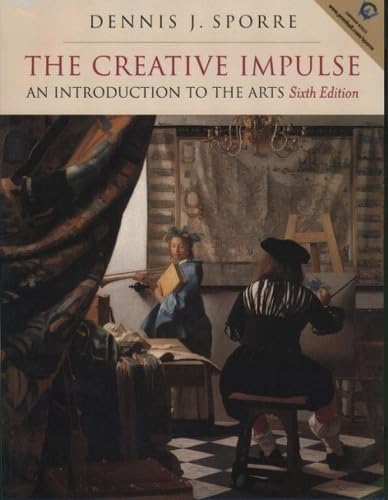



This book presents readers with an overview of the arts in the Western tradition; in the contexts of the philosophy, religion, aesthetic theory, economics, and politics surrounding them. It is an historical introduction to the humanities yielding a basic familiarity with major styles and their implications as well as a sense of the historical development of individual arts disciplines. Includes comprehensive and equal treatment of the histories of all the arts as well as a vibrant color illustration program. Explores such topics as Greek Classicism and Hellenism, Byzantium and the Rise of Islam, and The Baroque Age. For anyone interested in artwork or the history of art, whether in a museum, theatre, concert hall, or on the street. The Creative Impulse chronologically introduces the arts of Western traditionpainting and sculpture, architecture, theatre, music, dance, literature, and filmwithin the context of the philosophy, religion, aesthetic theory, economics, and politics that inform them. Up-to-date material encompassing modern artistic movements and achievementsyoung contemporary realist painters, ethnic and social alternative theatre, and performance artbroadens the scope of coverage. Dennis Sporre provides students of the humanities with a basic understanding of major styles and their historical significance, helping to facilitate a relationship with the arts beyond the classroom. Feature boxes on nonwestern art and culture appropriate to the time period covered by each chapter accompany the text. New to this edition: Chapter-opening explorations of "The Way Art Works" define and illustrate basic concepts about the arts. - Hyperlinks, or URLs, connect with websites for ,additional examples throughout the body of the text. - Each chapter closes with a "Cybersources" section for further study of examples and materials concerning the periods discussed in the preceding pages. Also available as a companion to the text: The humanities video CD-ROM presents fourteen segments that bring to life basic terms and ideas from the visual arts, architecture, theatre, music, dance, literature, and film. With each clip a listing of key terms and their definitions are included. Students are able to download the terms to their hard drive and create study notes or easy-to-use reference material. There is a website developed exclusively for the CD-ROM, containing web links that are organized by discipline and that offer a wealth of related information. Also included is a "starter kit" for each discipline that provides a general introduction to the make up of the arts genres, why they are studied, and how to study them effectively. Unique FREE online study resource...The site is a comprehensive resource that is organized according to the chapters within the text and features a variety of teaching and learning modules. This edition, the sixth, maintains The Creative Impulse's overall focus and intentthat is, to present an overview of the arts in the Western tradition in the contexts of the philosophy, religion, aesthetic theory, economics, and politics surrounding them. The text remains an historical introduction to the humanities from which the reader will gain a basic familiarity with major styles and their implications as well as a sense of the historical development of individual arts disciplines. The major focus of the text is the arts, and one of the changes in this edition is an attempt to make that focus clearer, and the organization of each chapter more transparent, by dividing each chapter into two major divisions: 1) Contexts and Concepts; and 2) The Arts. Another emphasis fundamental to the book remains, and that is an emphasis, by example, on formal analysis of works of art to supplement discussion about them. Not every work illustrated herein is analyzed, but analysis occurs frequently enough that, with a little encouragement from the instructor, students can infer how to see and hear and put into words what makes a particular work of art tick, so to speak. Developing confidence in relating and responding to works of artverbally and viscerallyis critical if students are to carry an interest in the arts beyond the confines of the classroom and the timeframe of the course, into the rest of their lives. That lifelong relationship with art, hopefully, is the purpose of humanities and introductory art courses. When encountering an artwork for the first timewhether in a museum, a theatre, a concert hall, or on the streetwe usually do not have access to biographical or contextual materials. We have only the artwork and the ability to confront it, either with or without confidence. Thus, the analyses, which examine how artworks work in terms of line, form, color, melody, plot, and so on, teach a means by which artworks can be approached, responded to, and shared in an on-the-spot manner; the way works of art are encountered in real life. Also new to this edition are three features. The firs