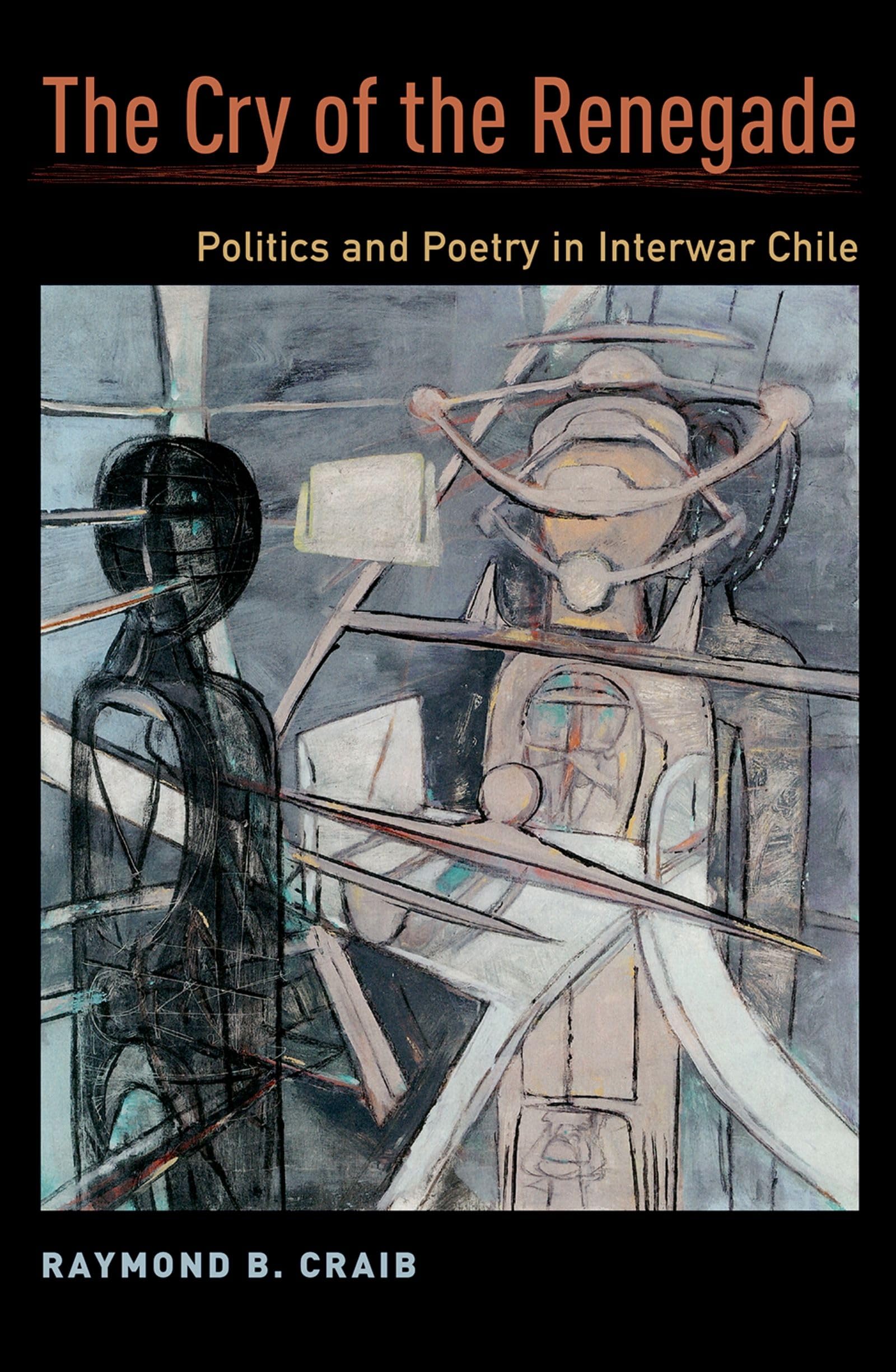



On October 1, 1920, the city of Santiago, Chile, came to a halt as tens of thousands stopped work and their daily activities to join the funeral procession of José Domingo Gómez Rojas, a 24 year old university student and acclaimed poet. Nicknamed "the firecracker poet" for his incendiary poems, such as "The Cry of the Renegade" Gómez Rojas was a member of the University of Chile's student federation (the FECh) which had come under repeated attack for its critiques of Chile's political system and ruling parties. Government officials accused the FECh's leaders of being advocates for the destruction of the social order, subversives who had the temerity to question national policy making, and insolent youths who did not know their place. Arrested for alleged sedition as part of a five-month-long "prosecution of subversives," Gómez Rojas joined other students and workers in Santiago's prison system. He never left. After two months in police custody, he died in Santiago's asylum, quickly to be reborn as a political martyr for students and workers alike. This microhistory recovers the context within which Gómez Rojas's arrest, imprisonment, and death unfolded and the experiences of men he counted as friends, comrades, colleagues, mentors, and pupils. Fifty years before the much-heralded student movements of 1968, Raymond Craib shows, university students and workers were active political collaborators and radicalized political subjects. In interwar Chile, members of Chile's sizeable working class marched side-by-side with students from the FECh. At the same time, increasingly radicalized university students, as well as former students, workers, and worker-intellectuals, gathered together to talk, read, and find common cause. Members of what Craib calls a "capacious Left" they shared a wide-ranging interest in works of sociology and political theory, a penchant for poetry, and an eclectic embrace of anarchist, socialist, and communist principles and practices. They also shared the experience of repression, an experience that ultimately cost Gómez Rojas his life and marked an entire generation of political organizers and agitators, including future president Salvador Allende and poet Pablo Neruda. "Raymond Craib's rendering is quite novel--and inspiring....[A]ll the book's assertions are supported by copious and carefully marshalled sources....[I]t is a book that should attract not only Chileans or followers of Chilean history, but anyone with any sensitivity towards human agency writ large."--Julio Pinto Vallejos, Journal of Latin American Studies "His book will interest scholars working on twentieth-century Chile, anarchism in Latin America, and student movements in general....[A] compelling narrative....Craib's book provides a more humanized and quotidian account of real people struggling for their right to a just salary, education, free speech, and mobility within and among nation-states....[A] beautifully written story of the alliance among students and workers during the 1920s in Santiago....We need more books like this; books focused on real activists with multiple needs, desires, frustrations, and interests; stories anchored in the streets in which anarchists walked and marched, spaces that were contested, disputed, and challenged by insolent actions and subversive words."--Sabrina González, Canadian Journal of Latin American and Caribbean Studies "Craib succeeds in painting a vivid picture of the lived experience of these creators of Santiago's 'capacious left' in 1920. With 52 illustrations including photographs, detailed maps, and periodical reproductions, a narrative structure organizing each chapter around a different individual story, and an evocative, almost poetic narrative voice, the book can place the reader amid the blocks of anarchist Santiago, allowing him or her to imagine its shoemakers, printers, and students living, arguing, and agitating in the streets."--Myrna Ivonne Wallace Fuentes, Hispanic American Historical Review "Craib's rich and compelling stories and insights together stand as a significant contribution to what is a thin Chilean historiography on a period during which class conflict intensified, the old elite saw its commanding grip on politics slip away, and student groups, anarchists, and other emergent forces claimed spaces in the public sphere and on the streets....[It] will appeal to scholars and students interested in politics, ideology, class conflict, labor, student organizations and mobilization, and nationalism. Craib's writing is lively and often poetic, tying together the life stories of the study's main actors, and the discourses, institutions, and events that shaped their world....Provides us a deeper and more nuanced understanding of episodes with far-reaching implications in twentieth-century Chilean society, politics, and collective memory."-- Patrick Barr-Melej, American Historical Review "The link Craib makes with the transnational aspect takes the book