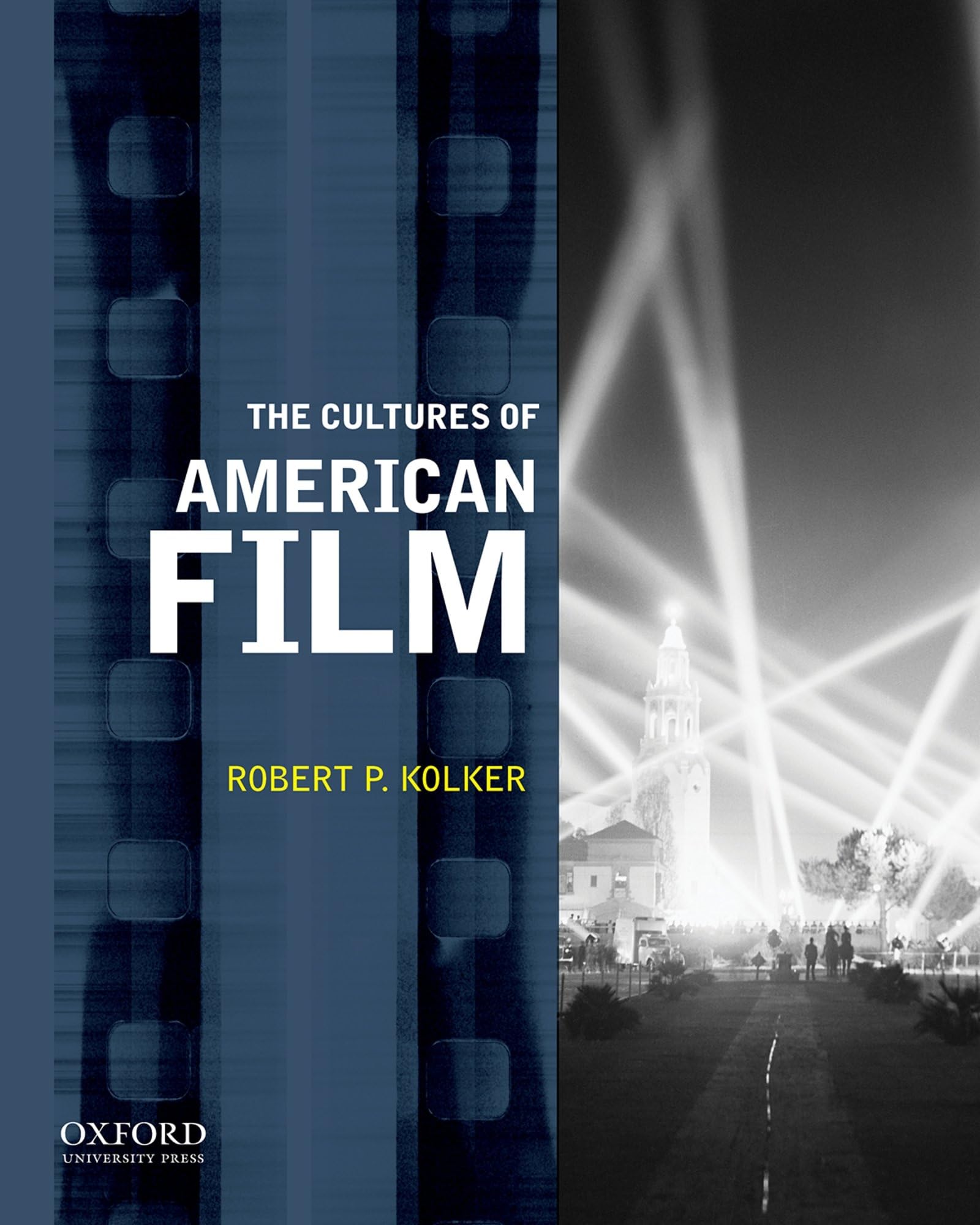



Since its inception in 1894, American film has developed many genres and created many important directors and stars, while maintaining an intensely loyal audience. How has this incredibly popular medium managed to stay so relevant for more than a century? The Cultures of American Film 's chronological organization provides a historical overview of film, while its analytical approach addresses form and content: how films work and how we respond to them. Placing films in their cultural contexts, it examines and analyzes the ways in which film works on an individual level and within society. The text provides close analyses of films from the nineteenth century to present day, discusses how and why films are made, and investigates the responses that films require and we desire. Suggestions for further reading and critical analysis appear at the end of each chapter. "Lively, informal, provocative, and unintimidating-in short, student-friendly! The book serves as a fine introduction to American film, with a nice balance of historical and cultural context and extended looks at particular directors and their films."-Gregory Miller, California State University, Bakersfield "This book addresses what many film texts lack: the role of culture. It offers a historical retelling of film from the perspective of the filmmakers who shaped American life."-Courtney Feldscher, Boston University "A well-written and compact work that is accessible and that will benefit a broad range of students in a diversity of courses."-Sam Girgus, Vanderbilt University A contextual history of this enormously popular medium Robert P. Kolker is Emeritus Professor of English at the University of Maryland and teaches in the Bachelor of Interdisciplinary Studies Program at the University of Virginia. He is the author of A Cinema of Loneliness , and editor of Alfred Hitchcock's Psycho: A Casebook, Kubrick's 2001: New Essays , and the Oxford Handbook of Film and Media Studies , all published by Oxford University Press.