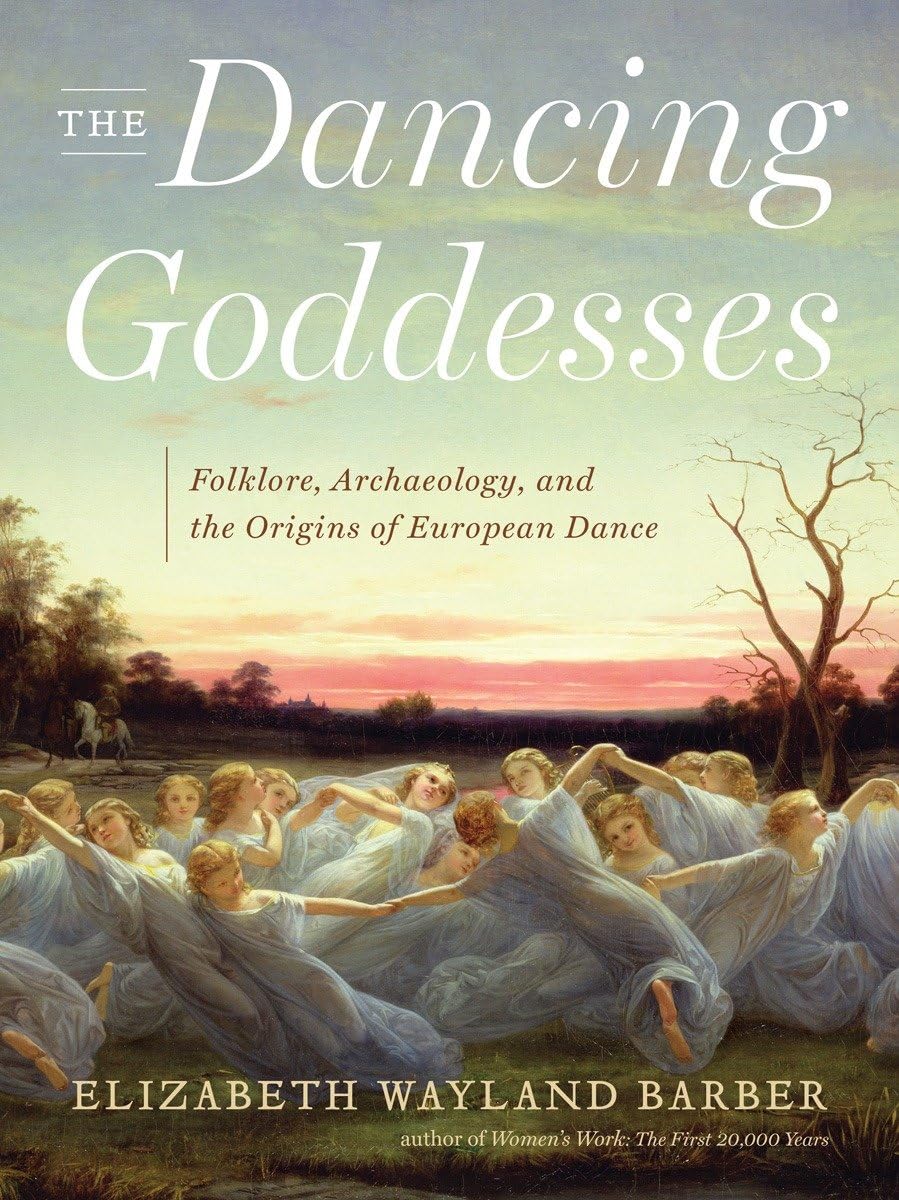
The Dancing Goddesses: Folklore, Archaeology, and the Origins of European Dance
$35.00
by Elizabeth Wayland Barber



A fascinating exploration of an ancient system of beliefs and its links to the evolution of dance. From southern Greece to northern Russia, people have long believed in female spirits, bringers of fertility, who spend their nights and days dancing in the fields and forests. So appealing were these spirit-maidens that they also took up residence in nineteenth-century Romantic literature. Archaeologist and linguist by profession, folk dancer by avocation, Elizabeth Wayland Barber has sleuthed through ethnographic lore and archaeological reports of east and southeast Europe, translating enchanting folktales about these “dancing goddesses” as well as eyewitness accounts of traditional rituals―texts that offer new perspectives on dance in agrarian society. She then traces these goddesses and their dances back through the Romans and Greeks to the first farmers of Europe. Along the way, she locates the origins of many customs, including coloring Easter eggs and throwing rice at the bride. The result is a detective story like no other and a joyful reminder of the human need to dance. 150 illustrations and 9 maps *Starred Review* In her latest, joyfully comprehensive work of scholarly discovery and original analysis, archaeologist, linguist, and prehistoric textiles expert Barber, inspired by her passion for folk dancing, unearths the roots and significance of dance in the diverse cultures of Europe and Russia. Originally dance “was not an ‘art form’ but the essence of life itself,” a perception borne out by Barber’s many-pronged diggings into folklore, religion, agriculture, seasonal rituals, traditional medicine, ornament, and clothing. She begins with folktales about magical dancing female spirits, “bringers of fertility,” and village maidens dancing to summon spring. Of courtship dances, Barber wryly observes that “certain dances evolved to test whether the bride was physically strong and agile enough” to do the hard work women performed in the fields and at home. Taking cues from images of dancers in handicrafts and art and spanning ancient Greece and Rome and the meshing of pagan traditions and Christianity, Barber describes “dance cures” and dances for the ancestors and revels in such intriguing customs as the Slavic “magical sleeve dance.” She even draws on cognitive science to investigate how dancing affects the brain, bringing people into accord and strengthening communities. Years in the making, Barber’s far-roaming, gracefully interpretive, and sprightly study of European dance will be the go-to resource for many years to come. --Donna Seaman "Rich with anecdotes and compelling explanations of the origin of many modern customs (such as throwing rice at a bride), Barber's is an informative and amusing read, often bringing together many diverse sources―traditional stories, illustrations of artifacts, and aspects of popular culture―into an illuminating whole that will serve as a nice introduction for those unfamiliar with the topic, and a valuable reference for scholars of European dance and folklore." ― Publishers Weekly Elizabeth Wayland Barber is the author of Prehistoric Textiles , The Mummies of Ürümchi , and The Dancing Goddesses , among other works. She is professor emerita of archaeology and linguistics at Occidental College, and lives in Utah. Used Book in Good Condition