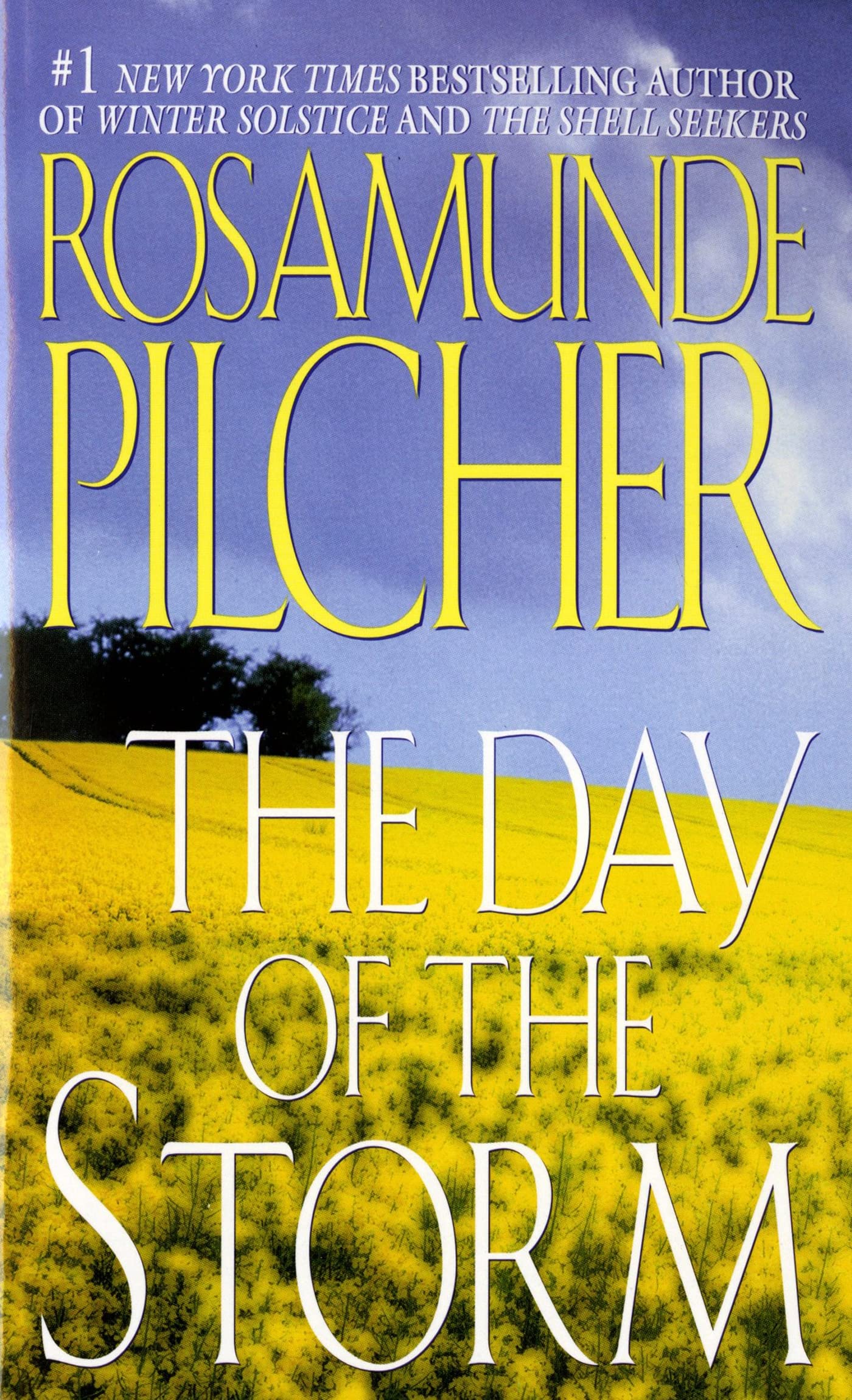



When you read a novel by Rosamunde Pilcher you enter a special world where emotions sing from the heart. A world that lovingly captures the ties that bind us to one another-the joys and sorrows, heartbreaks and misunderstandings, and glad, perfect moments when we are in true harmony. A world filled with evocative, engrossing, and above all, enjoyable portraits of people's lives and loves, tenderly laid open for us... On the last day of her mother's life, Rebecca learns she has a family in Cornwall, and sets out to find the grandfather and cousin she has never known. But only the enigmatic Joss Gardner, the outsider who seems to be the apple of her grandfather's eye, can help her understand the dark currents that lie behind her family's loving reception. ROSAMUNDE PILCHER (1924- 2019) wrote such worldwide bestselling novels as The Shell Seekers, September, Coming Home, Winter Solstice , and Voices in Summer . Her breakthrough novel, The Shell Seekers, sold more than 10 million copies. Pilcher also authored the photographic autobiography, The World of Rosamunde Pilcher . She was an Officer of the Order of the British Empire (OBE) and lived in Perthshire, Scotland. The Day of the Storm By Rosamunde Pilcher St. Martin's Press Copyright © 1975 Rosamunde Pilcher All rights reserved. ISBN: 978-0-312-96130-5 CHAPTER 1 It all started on a Monday at the end of January. A dull day at a dull time of the year. Christmas and the New Year were over and forgotten and yet the new season had not started to show its face. London was cold and raw, the shops filled with empty hope and clothes "for cruising". The trees in the park stood lacy and bare against low skies, the trodden grass beneath them dull and dead, so that it was impossible to believe that it could ever again be carpeted with drifts of purple and yellow crocus. It was a day like any other day. The alarm woke me to darkness, but a darkness made paler by the wide expanse of the uncurtained windows, and through them I could see the top of the plane tree, illuminated by the orange glow of distant street lights. My room was unfurnished, except for the sofa bed on which I lay, and a kitchen table which I was going to strip of paint when I had the time, and polish with a coat of beeswax. Even the floor was bare, boards stretching to the wainscotting. An orange box did duty as a bedside table, and a second one filled in for a chair. I put out a hand and turned on the light and surveyed the desolate scene with the utmost satisfaction. It was mine. My first home. I had moved in only three weeks ago but it belonged entirely to me. With it, I could do as I pleased. Cover the white walls with posters or paint them orange. Sand the bare floor or stripe it in colour. Already I had started to acquire a proprietary interest in junk and antique shops, and could not pass one without scanning the window for some treasure that I might be able to afford. This was how the table had come into my possession, and I already had my eye on an antique gilt mirror, but had not yet plucked up the courage to go into the shop and find out how much it was going to cost. Perhaps I would hang it in the centre of the chimney breast, or on the wall opposite the window, so that the reflections of the sky and the tree would be caught, like a picture, within its ornate frame. These pleasant imaginings took some time. I looked again at the clock, saw that it was growing late, and climbed out of bed to pad, barefooted, across the floor and into the tiny kitchen, where I lit the gas and put the kettle on to boil. The day had begun. * * * The flat was in Fulham, the top floor of a small terrace house which belonged to Maggie and John Trent. I had met them only at Christmas, which I had spent with Stephen Forbes and his wife Mary and their large family of untidy children, in their large and untidy house in Putney. Stephen Forbes was my boss, the owner of the Walton Street bookshop where I had been working for the past year. He had always been enormously kind and helpful towards me and when he found out, from one of the other girls, that I would be on my own for Christmas, he and Mary had immediately issued a firm invitation—more an order, really—that I should spend the three days with them. There was plenty of space, he insisted vaguely, a room in the attic, a bed in Samantha's room, somewhere, but I wouldn't mind, would I? And I could always help Mary baste the turkey and pick all those torn bits of tissue paper off the floor. Considering it from this angle, I finally accepted, and had a wonderful time. There's nothing like a family Christmas when there are children everywhere and noise and paper and presents, and a pine-smelling Christmas tree, glittering with baubles and crooked home-made decorations. On Boxing Night, with the children safely in bed, the Forbeses threw a grown-up party, although we still seemed to continue playing childish games, and Maggie and John Trent came to t