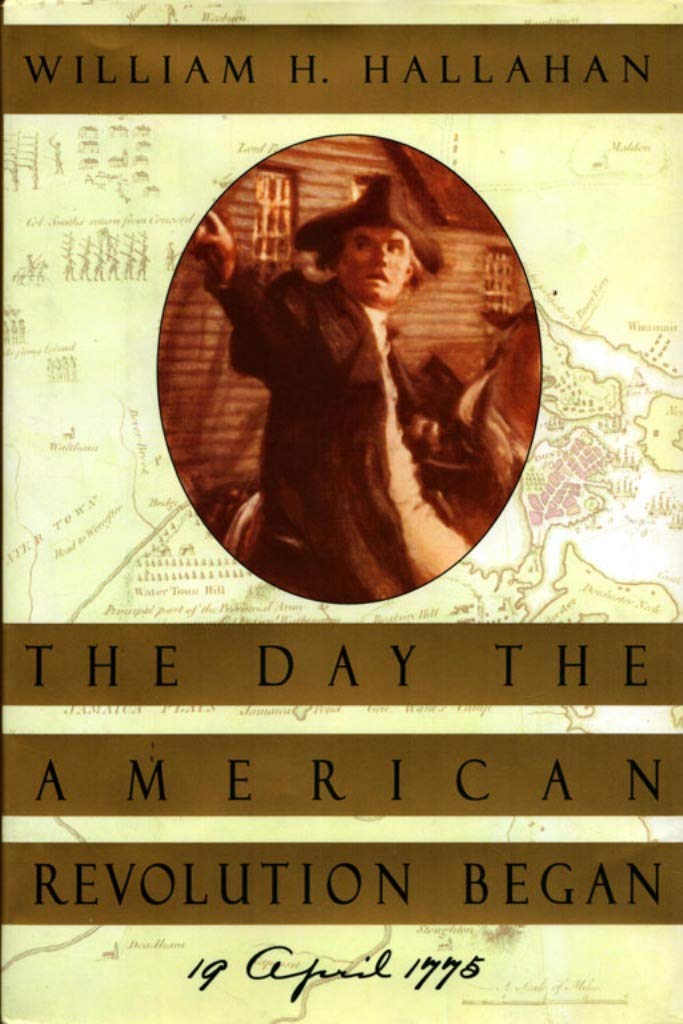



Traces the events of Lexington and Concord through the letters, diaries, official documents, and memoirs of people from all walks of life, from rebel leader Samual Adams to apprehensive Loyalists, farmers, and statesmen. The shot heard 'round the world traveled at slightly less than the speed of sound, as the news of its firing took four days to travel from Lexington Green to New York, five days to Philadelphia, and more than five weeks to distant London. William H. Hallahan follows the news--and the reactions it provoked--in The Day the American Revolution Began . Reminiscent of the best historical fiction, Hallahan's narrative examines the events leading up to the fateful day and profiles many players on both sides of the conflict. Some are little known, such as Mrs. Moulton, an elderly resident of Concord who insisted that Colonel Smith put out a fire his Redcoats had set; or Samuel Jarvis, who, with his wife and four children, was stripped naked, then tarred and feathered by a rebel mob because he was a Loyalist. Hallahan also treats us to behind-the-scenes glimpses of the more famous: John Hancock, having fled Lexington, sends back for a salmon he had inadvertently left behind ("Excitement always made him ravenous"); General Gage, looking across the masses of wounded men in his army camp at his American-born wife, suspects she was the spy who had revealed his military plans against Concord to the rebels. Throughout the book, Hallahan remains remarkably balanced. The British were not all bullheaded tyrants (indeed, many were reluctant to go to war against their colonists), nor were the Americans all noble patriots. The excesses of Samuel Adams's mob--and his questionable political tactics--are discussed at length. Hallahan's extensive use of diaries, letters, broadsheets, and memoirs, as well as official accounts, lends his prose an immediacy lacking in many studies. Readers looking for an in-depth study of the battles of the American Revolution may be disappointed; only the actions at Lexington and Concord receive Hallahan's attention. But careful attention it is, and The Day the American Revolution Began is an engaging, entertaining, informative read. Highly recommended. --Sunny Delaney In an eminently entertaining and informative fashion, Hallahan has stitched together individual and collective reactions to the onset of the American Revolution. Although the first shots were fired at Lexington on April 19, 1775, it took weeks for the news to penetrate all the colonies and more than a month for the first report to reach King George III in London. With Boston, New York, Philadelphia, Williamsburg, and London serving as representative touchstones, the author chronicles the initial responses of rebels, loyalists, and neutrals in each of these cities. In addition to the specific hopes and fears of a multitude of private citizens, the gripping narrative also tracks the rapid spread of the patriotic fervor necessary to fuel and sustain revolutionary movement. Utilizing letters, diaries, speeches, official documents, and memoirs, Hallahan has successfully evoked all the passion and drama of the birth of the American Revolution. Margaret Flanagan "vividly describes the events of April 19, 1775, when British troops dired on Colonial subjects at Lexington and at Concord." -- -- Greensboro News & Record An engaging, entertaining, informative read. Highly recommended. -- -- Amazon.com William H. Hallahan is the author of both fiction and nonfiction. His previous book, Misfire, covered the history of U.S. military shoulder arms and the men who carried them into battle. He lives in New Jersey.