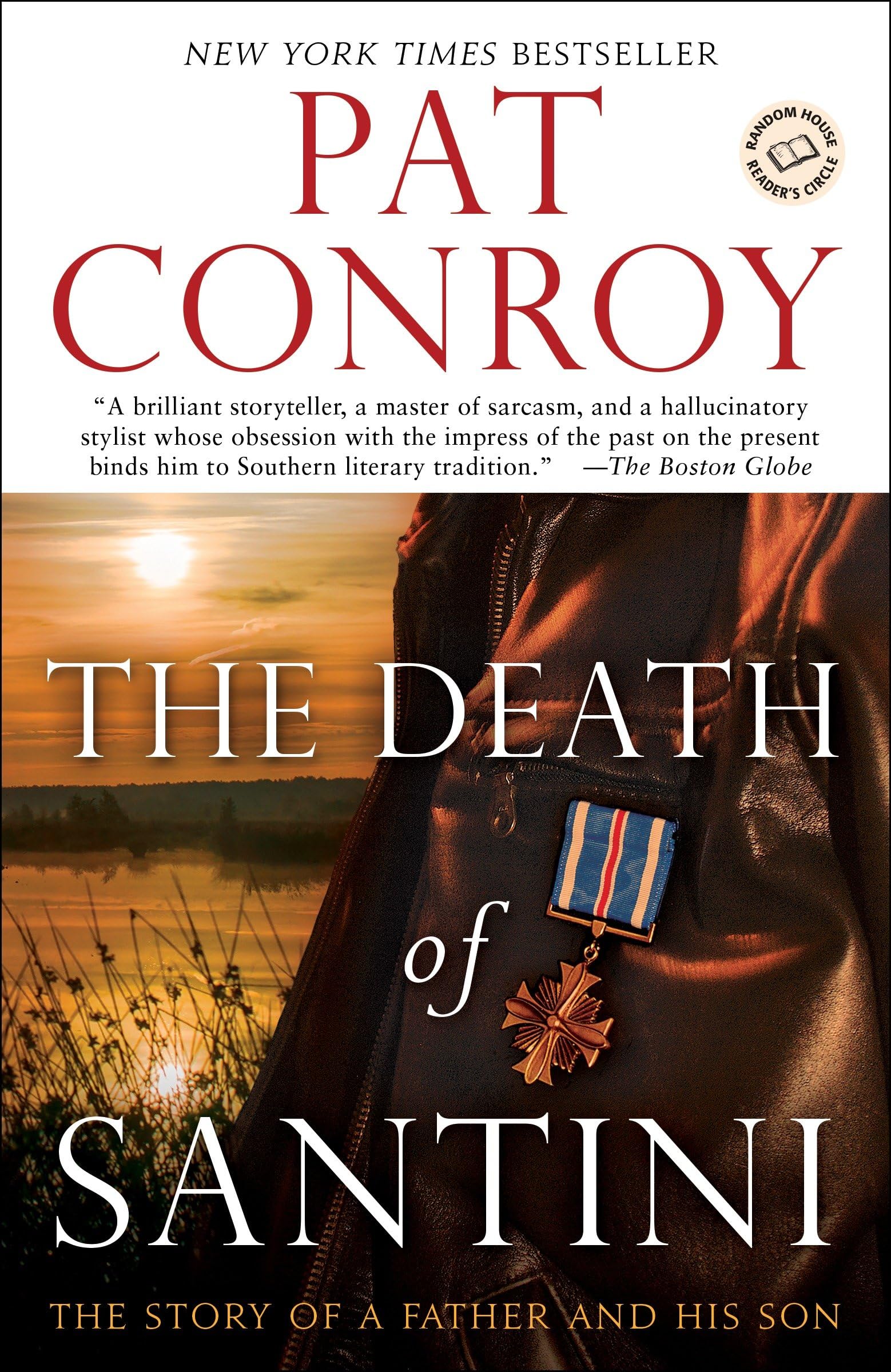



NEW YORK TIMES BESTSELLER • “A brilliant storyteller, a master of sarcasm, and a hallucinatory stylist whose obsession with the impress of the past on the present binds him to Southern literary tradition.” — The Boston Globe Pat Conroy’s great success as a writer has always been intimately linked with the exploration of his family history. As the oldest of seven children who were dragged from military base to military base across the South, Pat bore witness to the often cruel and violent behavior of his father, Marine Corps fighter pilot Donald Patrick Conroy. While the publication of The Great Santini brought Pat much acclaim, the rift it caused brought even more attention, fracturing an already battered family. But as Pat tenderly chronicles here, even the oldest of wounds can heal. In the final years of Don Conroy’s life, the Santini unexpectedly refocused his ire to defend his son’s honor. The Death of Santini is a heart-wrenching act of reckoning whose ultimate conclusion is that love can soften even the meanest of men, lending significance to the oft-quoted line from Pat’s novel The Prince of Tides : “In families there are no crimes beyond forgiveness.” Praise for The Death of Santini “A painful, lyrical, addictive read that [Pat Conroy’s] fans won’t want to miss.” — People “Conroy’s conviction pulls you fleetly through the book, as does the potency of his bond with his family, no matter their sins.” — The New York Times Book Review “Vital, large-hearted and often raucously funny.” — The Washington Post “Conroy writes athletically and beautifully, slicing through painful memories like a point guard splitting the defense.” —Minneapolis Star Tribune “A brilliant storyteller, a master of sarcasm, and a hallucinatory stylist whose obsession with the impress of the past on the present binds him to Southern literary tradition.” — The Boston Globe “A painful, lyrical, addictive read that [Pat Conroy’s] fans won’t want to miss.” — People “Conroy’s conviction pulls you fleetly through the book, as does the potency of his bond with his family, no matter their sins.” — The New York Times Book Review “Vital, large-hearted and often raucously funny.” — The Washington Post “Conroy writes athletically and beautifully, slicing through painful memories like a point guard splitting the defense.” —Minneapolis Star Tribune Pat Conroy (1945–2016) was the author of The Boo, The Water Is Wide, The Great Santini, The Lords of Discipline, The Prince of Tides, Beach Music, The Pat Conroy Cookbook: Recipes of My Life, My Losing Season, South of Broad, My Reading Life, and The Death of Santini . CHAPTER 1 • The Promise On June 4, 1963, I walked off the graduation stage of Beaufort High School without a single clue about where I was attending college next year or if I’d be attending one at all. My parents had driven me mad over this subject and neither would discuss it with me further. I had planned to get a job at the tomato-packing shed on St. Helena Island to earn some money if my parents somehow managed to enroll me in a college. But my father received orders to Offutt Air Force Base in Omaha, Nebraska, for the following year. I didn’t want to leave Beaufort, and I sure as hell didn’t want to move to Nebraska, a place where I didn’t know another human being. I wanted to go to college. My father had the car packed and ready when I turned my graduation robe in to my teacher Dutchen Hardin, hugged my other favorite Beaufort High teachers and classmates, then fled in tears toward my life in Nebraska. Before I entered the car, I composed myself, dried my eyes, and got in the shotgun seat. The motor was running and Dad threw me a map, saying, “You’re the navigator, pal. Any mistakes and I whack you.” Before a single graduation party had begun, we were already crossing the Savannah River into Georgia. Our journey took us on back roads and through scores of towns that we hurtled by in their sleep. It was the age before interstate highways were common, so most of our trip would take us through the rural South and the farmlands of the Midwest. To my shock, Dad planned to make it a straight-through shot to Chicago, pausing only for pit stops and gas. “Dad, you sure you want to do this?” I asked. “Hey, jocko, you a detective?” “That’s a lot of driving. It might be too much for you.” “That’s why you’re on guard duty, pal,” he said. “I start nodding off, you rap me on the shoulder to keep me awake.” During the twenty-four-hour drive, my father fell asleep three times, and I knocked his right shoulder, hard, three delicious times. Once in Indiana, he had failed to follow the curve of the highway and drove the station wagon over a cow guard and into a field heavily populated with Black Angus cattle. When I punched his shoulder, he woke suddenly, dodging fifty cows on his way back to the highway. “You’d get a court-martial for that one, navigator,” he said.