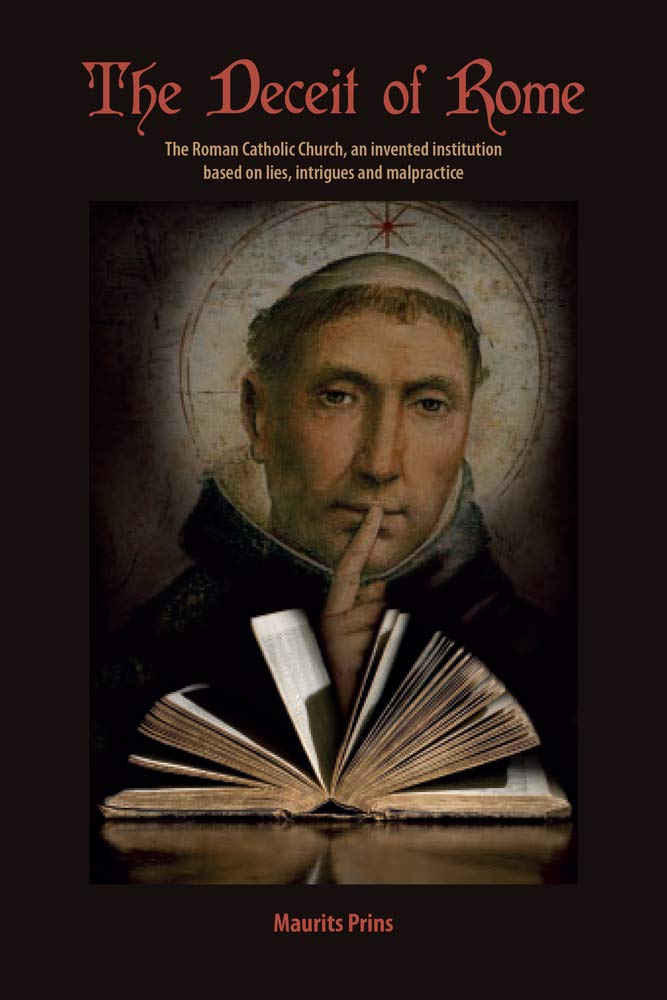
The Deceit of Rome: The Roman Catholic Church, an Invented Institution Based on Lies, Intrigues and Malpractice
$12.00
by Maurits Prins



Uncover the hidden truths behind the Roman Catholic Church. This explosive exposé confirms long-held suspicions about the Church's deceitful practices and power-hungry agenda. Delve into centuries of corruption, from wealthy cardinals enjoying lavish lifestyles to financial fraud within the Curia. Explore the origins of Christianity, the role of Mary Magdalene, and the influence of Gnostic teachings. Challenge the Church's dogma and discover the historical inaccuracies that have shaped its narrative. This book is for those seeking a deeper understanding of religious history and a critical perspective on institutional power. Maurits Prins was born in 1936 in a Catholic family in the south of The Netherlands. After graduating high school he entered a monastery where he studied psychology and developed his musical skills. In 1968 he started his own practice as a Jungian psychologist and psychosocial therapist, for which his psychic abilities were of great help. The Deceit of Rome The Roman Catholic Church - an invented institution based on lies, intrigues and malpractice By Maurits Prins Trine Day LLC Copyright © 2019 Maurits Prins All rights reserved. ISBN: 978-1-63424-234-9 Contents Cover, Title Page, Copyright Page, Epigraph, Foreword, Introduction, The (False) Truth, Abuse Of Power & Dictatorship, The Crusades, The Order of the Knights Templar, The Murder of the Albigensians, The Inquisition, The Persecution of Witches, Papal Disorder, Gnosticism, Desiderata, The Secret of Southeastern France, The Holy Grail, Languedoc, Rennes-le-Château, Epilogue, Bibliography, Contents, Landmarks, CHAPTER 1 The (False) Truth From the perspective of the present, I would describe the environment I grew up in as a miniature society, in which the only thing that mattered was to be a Catholic. In those days, there was some segregation in the Netherlands. It is undeniable that in the 1940's and 50's there was not much to do in the Catholic south of the country. North of the big rivers, everything was different. Those regions were inhabited by people who thought differently – by Calvinists or other strict reformists. The churches there always expected people to wear black stockings, which was the symbol of a very strict way of life. That is how we described those people and when we talked about them, it seemed so far away, as if we were speaking of a foreign country. During the war and all it entailed we attached a lot of importance to whatever the pastor preached to us on Sunday. Most people did not have much money to spend and there was an atmosphere of threat and insecurity. Their daily existence was the thing that kept people occupied. In this world, I grew up in a traditional Catholic family. Sundays, High Mass and Praise were obligatory. The same went for some other days also. We had to attend Praise on Wednesday evening and were obliged to go to church every first Friday of the month. In May and October (the months devoted to Mother Mary), we visited church every night for the rosary prayer. I grew up with themes like the Ten Commandments, and getting indulgence, which we could earn by lighting a candle and reciting, six times, the prayers of Our Father and Hail Mary. After that, we would leave the church for a moment and all would start over again. Every time we followed this routine, we deserved an indulgence on behalf of a deceased person. All devout Catholic persons followed this scheme, because they followed their leaders and believed what the Church taught them. One can compare this to a sect, for the members were brainwashed by their leaders and had their minds turned around. People accepted delusions and fabrications without further investigation. I can still hear my father say, "The pope is infallible in his declarations." It is clear to me that this morbid comedy has been playing for ages. It was most successful during times when common people did not know how to read or write. In September 1942, my mother took me to school for the first time and I was not exactly eager to go. I was an early pupil, only six years old. With the war raging, there was no such thing as nursery school. During that first year in school, I experienced my First Holy Communion. It was common practice to place the word "holy" before other words, whether it was justified or not. Did this really add any value? Now I know that the Catholic Church wanted this word to convey some sort of elevation, but apart from this woolly, unrealistic theological thinking, the basic meaning of the word holy is simply: "complete." When I grew up it was common practice for the entire first class of a Roman Catholic primary school to be prepared for First Communion. It was not a matter of choice and we simply went with it. Nowadays, parents and child together make the decision whether or not to take First Communion. That is why few children take their First Communion these days. The question arise