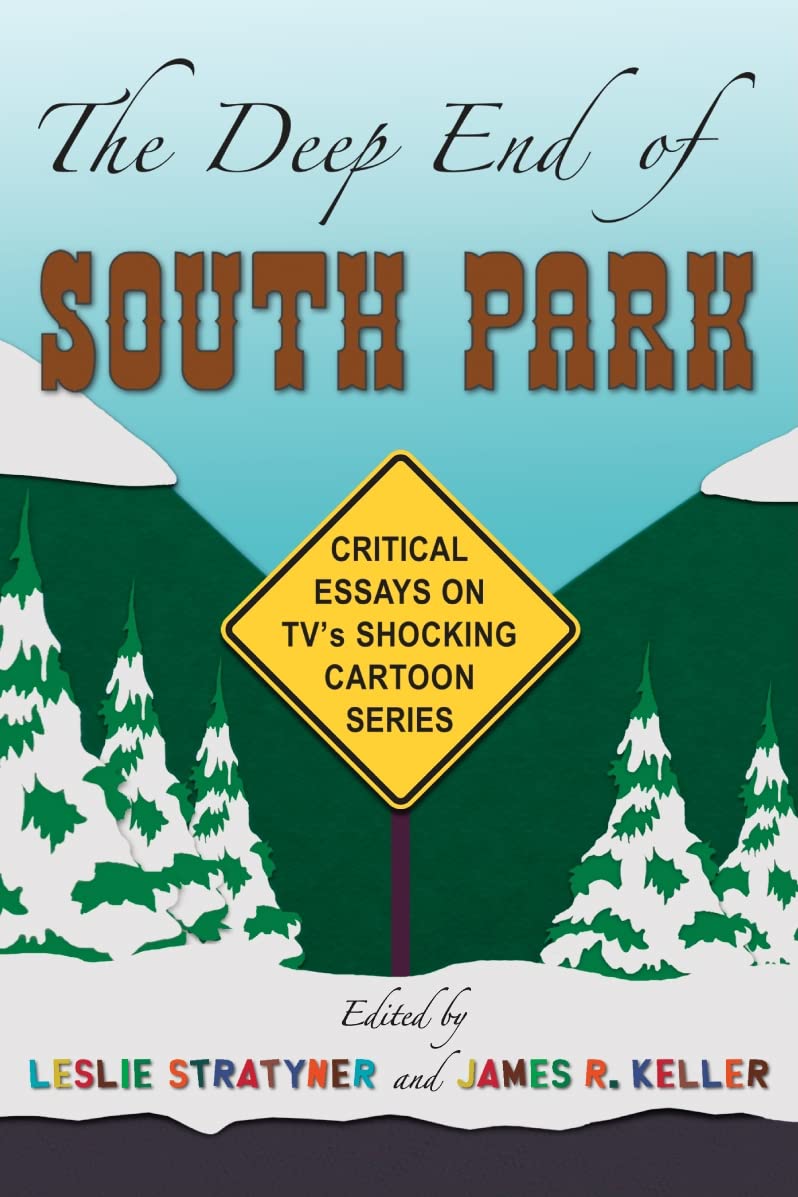
The Deep End of South Park: Critical Essays on Television's Shocking Cartoon Series
$19.99
by Leslie Stratyner



No American television show of the past decade has been vilified as has Comedy Central's South Park. This is the show that has featured, in turn, a nine-year-old boy enmeshed in an affair with Ben Affleck, a maniacal Mel Gibson smearing feces everywhere, and the misadventures of Mr. Hankey, the Christmas Poo, a talking, bouncing, singing piece of poop. While it's not always an exercise in good taste, South Park is a socially significant satire that has also devoted entire episodes to interpretations of Great Expectations, Ken Burns' Civil War, and Hamlet. This volume explores the popularity and cultural relevance of South Park and its place as an artistically and politically worthy satire. No American television show of the past decade has been vilified as has Comedy Central's South Park. This is the show that has featured, in turn, a nine-year-old boy enmeshed in an affair with Ben Affleck, a maniacal Mel Gibson smearing feces everywhere, and the misadventures of Mr. Hankey, the Christmas Poo, a talking, bouncing, singing piece of poop. While it's not always an exercise in good taste, South Park is a socially significant satire that has also devoted entire episodes to interpretations of Great Expectations, Ken Burns' Civil War, and Hamlet. This volume explores the popularity and cultural relevance of South Park and its place as an artistically and politically worthy satire. Leslie Stratyner, a professor of English at Mississippi University for Women, lives in Columbus, Mississippi. James R. Keller is a professor and chair of the English and Theatre department at Eastern Kentucky University in Richmond, Kentucky. The author or editor of numerous works about popular culture, he lives in Lexington, Kentucky.