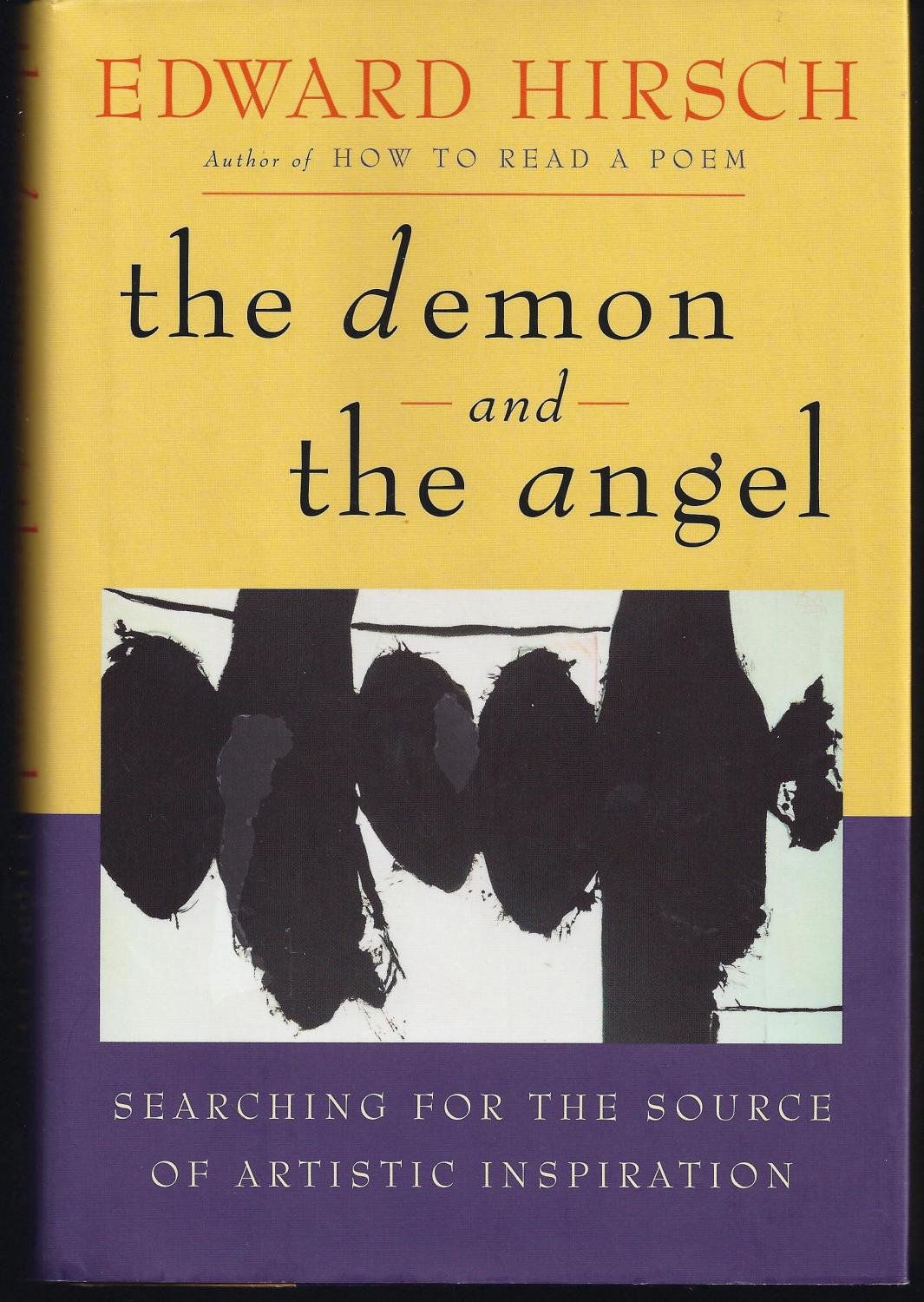
The Demon and the Angel: Searching for the Source of Artistic Inspiration
$24.29
by Edward Hirsch



In a groundbreaking exploration of the sources and mysteries of artistic creativity, the author of How to Read a Poem examines the concept of "duende," the potent power of creativity that results in a work of art, as he looks art how different artists--including Paul Klee, T. S. Eliot, Herman Melville, William Blake, Ella Fitzgerald, and Sylvia Plath--respond to the creative impulse. 25,000 first printing. What inspires an artist to create? Is it inner genius, external forces, or something beyond human understanding? Hirsch (How To Read a Poem) here sets off on an intellectual journey to unravel this mystery. At the heart of his exploration is Federico Garc¡a Lorca's concept of the duende, defined as "artistic inspiration in the face of death" or "tragic, sensual, fateful passion." Hirsch also examines the mysterious forces that have inspired artists like W.B. Yeats, Rainer Maria Rilke, and Jackson Pollock. Hirsch's analysis of artistic creativity is erudite, abstract, and occasionally overwhelming. He is so knowledgeable, so well read, and so able to cram each chapter with artistic examples ranging from the spontaneity of Miles Davis's jazz compositions to the death impulse in Rilke's poetry to the effect of black paint used by Mark Rothko that it's difficult to keep up with him. Not surprisingly, Hirsch never solves the mystery of artistic inspiration; instead, his book can and should be appreciated as a "hymn to the irrational triumphs of art, to romantic imagination." Amy Strong, South Portland, ME Copyright 2002 Cahners Business Information, Inc. Hirsch, a poet committed to elucidating the power of art, launched his ardent quest with How to Read a Poem and Fall in Love with Poetry (1999) and now ventures into the very heart of the matter: the nature of artistic inspiration. An elusive subject to be sure, but Hirsch is so steeped in literature, painting, and music, and so voracious in his pursuit of the revelations art delivers, that he's able to articulate the seemingly ineffable through brilliant critical analyses and empathic insights into artists' lives. The overarching theme of this unique, exhilarating, and virtuosic performance is an extended definition of duende , "that indefinable force which animates different creators and infuses their deepest efforts." Federico Garcia Lorca is Hirsch's guide to the "artistic night mind," the demonic realm from which this "joyful darkness" flows, while Emerson is his mentor in the study of the angelic aspect of inspiration and its "ferocious light." Not only does Hirsch evocatively explicate the mystical creative experiences of such diverse and seminal artists as Rilke, Stevens, Klee, Pollock, Martha Graham, Miles Davis, and Jimi Hendrix, he also unveils the origins of such radical departures as abstract painting and jazz. Hirsch himself is imbued with the soulful spirit he celebrates, and its "dark radiance" shimmers on every inspired page. Donna Seaman Copyright © American Library Association. All rights reserved Edward Hirsch is the author of five books of poetry, as well as the acclaimed How to Read a Poem . A frequent contributor to leading magazines and periodicals, including the New Yorker, DoubleTake, and American Poetry Review , he has received the Prix de Rome, a Guggenheim Fellowship, an American Academy of Arts and Letters Award for Literature, a MacArthur Fellowship, and the National Book Critics Circle Award. He teaches at the University of Houston. Edward Hirsch is the author of five books of poetry, as well as the acclaimed How to Read a Poem . A frequent contributor to leading magazines and periodicals, including the New Yorker, DoubleTake, and American Poetry Review , he has received the Prix de Rome, a Guggenheim Fellowship, an American Academy of Arts and Letters Award for Literature, a MacArthur Fellowship, and the National Book Critics Circle Award. He teaches at the University of Houston. only mystery I WISH I HAD BEEN IN Buenos Aires on October 20, 1933, when Federico García Lorca delivered a lecture that he called "Juego y teoría del duende" ("Play and Theory of the Duende"). Lorca was testifying to his own poetic universe, as his biographer Ian Gibson has recognized. It would have been electrifying to hear him, because on that night, addressing the members of the Friends of Art Club, the spirit of artistic mystery entered the room. It moved at the speed of Lorca's voice and burned like incense in the rich air. It was palpable to the audience, as if Lorca had thrown open the windows so that everyone present could hear the primitive wing beats shuddering in the darkness outside. The floor shifted a little under everyone's feet. The lamps trembled. Thinking about it now, sixty-nine years later, I can still see the stammering flames leaping off the typescript of Lorca's talk. I feel the ancient heat. (One month later, at the Buenos Aires PEN Club, Lorca and Pablo Neruda staged a happening at a luncheon in their ho