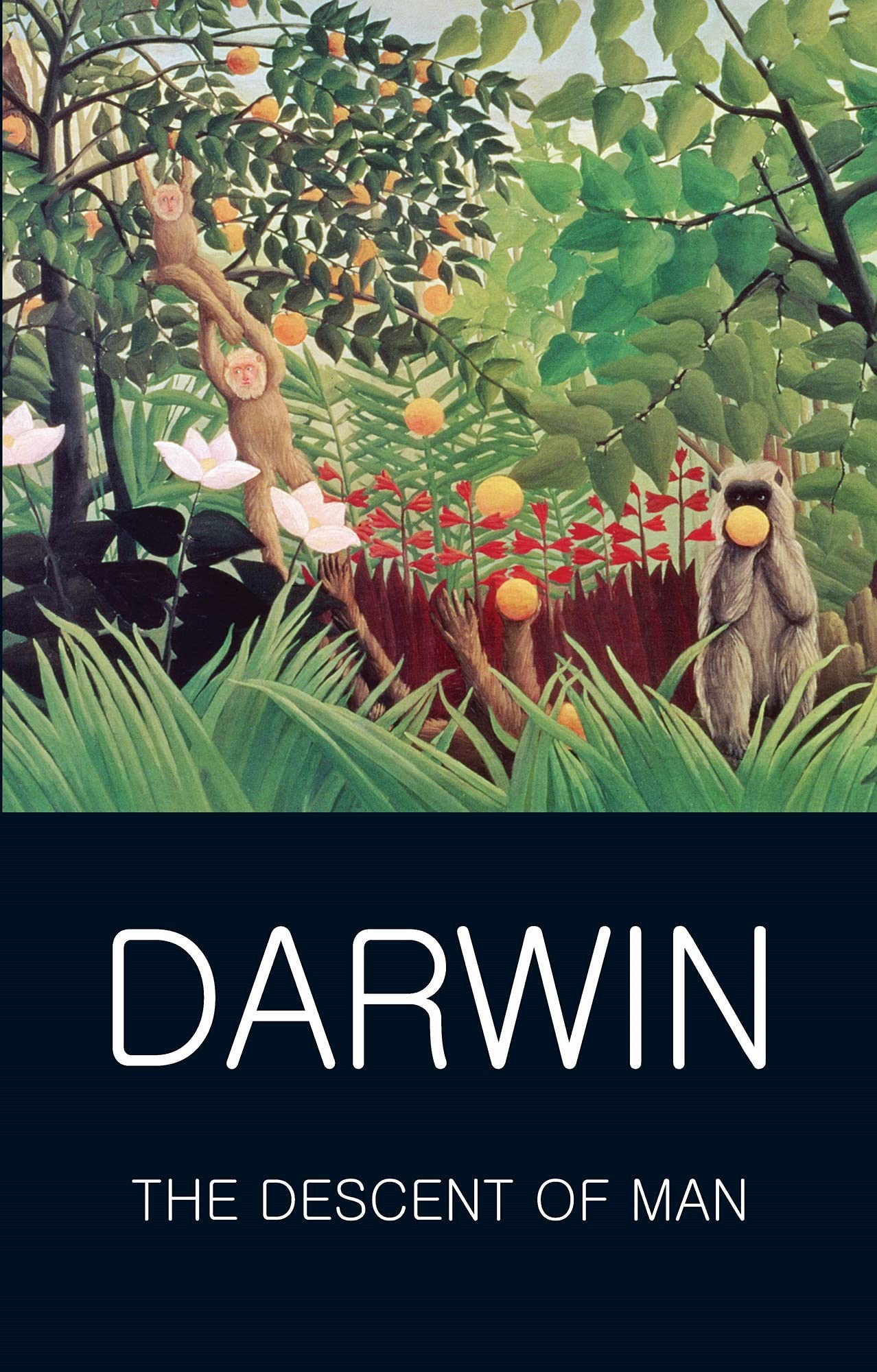



In The Descent of Man Darwin addresses many of the issues raised by his notorious Origin of Species: finding in the traits and instincts of animals the origins of the mental abilities of humans, of language, of our social structures and our moral capacities, he attempts to show that there is no clear dividing line between animals and humans. Most importantly, he accounts for what Victorians called the 'races' of mankind by means of what he calls sexual selection. This book presents a full explanation of Darwin's ideas about sexual selection, including his belief that many important characteristics of human beings and animals have emerged in response to competition for mates. This was a controversial work. Yet Darwin tried hard to avoid being branded as a radical revolutionary. He is steeped in Victorian sensibilities regarding gender and cultural differences: he sees human civilization as a move from barbarous savagery to modern gentlefolk, and women as more emotional and less intellectual than men, thus providing a biological basis for the social assumptions and prejudices of the day. The Descent of Man played a major role in the emergence of social Darwinism. This complete version of the first edition gives the modern reader an unparalleled opportunity to engage directly with Darwin's proposals, launched in the midst of continuing controversy over On the Origin of Species. Janet Browne is the author of the prize-winning biography, Charles Darwin: Voyaging and Charles Darwin: The Power of Place. Charles Darwin was born in Shrewsbury, England, on February 12, 1809 into a prominent middle-class family. His mother, who died when Darwin was eight, was the daughter of the famous potter Josiah Wedgwood. His father was a wealthy doctor, and his grandfather Erasmus Darwin had been a celebrated physician and writer whose books about nature, written in heroic couplets, are often read as harbingers of his grandson's views. Yet for someone whose revolutionary writings would turn the scientific world upside down, Darwin's own youth was unmarked by the slightest trace of genius. 'I believe that I was considered by all my masters and by my Father as a very ordinary boy, rather below the common standard of intellect,' he later said. Darwin was an indifferent student and abandoned his medical studies at Edinburgh University. In 1831 Darwin graduated with a B.A. from Christ's College, Cambridge, seemingly destined to pursue the one career his father had deemed appropriate--that of country parson. But a quirk of fate soon intervened. John Henslow, a Cambridge botanist, recommended Darwin for an appointment (without pay) as naturalist aboard the H.M.S. Beagle, a scientific vessel commissioned by the Admiralty to survey the east and west coasts of South America. Among the few belongings Darwin carried with him were two books that had greatly influenced him at Cambridge: Charles Lyell's Principles of Geology, which posited radical changes in the possible estimates of the earth's age, and an edition of the travel writings of the early nineteenth-century naturalist Alexander von Humboldt. The Beagle sailed from Plymouth on December 27, 1831, and returned to England on October 2, 1836; the around-the-world voyage was the formative experience of Darwin's life and consolidated the young man's 'burning zeal to add even the most humble contribution to the noble structure of Natural Science.' Darwin devoted the next few years to preparing his 'Transmutation Notebooks' and writing Journal of Researches into the Geology and Natural History of the Various Countries Visited by the H.M.S. Beagle, 1832-1836 (1839) in which his beliefs about evolution and natural selection first began to take shape. In 1839 he married his first cousin, Emma Wedgwood. They lived in London until 1842, when Darwin's chronic ill health forced the couple to move to Down House in Sussex, where he would spend virtually the rest of his life working in seclusion. There he soon completed the five-volume work Zoology of the Voyage of the Beagle (1840-1843) and outlined from his hoard of notes an early draft of what was eventually to become The Origin of Species. In 1856 Sir Charles Lyell persuaded Darwin to write out his theory of evolution by natural selection, which he had recently buttressed with ingenious experiments in breeding pigeons. Halfway through the project, Darwin received an essay from naturalist Alfred Russel Wallace that presented an identical theory, though one unsupported by anything comparable to Darwin's massive accumulation of data. Wracked by doubts and indecision, and fearful of the controversy his theories might unleash, Darwin nevertheless pushed forward to finish The Origin of Species. Published on November 24, 1859, the book forever demolished the premise that God had created the earth precisely at 9:00 A.M. on October 23, 4004 B.C.--and that all species of living creatures had been immutably produced during the following six days--as se