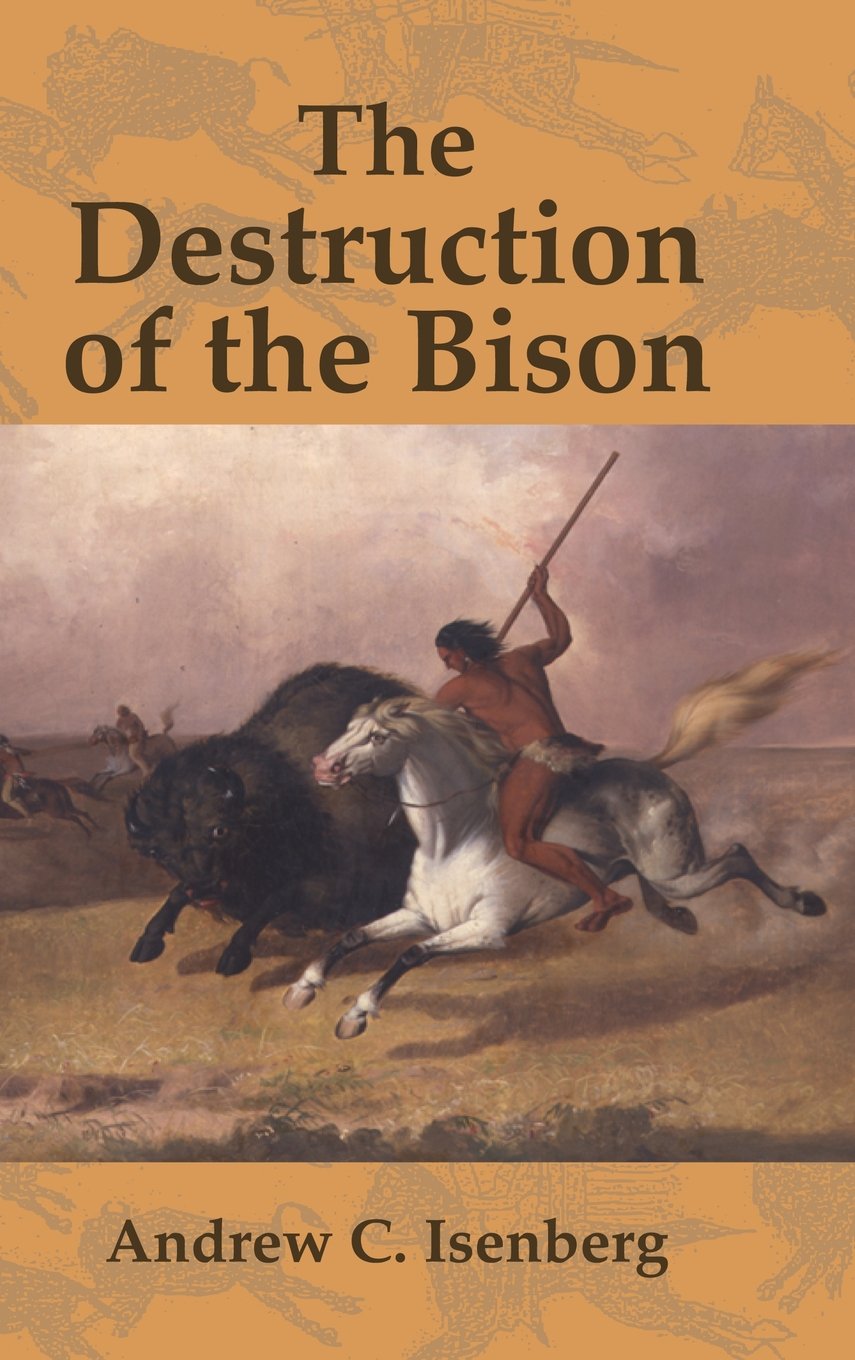
The Destruction of the Bison: An Environmental History, 1750–1920 (Studies in Environment and History)
$47.95
by Andrew C. Isenberg



The Destruction of the Bison explains the decline of the North American bison population from an estimated 30 million in 1800 to fewer than 1000 a century later. In this wide-ranging, interdisciplinary study, Andrew C. Isenberg argues that the cultural and ecological encounter between Native Americans and Euroamericans in the Great Plains was the central cause of the near extinction of the bison. Drought and the incursion of domestic livestock and exotic species such as horses into the Great Plains all threatened the Western ecosystem, which was further destabilized as interactions between Native Americans and Euroamericans created new types of hunters in both cultures: mounted Indian nomads and white commercial hide hunters. In the early twentieth century, nostalgia about the very cultural strife that first threatened the bison became, ironically, an important impetus to its preservation. Isenberg (history, Princeton) employs interdisciplinary methodology to explain the ecosocial factors that led to the destruction of 30 million bison during a 50-year period. Tracing the movement of Native American tribes from sedentary cultures to hunting societies that depended upon the horse to hunt bison on the Great Plains, the author discusses the impact of Euroamerican economics on the Native peoples. Fur trading of the 18th century altered Plains culture, as did the 19th-century demand for bison hides. These encounters between Native Americans and Euroamericans were the central cause of the near extinction of the bison. Isenberg also considers other factors such as drought, disease, and the introduction of domestic livestock. This case study of extinction and the preservation of a species will have a wide appeal and correlate with such books as Shepard Krech's The Ecological Indian: Myth and History (LJ 8/99). Recommended for all libraries. -Patricia Ann Owens, Wabash Valley Coll., Mt. Carmel, IL Copyright 2000 Reed Business Information, Inc. "Thoroughly researched and well-written, The Destruction of the Bison is an example of modern interdisciplinary scholarship that is not only convincing, analytical, and informative, but also a joy to read. This book will prove valuable to the academic specialist, the student, and the general public." American Studies International "The Destruction of the Bison is an engaging, well-written, and lucid account of a story that has been told many times, but is only now beginning to be truly understood." Peter S. Alagona, The Professional Geographer "Isenberg's well-researched and very readable environmental history provides a more compelling explanation that acknowledges the interaction between a dynamic natural environment and the human societies that inhabited it." Economic History "...elegant....Isenberg has found an impressive array of sources for his history....a detailed, convincing instance of how civilizations expand, it is profoundly instructive." William H. McNeill, The New York Review of Books "A well-researched, well-documented book, The Destruction of Bison is, best of all, a compelling read. It has a narrative that sweeps the reader through the two hundred pages quickly. The book is, simply, an engrossing history...the book remains one that students, academics, and many adults would learn from and enjoy. The Destruction of Bison would be a good choice for academic libraries as well as for many public library collections. Highly recommended." E-Streams "This case study of extinction and the preservation of a species will have a wide appeal and correlate with such books as Shepard Krech's The Ecological Indian: Myth and History. Recommended for all libraries." Library Journal "To be filed in this month's don't-judge-a-book-by-its title category....[Isenberg's] impassioned first book is much more than an ecological history of American wildlife." Publisher's Weekly "The book works well as a teaching tool: it reveals complex causation while maintaining clarity and readability. As enviornmental history, the book is extremely satisfying...Isenberg appreciates the dynamism of culture, economy, and environment on the Plains. His treatment of Indian experiences, though overgeneralized, is still subtle and complex." Emily Greenwald, Journal of Interdisciplinary History "The Destruction of the Bison is certain to stimulate discussion of its author's conclusions and likely to remain a standard work of enviromental history for years to come." William A. Dobak The National Archives Washington, DC ‘The Destruction of the Bison is one of those very rare books that manage to be the definite work on a subject and simultaneously profoundly change how we understand that subject. No one can write about the destruction of America’s national mammal - and the peoples who exploited and cared for it - without engaging with Andrew Isenberg’s bold masterwork.’ Pekka Hämäläinen, University of Oxford ‘In the nineteenth century, in the short span of a few decades, the great bison herds