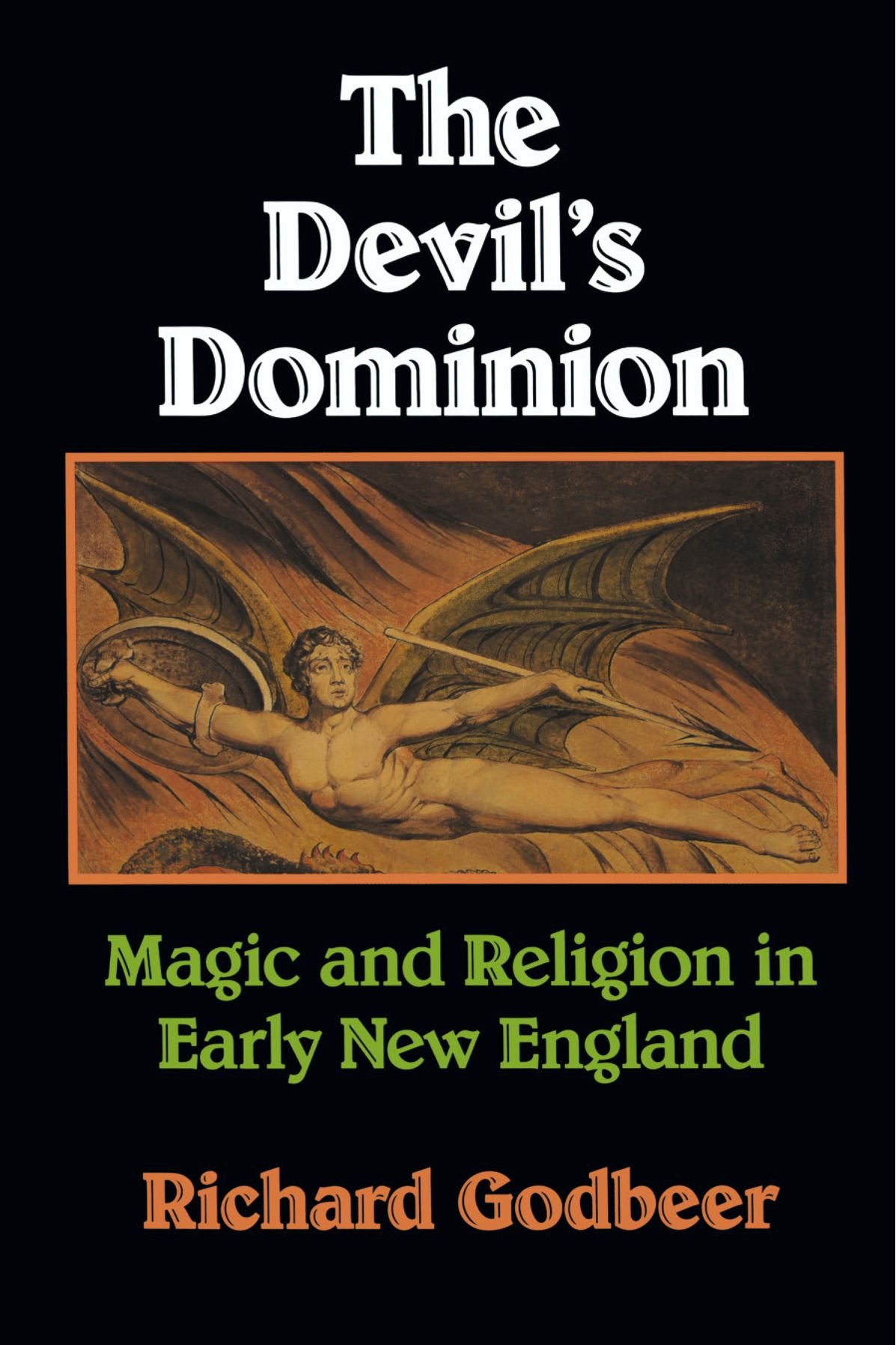



Early New Englanders used magical techniques to divine the future, to heal the sick, to protect against harm and to inflict harm. Protestant ministers of the time claimed that religious faith and magical practice were incompatible, and yet, as Richard Godbeer shows, there were significant affinities between the two that enabled layfolk to switch from one to the other without any immediate sense of wrongdoing. Godbeer argues that the different perspectives on witchcraft engendered by magical tradition and Puritan doctrine often caused confusion and disagreement when New Englanders sought legal punishment of witches. "Godbeer shows us that popular belief in magic underlay most accusations of witchcraft, even in the Salem epidemic, and he also shows that popular belief did not necessarily ascribe the efficacy of magic, and by consequence of witchcraft, to the devil." The New York Review of Books "This short, crisply written book makes a major contribution to our understanding of magic and witchcraft in the culture of seventeenth-century New England. Amidst a plethora of American witchcraft studies, this one stands out for both the usual topics included and for its provocative interpretations. More broadly, it provides another framework for considering the complex relationship between Puritanism and popular attitudes and conduct in orthodox New England...Nonetheless, this is a remarkably intelligent and intelligible book that should be carefully read and considered by anyone interested in the religious and cultural history of early America." The Catholic Historical Review "The Devil's Dominion probes one of Puritanism's most terrifying anomalies: a fascination for supernatural belief that, ironically, drove distressing numbers of laypeople to practice magic and powerful ministers and magistrates to prosecute it. No book better explains how and why so many New Englanders lost their lives to witch prosecutions. The Devil's Dominion does not explain away the witchcraft charges, as is traditional, but probes their origins; it is intellectual and social history at its most arresting." Jon Butler, Yale University "This strongly argued and well-documented book shows how certain themes in Puritanism's Calvinist spirituality ironically left people--even believers--hungry for alternatives, more immediately satisfying solutions to life crises. The Devil's Dominion takes its place on the shelf of significant studies of the dark side of colonial religion and society and deserves a wide readership." Charles Hambrick-Stowe, Lancaster Theological Seminary "By exploring the tension between elite doctrine and folk tradition, Godbeer's intriguing study shows how supernaturalism could lead to the hangman's noose and why, after the Salem trials, the executions stopped." William and Mary Quarterly "In this well-written and insightful book, Godbeer raises important enough questions to repay close study for years to come." H. Larry Ingle, The Historian "...a penetrating study...based on careful research in court records and clerical writings...." Robert J. Wilson III, Historical Journal of Massachusetts "His book deserves attention mostly for its sensitive and detailed rendering of the complicated religious world view that characterized 'Puritan' New England." Carol F. Karlsen, American Historical Review "The Devil's Dominion propels the reader on a fascinating, well-documented journey into the occult world of the early New England colonists. Written in an engaging style that combines solid social history, anecdotal support, and theoretical insight, Godbeer explores an inherent ambiguity in Puritan teachings regarding human liability for sin....The Devil's Dominion is a must for anyone interested in probing the American religious imagination." John K. Simmons, Syzygy "Godbeer has written an excellent survey of popular magic, witchcraft, and religion in seventeenth-century New England. It is especially notable for the degree to which it connects occult practices in early New England to the English folk tradition from which they originated....[F]or the clarity of its presentation and the scope of its argument, this is an important book....likely to become a standard survey of this subject in New England." Walter W. Woodward, Journal of Interdisciplinary History A detailed look at the folk magic used by settlers in early New England. Used Book in Good Condition